How to Source Discontinued Wiring Harnesses?

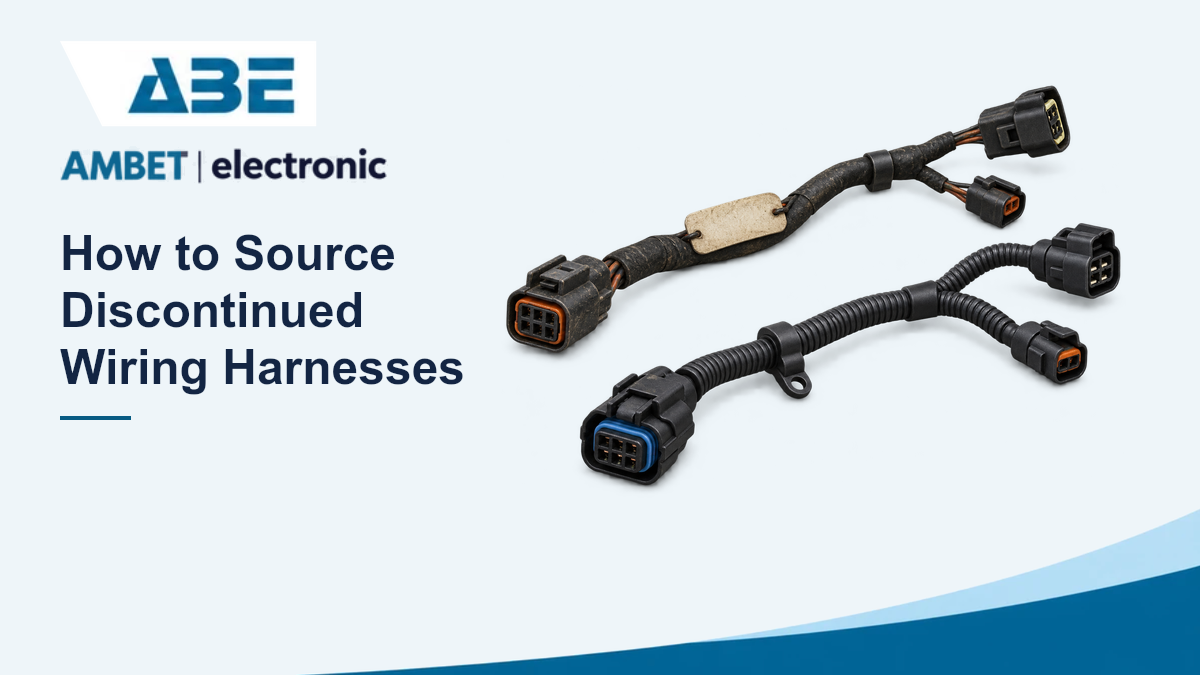
When an original wiring harness goes out of production, the quickest listing can turn into a return if a connector, branch, or pin assignment differs.
Identify the original harness and confirm its fitment before choosing a sourcing route. Check verified stock and approved supersessions first. If supply is limited, request a custom build from an approved drawing or measured sample, then validate it before ordering.
For importers and distributors, the decision often comes down to whether the order fills an immediate gap or needs to support repeat sales.
How Do You Identify the Exact Harness You Need to Replace?
A readable tag gives purchasing a starting point. The application record and mating connectors help confirm which assembly the buyer actually needs.
Record the original equipment part number, revision or suffix, target vehicle or equipment configuration, and the harness location. Compare the mating faces, pin assignments, branch lengths, and mounting points with the evidence available for that application.
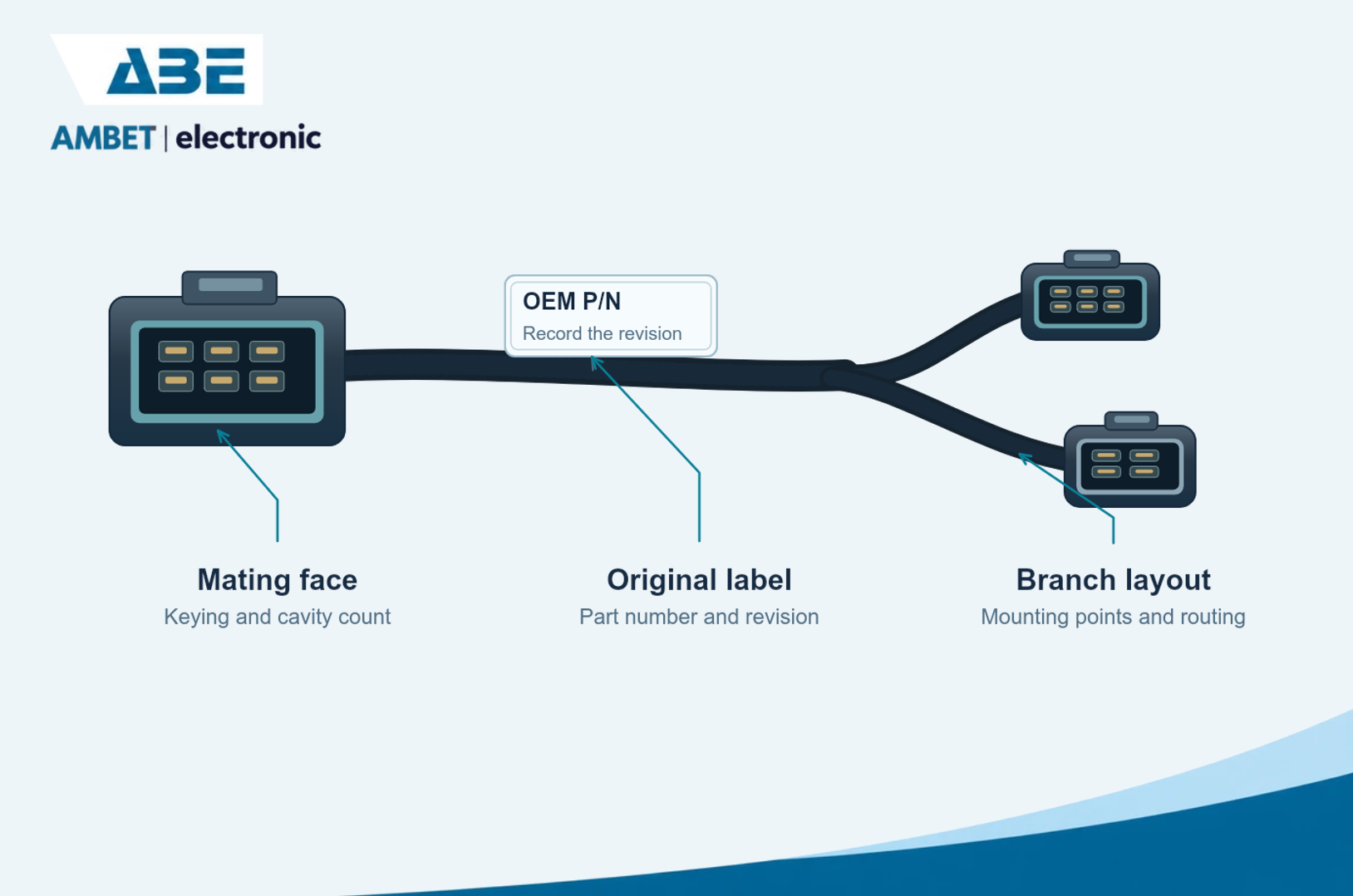
Which Part Numbers, Fitment Details, and Revisions Should You Record?
Start with the tag on the complete harness, an OEM parts catalog1, or the equipment's service documentation. A number molded into a connector housing may identify that housing rather than the complete wiring assembly. Record each number with its source so the supplier can tell which one describes the finished harness. Save a photo of any suffix and keep a record of the drawing revision if one exists.
For a vehicle application, record the make, model, model year, and relevant engine, equipment package, or production range. Use the vehicle identification number when the parts lookup supports it. For industrial equipment, record the machine model, serial range, and installed option. Write down the circuit or assembly the harness connects to. When similar assemblies appear in a catalog, compare the intended location, mating interfaces, and branch layout before assigning a fitment range to the replacement.
How Can You Document an Unlabeled or Incomplete Sample?
Lay out the removed harness and take one photo of the full assembly. Label each connector and branch in the photos. Capture the mating face, wire-entry side, latch, keying, clips, grommets, and mounting points. Record the measurement starting points and note any section that has been cut, repaired, stretched, or exposed to heat. Use service documentation, a known-good harness, or the vehicle-side connector to help resolve missing details.
Share any available wiring diagram with the photos and sample. Ask the supplier to list the circuits, dimensions, or materials it can confirm and the items that still need buyer input. When a diagram and physical sample disagree, have the responsible engineer approve the interpretation in writing before a reproduction is built.
Which Sourcing Route Fits Your Order?
An urgent service order and a repeat aftermarket program can justify different inventory and tooling decisions.
Use verified stock for immediate needs when the parts and condition are confirmed. Follow approved supersessions when documentation supports the application. Consider a custom replacement when recurring demand and a usable drawing or sample justify development.
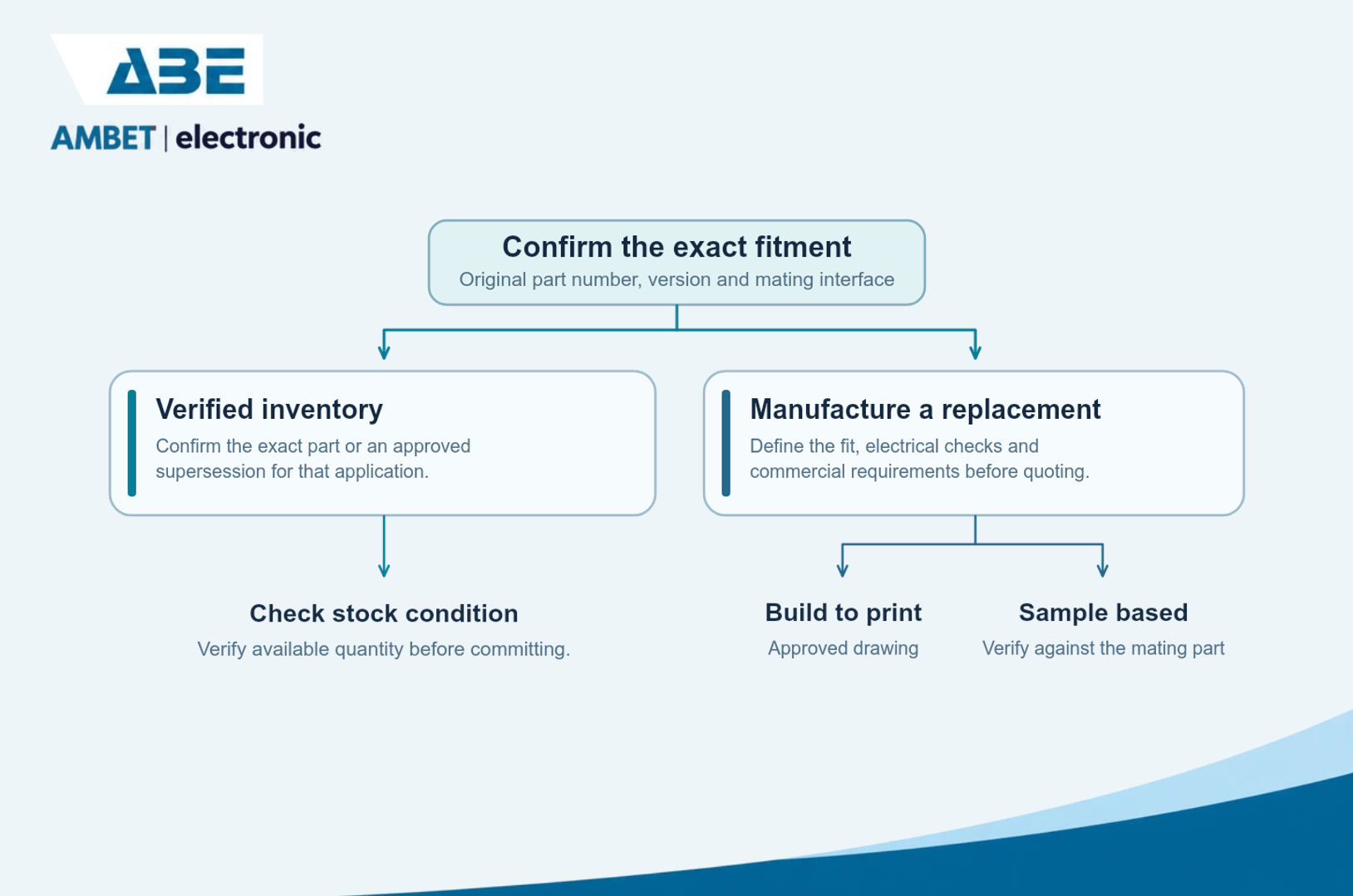
When Can You Use Verified Stock or an Approved Supersession?
Check an authorized source for remaining stock or a current replacement number. Ask which part number and revision are in stock, how many units are available, and how the seller identifies their origin and condition. Agree on what happens if an item arrives with a different label, old repair, damaged housing, or corroded terminal. If a seller offers a mixed lot, ask for the quantity and identity of each distinct variant before you price the order.
An OEM part-number supersession2 is a useful lead. Check the application notes for the later part and confirm whether the substitution needs a bracket, adapter, or other related part. Record which harness number the later part replaces and the applications the documentation covers. If the purchase is for a recurring SKU, ask how much matching inventory remains and set a date to review the replenishment plan.
When Does a Build-to-Print or Sample-Based Replacement Make Sense?
Choose build-to-print when you have a usable drawing, bill of materials, and pinout. Ask the supplier which components it can source and which need replacement proposals. If you have a usable sample, AMBET can measure it and prepare draft technical details for your approval before sampling. Agree on how the sample will be returned and which characteristics require additional evidence from your engineering team.
| Sourcing route | Evidence to request before committing |
|---|---|
| Verified stock | Part label, applicable revision, lot condition, and available quantity |
| Approved supersession | Written replacement reference for the intended application and applicable installation notes |
| Custom build | Approved drawing or sample-based specification, component availability, and a validation plan |
If the legacy connector is also discontinued, request a list of proposed changes with the effect on mating, routing, and tests. Ask engineering to approve the new specification before ordering production.
What Should You Give a Harness Supplier for a Comparable Quote?
Quotes can look comparable while carrying different assumptions about the original connectors, first sample, or release tests.
Send suppliers the same revision, fitment evidence, initial quantity, repeat forecast, and acceptance plan. Ask each to itemize tooling, sample and test fees, component assumptions, minimum order quantities by part number, and lead-time milestones.
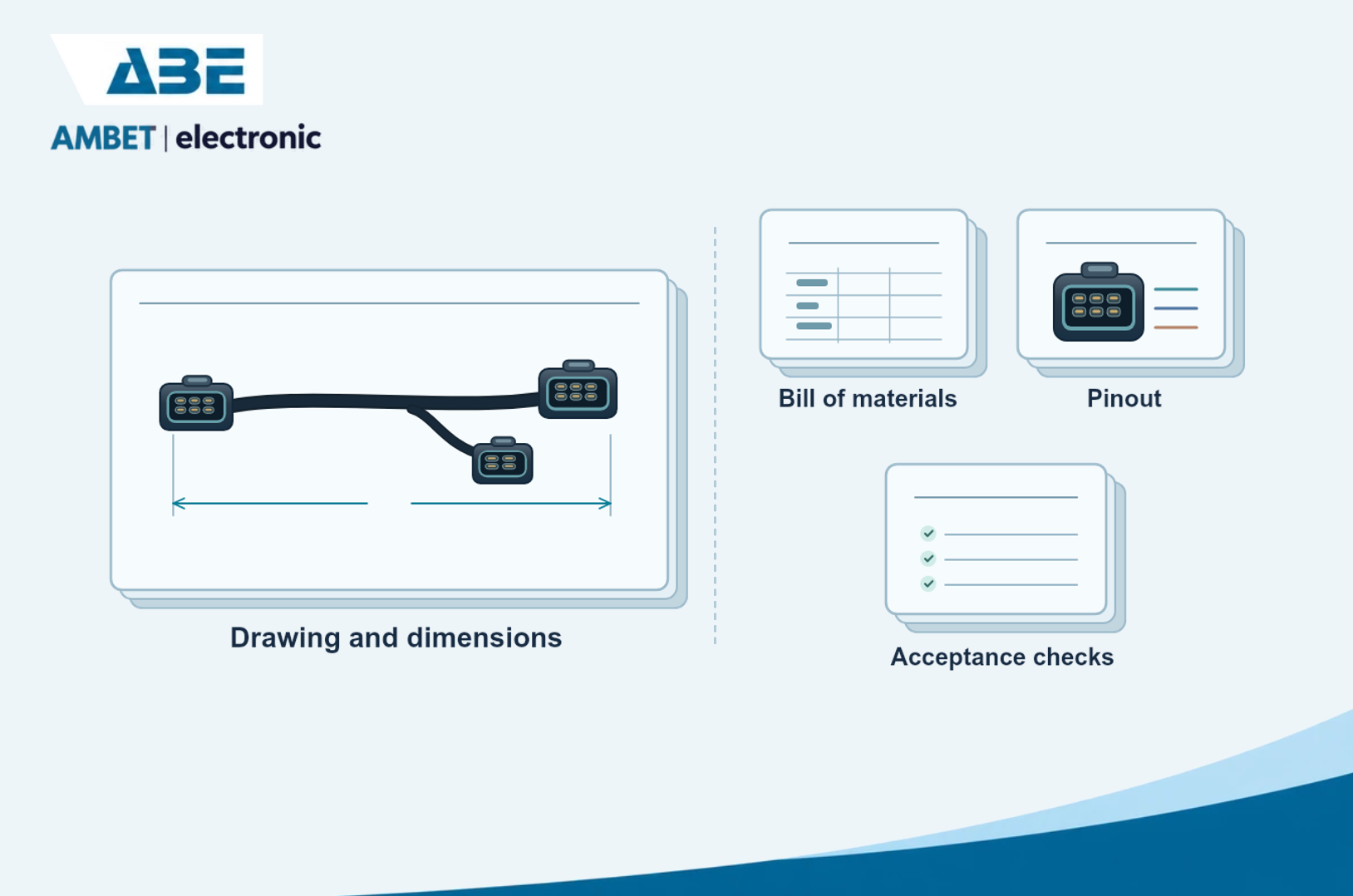
Which Technical Details and Acceptance Criteria Belong in the RFQ?
Give each supplier the same request for quotation (RFQ) package. Include the part reference, approved drawing and bill of materials if available, pin-to-pin schedule, and photos or a sample. Identify the mating components by part number when known. Show branch lengths from agreed reference points, wire sizes, clips, grommets, protective coverings, labels, and packaging. Indicate where substitutions are allowed and who has authority to approve them. For questions you cannot answer yet, distinguish an assumption from a target requirement so each supplier can quote against the same scope.
Describe the installation and the acceptance checks for the replacement. Specify any required customer format for test records or sample approval. Request an itemized explanation of the spec differences if the proposed material or connector differs from the reference. That makes it easier to see which quote depends on a change to the harness or its installation.
How Should You Compare Minimum Quantities, Tooling, and Reorder Lead Times?
Use separate quantities for the initial order and repeat demand per part number. A supplier can quote an acceptable unit price at a volume your slow-moving SKUs cannot absorb. Ask for minimum quantities by SKU, any material-buy commitments, and whether multiple SKUs can share tooling. Compare the one-time sample and tooling costs, test fees, shipping assumptions, and any tooling storage or maintenance terms.
Request timing for sample delivery, buyer approval, production, and transit as separate milestones. Ask which milestone starts the quoted production clock. Compare first-order timing with repeat-order timing under the same component and inventory assumptions. An offer based on stocked housings will have a different schedule if the supplier has to order those housings again for each repeat run.
How Do You Qualify a Replacement for Repeat Orders?
The first sample gives engineering, sourcing, and quality a common reference for production and later changes.
Confirm fit and electrical operation on a production-intent sample. Approve the drawing, bill of materials, test results, and sample revision together. Hold repeat orders to that revision and require written approval for material or design changes.
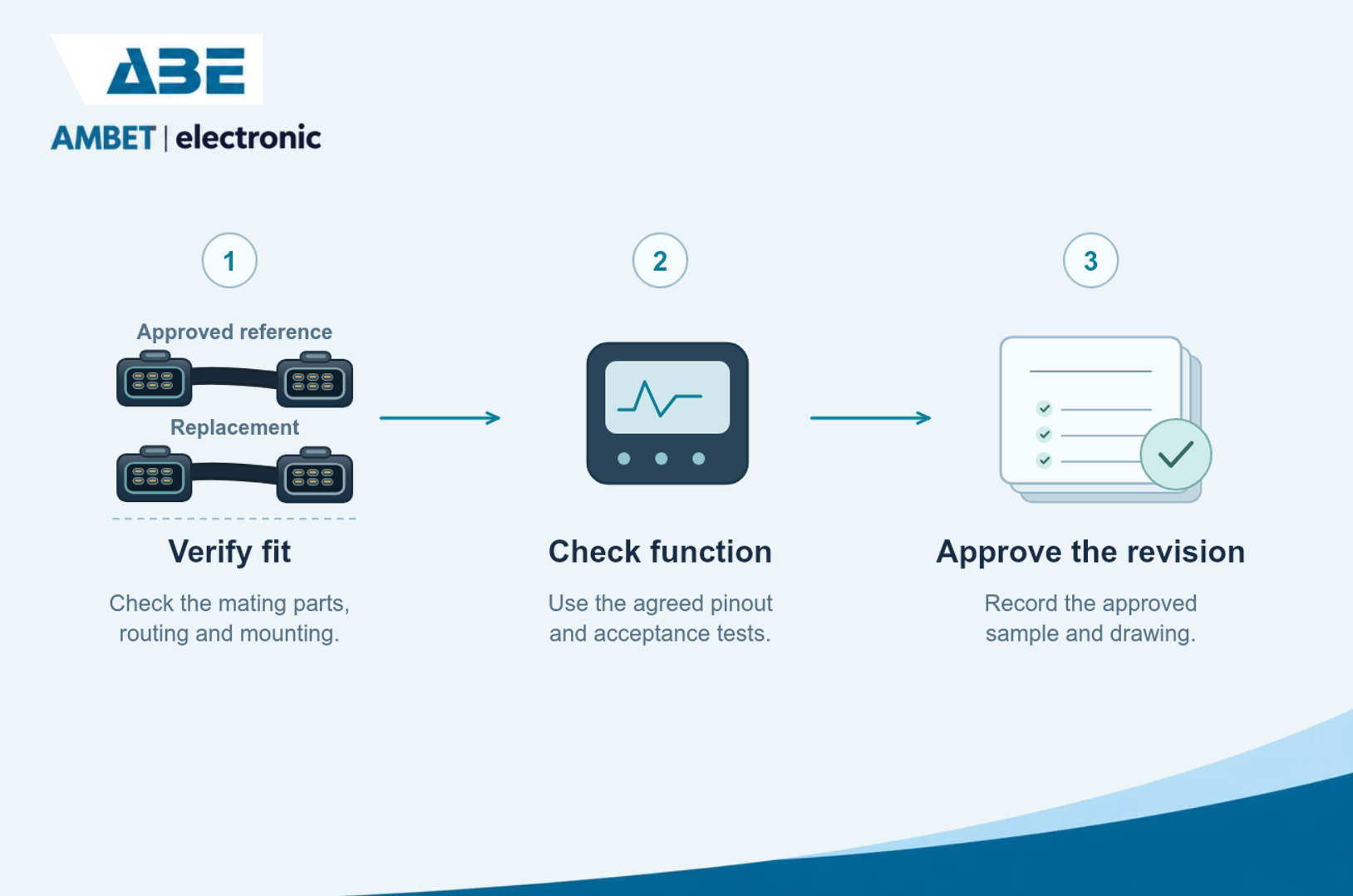
What Should You Check on the First Sample?
Install the sample on the intended vehicle or equipment, or use an approved matching fixture for the checks it is designed to represent. Verify that the connectors mate and lock as specified. Check branch reach, clip engagement, grommet fit, and clearances along the full route. Review points where the harness passes a moving part, hot surface, or tight bend. Record which application and revision were used to check fit.
Have qualified staff check continuity, opens, shorts, and miswires3 against the approved pinout with an appropriate fixture or tester. Use the agreed acceptance plan for any additional electrical, environmental, or mechanical checks the application requires. Keep the results with the sample approval record. If a residual difference remains, document the deviation and confirm who can accept it for the specified order or revision.
How Can You Keep Subsequent Orders on the Approved Revision?
Keep the approved sample, drawing, bill of materials, acceptance criteria, and decision record together. Put the approved part number and revision on each purchase order. Ask how the supplier links shipment labels and test records to the production lot so your receiving team can check the documents at arrival. This is especially useful when the old and new versions share similar descriptions.
Agree on configuration control4 before the first repeat purchase. Ask the supplier to send proposed replacements or changes with the affected part numbers, revised documents, and validation plan. Obtain written approval before switching materials or production revisions. Confirm which lots will be built to the old revision and which will be built to the new one, then update the purchasing record and fitment listing together.
Conclusion
Identify the exact application, compare sourcing routes on the same evidence, and lock the approved sample and revision before ordering replacements for repeat sale.
Shows how an original equipment parts catalog uses vehicle details and VIN to narrow part selection. ↩
Provides an OEM service example of checking part numbers, application, and installation instructions together after a supersession. ↩
Explains how a harness tester uses a reference connection map to identify open, shorted, or miswired circuits. ↩
Explains how an approved baseline and documented change review keep later builds aligned with the accepted design. ↩