How Do You Choose the Right Wire Harness Manufacturer?

Choosing the wrong wire harness manufacturer can lead to poor quality, delayed deliveries, and costly production changes. How can you find a supplier that meets your actual needs?
To choose the right wire harness manufacturer, evaluate its technical capabilities, quality control processes, customization experience, production capacity, and delivery reliability. You should also review samples, compare quotations, and confirm its ability to support your project from prototype to mass production.
I recommend looking beyond the initial quotation when comparing suppliers. A manufacturer may offer a competitive price, but can it understand your drawings, source the correct components, and maintain consistent quality? These questions help you identify a supplier that can support your project over the long term.
What Should You Consider Before Choosing a Wire Harness Manufacturer?
Not every wire harness manufacturer is suitable for every project. Before contacting suppliers, I recommend understanding exactly what your project requires.
Before choosing a wire harness manufacturer, define your application, technical requirements, expected order volume, production needs, and customization requirements. These details help you identify suppliers with the right experience and manufacturing capabilities.
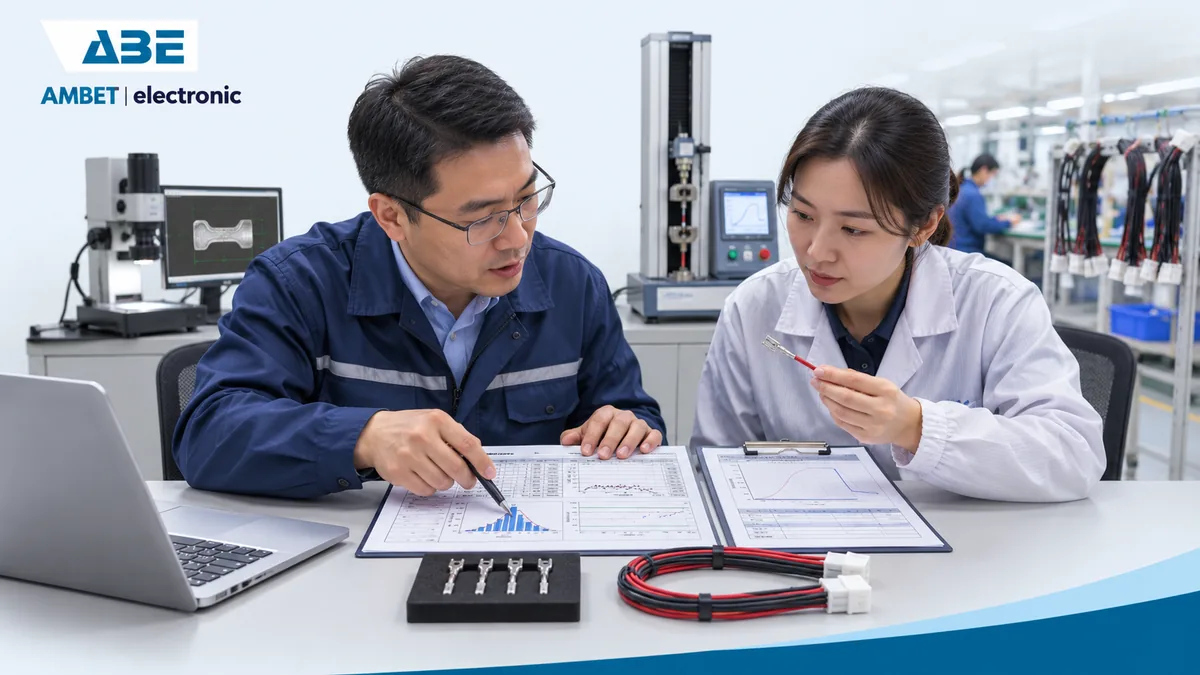
Defining Your Application and Technical Requirements
I would start by identifying where the wire harness will be used.
A harness designed for an automotive lighting system may have very different requirements from one used in industrial machinery.
The application affects the wire specifications, connector selection, insulation materials, and protection requirements.
For example, an automotive harness installed in an engine compartment may need to withstand higher temperatures, vibration, moisture, and exposure to automotive fluids.
An industrial equipment harness may have different requirements based on its operating environment and electrical system.
Before contacting a manufacturer, I recommend preparing the following information:
- Application and equipment type
- Operating voltage and current
- Wire gauge1 and conductor specifications
- Connector types and part numbers
- Pinout and electrical connection requirements
- Operating temperature range
- Environmental protection requirements2
- Relevant industry or customer standards3 and automotive quality management requirements4
You may not have every technical detail at the beginning of the project. However, the more information you provide, the easier it becomes for a manufacturer to evaluate the requirements.
I would also distinguish between confirmed specifications and preliminary ideas. This helps the manufacturer identify which details still need engineering review.
Identifying Your Expected Order Volume and Production Needs
Order volume is another important factor when choosing a manufacturer.
Some suppliers focus on large production orders, while others have more experience with prototypes, small batches, and customized assemblies.
I recommend explaining your expected order quantities before requesting a quotation.
For example, your project may require:
- 5–20 prototype samples
- 100–500 units for initial production
- 1,000–5,000 units for regular orders
- Larger quantities for ongoing OEM production
These figures are examples, not universal production categories.
The manufacturer needs to understand both your initial requirements and your expected future demand.
A supplier that can produce a small sample may not necessarily have the capacity to handle your future volume.
I would also ask whether the manufacturer can support production increases if your project grows.
A reliable supplier should be able to explain how it manages production planning, material purchasing, and capacity when order quantities change.
Understanding Your Customization Requirements
Many OEM buyers need more than standard wiring products.
They may require specific connector combinations, wire lengths, branch arrangements, protective materials, or electrical configurations.
I recommend identifying which parts of the harness need customization.
For example:
| Customization area | Typical requirements |
|---|---|
| Connectors | Specific brands, models, and pin counts |
| Wires | Gauge, color, insulation, and length |
| Terminals | Terminal type and crimp specifications |
| Harness layout | Branch lengths and connector positions |
| Protection | Sleeves, tubing, tapes, and conduits |
| Identification | Labels, wire markings, and part numbers |
Some projects may also require special packaging, assembly instructions, or customer-specific testing.
I would confirm whether the manufacturer can follow your existing drawings or help review and develop the design.
This distinction matters because not every supplier offers the same level of engineering support.
How Do You Evaluate a Wire Harness Manufacturer's Technical Capabilities?
A manufacturer's website may show many products, but product photos alone cannot tell you how well it handles technical requirements.
To evaluate a wire harness manufacturer's technical capabilities, check its experience with your application, connector and pinout knowledge, wiring configurations, and ability to interpret custom engineering drawings and specifications.
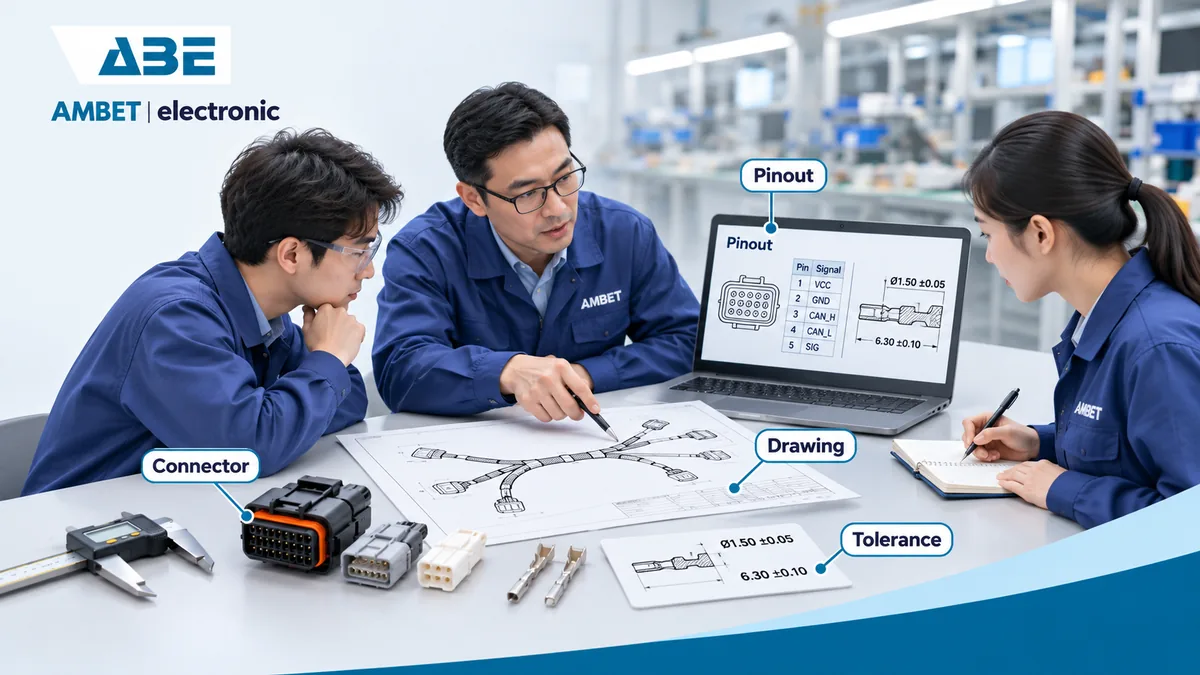
Experience With Automotive and Industrial Wire Harnesses
I recommend checking whether the manufacturer has experience with products similar to yours.
Automotive and industrial wire harnesses can involve different materials, components, testing requirements, and assembly processes.
For example, an automotive wiring harness may require specific connector retention, vibration resistance, and temperature performance.
An industrial equipment harness may require different cable constructions, shielding, or protection against mechanical damage.
I would ask the manufacturer to explain its experience in the relevant application areas.
Useful questions include:
- What types of wire harnesses do you manufacture?
- Do you work with automotive or industrial OEM customers?
- Can you handle customized connector and wire combinations?
- Have you produced similar harness assemblies?
- Can you provide relevant production or inspection examples?
I would not judge a manufacturer's experience only by the number of years it has operated.
Its understanding of your actual product requirements is more important.
A manufacturer with relevant experience may identify technical issues earlier and help reduce unnecessary development work.
Connector Selection, Pinout Design, and Wiring Configurations
Connector knowledge is an important part of custom wire harness manufacturing.
The manufacturer needs to understand how connectors, terminals, and wires work together.
For example, two connectors may have the same number of pins but different dimensions, terminal systems, or locking structures.
The manufacturer should verify connector and terminal compatibility5. Using an incompatible terminal can create problems during assembly and operation.
Pinout accuracy is equally important.
The pinout defines which electrical function belongs to each connector cavity.
If a wire is inserted into the wrong position, the finished harness may not work as intended.
I recommend asking whether the manufacturer can:
- Identify compatible connector and terminal combinations
- Follow customer-provided pinout tables
- Review connector orientation and cavity numbering
- Handle different wire gauges and terminal types
- Assemble multi-branch wiring configurations
- Verify electrical connections before shipment
I would also ask how the manufacturer controls terminal insertion and connector assembly.
These details help you understand whether the supplier can handle your actual wiring requirements rather than simply assemble wires according to a basic drawing.
Ability to Work With Custom Drawings and Specifications
A custom wire harness project often involves several technical documents.
These may include electrical schematics, wiring diagrams, harness layout drawings, connector pinouts, and bills of materials.
The manufacturer needs to understand how these documents relate to one another.
For example, the electrical schematic may show how components connect, while the harness layout drawing defines the physical arrangement and branch dimensions.
I recommend asking whether the manufacturer can work directly from your engineering documents.
You should also check how it handles:
- Drawing revisions
- Technical clarification
- Missing specifications
- Component substitutions
- Engineering changes
- Customer approval
If your drawings contain unclear dimensions or conflicting connector information, the manufacturer should identify these issues before assembly.
I consider this ability an important part of technical support.
A supplier that can identify problems before production may help prevent incorrect samples and unnecessary rework.
How Can You Assess a Manufacturer's Quality Control Standards?
A supplier may claim to have strict quality control, but how can you understand what actually happens during production?
You can assess a wire harness manufacturer's quality control by reviewing its incoming material inspection, component verification, crimping controls, electrical testing, in-process inspections, and final inspection procedures.
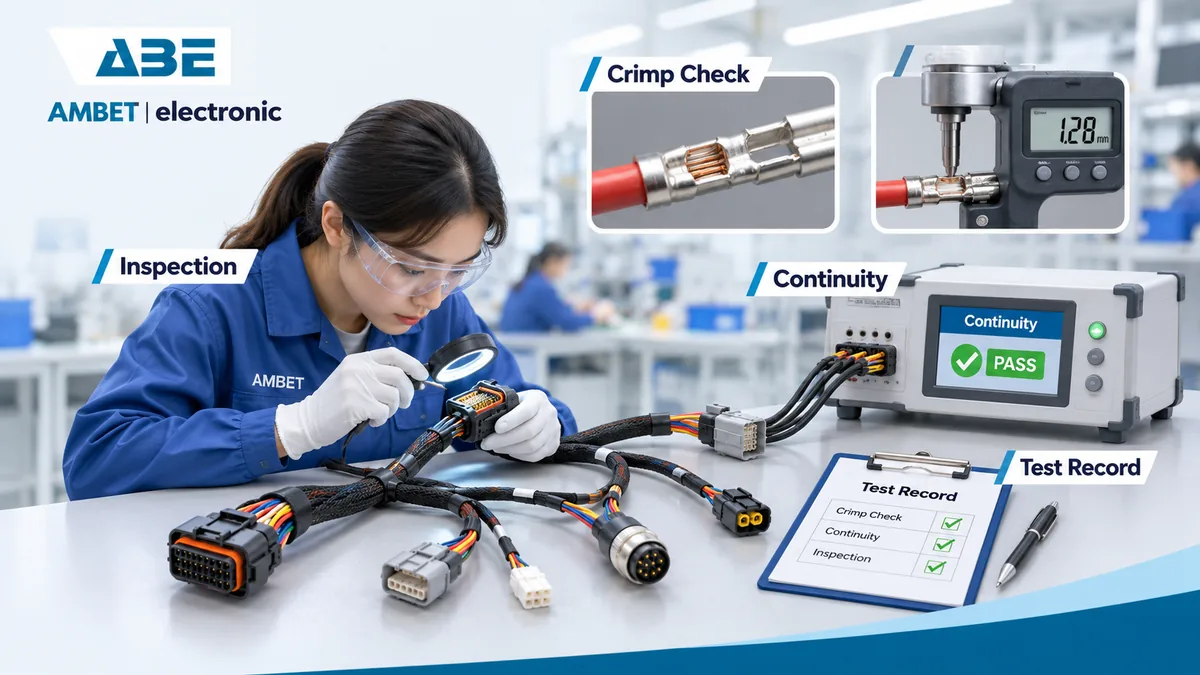
Incoming Material Inspection and Component Verification
Quality control starts before the wires and connectors enter the assembly process.
I recommend checking how the manufacturer verifies incoming materials.
The manufacturer should confirm that the received components match the approved specifications.
For example, the inspection may cover:
- Wire type and gauge
- Conductor and insulation materials
- Connector part numbers
- Terminal specifications
- Seal and protective material types
- Material labels and batch information
Connector verification is particularly important.
A connector housing may look similar to another model, but the terminal system or mating interface may be different.
The manufacturer should use the approved part numbers and technical documents as references.
I would also ask whether material batches can be identified and traced when required by the project.
This can help the manufacturer investigate problems if a material issue is discovered later.
Crimping Quality and Electrical Testing
Crimping is one of the most important processes in wire harness manufacturing.
A terminal must meet the required crimp quality criteria6 to connect securely to the conductor while maintaining the required electrical and mechanical performance.
I recommend asking how the manufacturer controls its crimping process.
Relevant quality checks may include:
- Crimp height measurement
- Crimp appearance inspection
- Pull force testing
- Terminal position inspection
- Wire stripping inspection
- Tooling setup verification
The exact inspection requirements depend on the terminal specification and customer requirements.
Electrical testing is another important part of quality control.
Common checks include continuity testing and pinout verification7.
These tests help confirm that the intended electrical connections are complete and correctly assigned.
For some projects, additional electrical tests may be required.
I would ask the supplier which tests are included in its standard process and which tests need to be agreed separately.
True or False:
A wire harness manufacturer with an ISO quality certificate automatically guarantees that every finished harness meets your specifications?
False.
A quality management certificate provides information about the manufacturer's management system, but it does not independently prove that every product meets your technical requirements. You should still review product-specific inspection methods, testing records, and acceptance criteria.
In-Process Inspection and Final Quality Checks
Incoming material inspection and electrical testing are not the only quality control steps.
The manufacturer should also monitor the assembly process.
For example, an in-process inspection may check wire cutting, stripping, terminal crimping, connector insertion, and branch assembly.
These checks help identify problems before the complete harness is finished.
I recommend asking how the manufacturer performs its final inspection.
Depending on the product, this may include:
| Inspection area | What to verify |
|---|---|
| Wire dimensions | Length and cutting accuracy |
| Connector assembly | Correct housing and terminal positions |
| Crimping | Appearance and specified measurements |
| Electrical | Continuity and pinout |
| Protection | Sleeves, seals, and coverings |
| Identification | Labels and part numbers |
| Appearance | Visible damage and assembly defects |
I would also ask whether the manufacturer keeps inspection records.
For OEM projects, these records can help buyers review quality performance and investigate problems when they occur.
Why Are Engineering Support and Customization Capabilities Important?
A custom wire harness project may change several times before production approval. A supplier needs to do more than follow the original drawing.
Engineering support and customization capabilities help manufacturers review designs, clarify technical requirements, adjust wire and connector configurations, and manage prototype revisions before mass production.
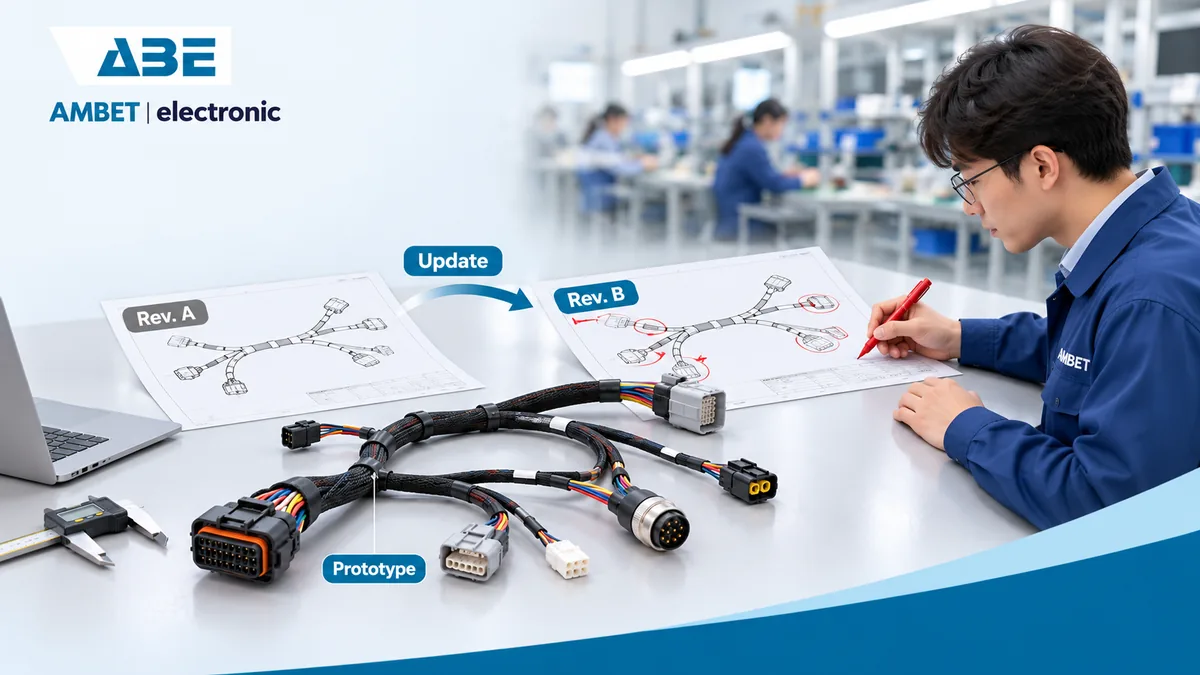
Support for Design Review and Technical Clarification
I recommend choosing a manufacturer that can communicate with your engineering or purchasing team about technical details.
This is especially important when your drawings contain missing information or when you need to change an existing harness design.
For example, your original connector may no longer be available.
The manufacturer may help identify possible alternatives, but it should first check their compatibility and obtain the required customer approval.
A design review may also identify problems with wire lengths, connector positions, terminal selection, or assembly access.
I would ask whether the supplier can review:
- Electrical schematics
- Connector and terminal specifications
- Wire gauge and insulation requirements
- Harness layout drawings
- Branch dimensions
- Assembly and testing requirements
The manufacturer should also explain any technical limitations it identifies.
I prefer clear technical communication over a supplier that simply agrees to every request without checking whether the design is practical.
Flexibility in Wire Lengths, Connectors, and Harness Configurations
Customization means that the manufacturer needs to adapt the assembly to your actual application.
For example, two customers may use the same type of connector but require different wire lengths, branch positions, or protective materials.
The manufacturer should understand how these changes affect the complete assembly.
I recommend checking its ability to handle:
- Different wire gauges and lengths
- Multiple connector combinations
- Custom pin configurations
- Multi-branch harness layouts
- Different insulation materials
- Protective sleeves and conduits
- Customer-specific labels and packaging
The manufacturer should also confirm whether these changes require new tooling, additional materials, or engineering preparation.
A flexible supplier can help support different project requirements, but flexibility should not come at the expense of specification control.
Every approved configuration should be documented clearly.
Prototype Development and Design Revisions
Prototype development allows buyers to check the actual assembly before placing larger orders.
I recommend asking whether the manufacturer can support both prototype quantities and future production.
A good prototype process should include:
- Review of drawings and specifications.
- Confirmation of critical components.
- Sample assembly.
- Dimensional and electrical inspection.
- Customer evaluation.
- Revision and approval where necessary.
Design revisions should also be controlled.
For example, if the customer changes a connector or branch length after reviewing the sample, the manufacturer should update the relevant documents.
I would ask how the supplier records these changes and confirms the final approved version.
This helps prevent an old sample design from being used during mass production.
How Do You Evaluate Production Capacity and Delivery Reliability?
A manufacturer may produce a good sample, but can it deliver the required quantity on schedule?
To evaluate production capacity and delivery reliability, review the manufacturer's equipment, assembly processes, material sourcing, available production capacity, lead times, and ability to manage customer delivery schedules.
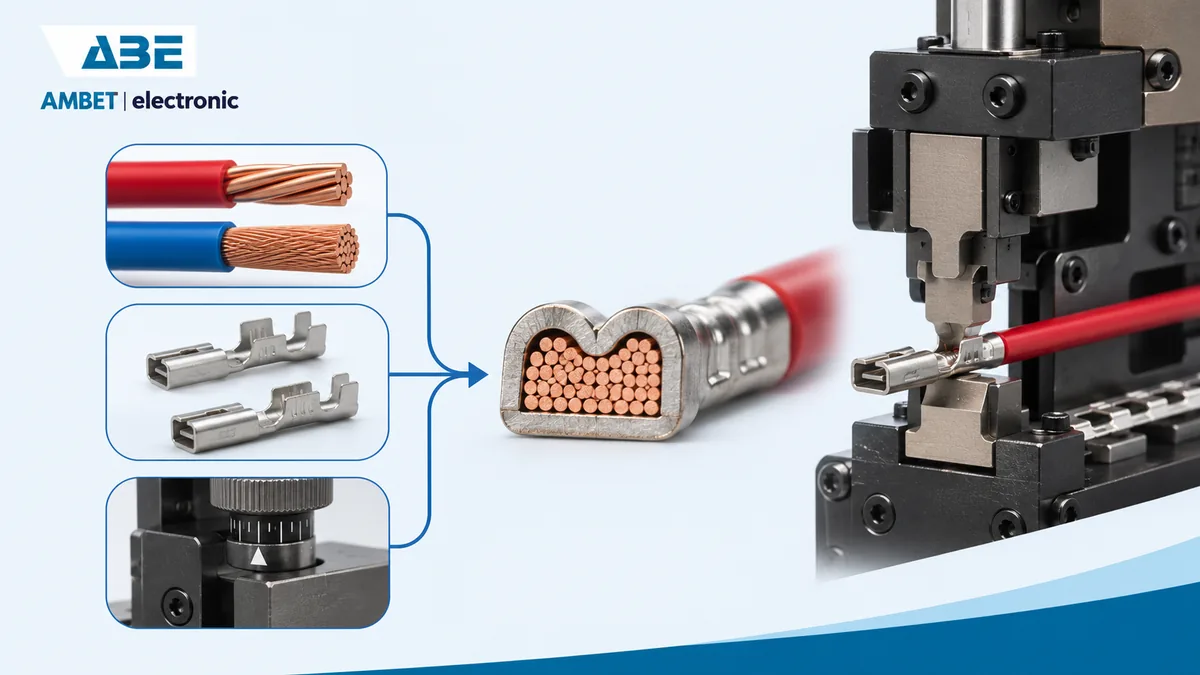
Available Manufacturing Equipment and Production Processes
I recommend asking what equipment and production processes the manufacturer uses for your type of harness.
The equipment should match the product requirements.
Depending on the assembly, manufacturing processes may include:
- Automatic or semi-automatic wire cutting and stripping
- Terminal crimping
- Wire marking
- Connector assembly
- Ultrasonic welding where applicable
- Harness board assembly
- Electrical testing
However, I would not evaluate a manufacturer only by counting its machines.
The more important question is whether its equipment and production processes can meet your specifications consistently.
For example, a complex multi-branch harness may require suitable assembly fixtures and clear work instructions.
A manufacturer should also have a process for maintaining and checking its crimping tools.
I recommend asking how it manages equipment maintenance, operator training, and production inspection.
These details can tell you more about its actual manufacturing capability.
Material Sourcing and Component Availability
Material availability has a direct effect on production schedules.
Some connectors, terminals, and specialized wires may have longer purchasing lead times than standard components.
If one critical component is unavailable, the entire production order may be delayed.
I recommend asking how the manufacturer manages material sourcing.
Useful questions include:
- Does the manufacturer have established component suppliers?
- Can it source the specified connector brands?
- Are critical materials available in sufficient quantities?
- How does it manage supplier lead times?
- Can it identify potential material shortages early?
- How does it handle approved component alternatives?
I would also ask whether the supplier checks material availability before confirming the delivery date.
This is particularly important for customized harnesses that use specialized connectors or customer-specified components.
A manufacturer should not promise a production schedule without considering the actual material supply situation.
Production Lead Times and On-Time Delivery
Delivery reliability depends on more than assembly speed.
The total lead time may include technical review, material purchasing, production preparation, assembly, inspection, and shipping.
I recommend asking the supplier to explain its lead time by stage.
| Production stage | What affects the schedule |
|---|---|
| Engineering review | Drawing completeness and technical clarification |
| Material sourcing | Component availability and supplier lead times |
| Production preparation | Tooling, fixtures, and work instructions |
| Assembly | Order quantity and process complexity |
| Inspection | Required testing and approval |
| Delivery | Packaging and transportation arrangements |
I would also ask how the manufacturer handles urgent orders and changes in customer demand.
A supplier may have enough equipment but still experience delays if its production schedule is not properly managed.
For ongoing OEM projects, I consider communication just as important as the original delivery commitment.
The supplier should inform buyers about potential delays before they affect the final delivery date.
Should You Request Samples Before Placing a Bulk Order?
A quotation can show the proposed price and specifications, but it cannot prove how the finished product will perform.
Yes. Buyers should request samples before placing a bulk order whenever the project requires custom wire harnesses or has important technical requirements. Samples allow you to evaluate quality, fitment, electrical connections, and compliance before approving mass production.
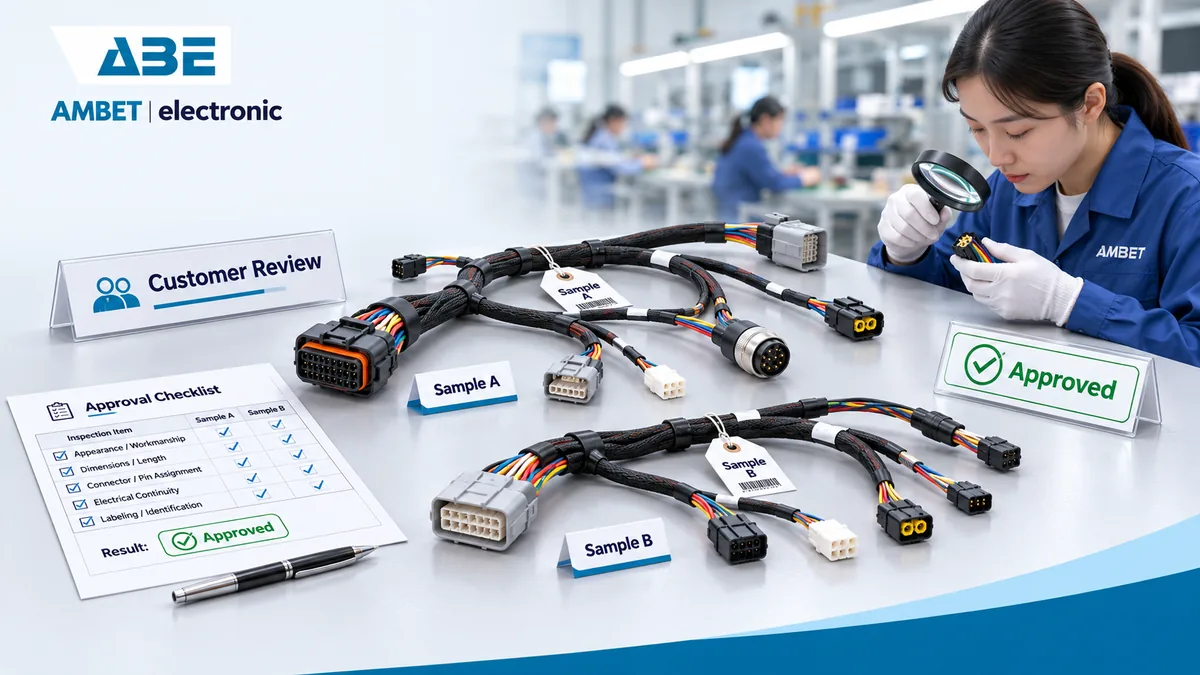
Evaluating Sample Quality and Technical Compliance
I recommend comparing the sample with the approved drawings and specifications.
The first check should cover the materials and components.
Are the correct wires, connectors, terminals, and protective materials used?
Then check the assembly.
Are the connectors installed correctly? Are the wire lengths and branch positions accurate? Are the labels and protective coverings in the right places?
I would use a sample inspection checklist.
| Sample inspection item | What to check |
|---|---|
| Materials | Correct wire, terminal, and connector models |
| Dimensions | Overall and branch lengths |
| Assembly | Connector and terminal positions |
| Crimping | Appearance and required measurements |
| Electrical | Continuity and pinout |
| Protection | Seals, sleeves, and coverings |
| Documentation | Drawing revision and inspection records |
The sample should be evaluated against the actual project requirements.
A sample that looks similar to the reference product is not enough if the connector part number or pin configuration is incorrect.
Confirming Fitment, Connections, and Electrical Performance
The next step is to check how the sample works in the intended application.
For example, an automotive harness may need to fit into a specific installation space and connect to several vehicle components.
I recommend checking:
- Whether each connector mates correctly
- Whether the harness reaches the required installation points
- Whether the branches follow the intended routing
- Whether the connectors lock properly
- Whether the electrical connections match the pinout
- Whether the harness meets the specified electrical tests
If possible, I would test the sample in the actual vehicle or equipment.
This can reveal installation problems that may not appear during a basic bench inspection.
The required electrical and environmental tests should follow the project specifications.
Approving Samples Before Mass Production
For some automotive OEM projects, formal Production Part Approval Process (PPAP) requirements8 may apply before mass production.
I recommend documenting which sample version has been approved.
The approval records should identify:
- Approved drawing revision
- Connector and terminal part numbers
- Wire specifications
- Harness dimensions
- Required test results
- Approved sample identification
- Any accepted deviations
The manufacturer should use these approved documents as the reference for production.
If the customer requests changes after approval, the affected specifications should be reviewed again.
True or False:
Once a wire harness sample passes inspection, the manufacturer can immediately begin mass production without further preparation?
False.
Sample approval confirms that the evaluated sample meets the agreed requirements. The manufacturer still needs to confirm production materials, tooling, work instructions, inspection procedures, and process controls before starting mass production.
How Do You Compare Wire Harness Manufacturers and Their Quotes?
Two suppliers may quote the same project at very different prices. How can you understand what each quotation actually includes?
To compare wire harness manufacturers and their quotations, review material specifications, manufacturing scope, MOQ, tooling costs, unit pricing, lead times, payment terms, and after-sales support. Compare the complete offer rather than price alone.
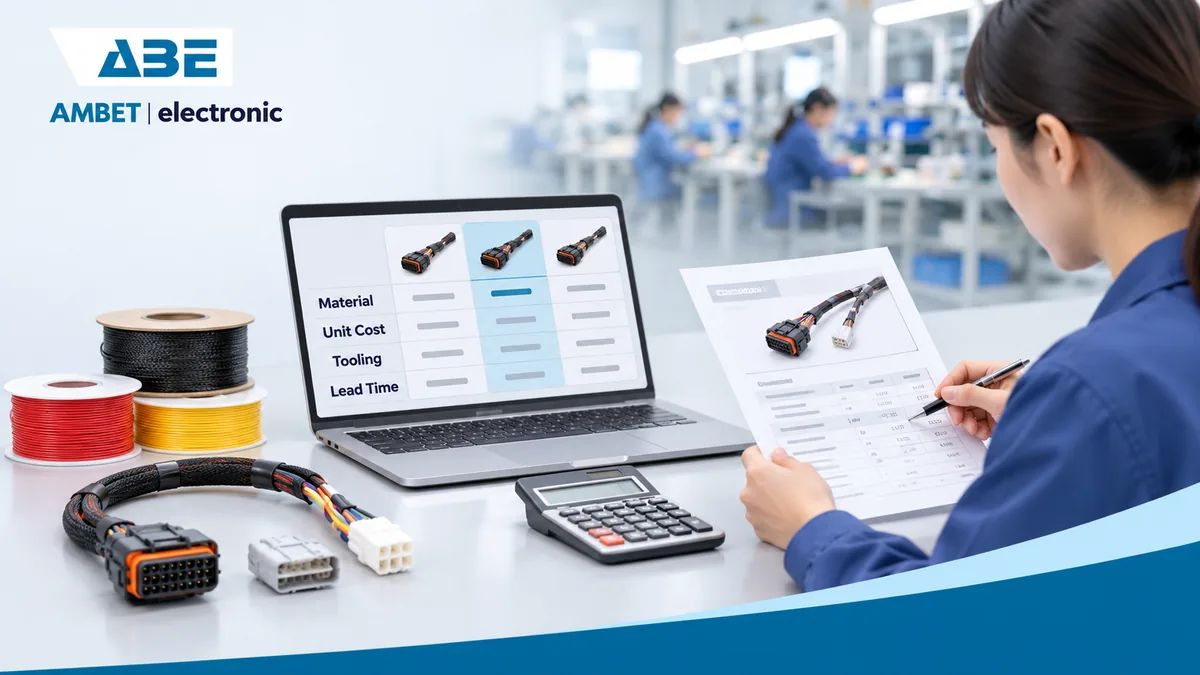
Comparing Material Specifications and Manufacturing Scope
The first step is to make sure that all suppliers are quoting the same product.
A lower quotation may use different wires, connectors, terminals, or protective materials.
For example, one supplier may quote the specified connector brand, while another may propose an alternative.
The prices are not directly comparable until the component differences are understood.
I recommend preparing a common RFQ specification for all suppliers.
It should include:
- Wire specifications
- Connector and terminal part numbers
- Pinout and wiring configuration
- Harness dimensions
- Protective materials
- Testing requirements
- Packaging requirements
- Required documentation
I would also check what each quotation includes.
Does the price cover engineering review, sample development, testing, and packaging?
Are special tooling costs included or charged separately?
A clear comparison helps prevent unexpected costs after the order is placed.
Understanding MOQ, Tooling Costs, and Unit Pricing
MOQ means Minimum Order Quantity.
Different manufacturers may have different MOQ requirements depending on their materials, production processes, and purchasing arrangements.
For example, a manufacturer may accept a small prototype order but require a larger quantity for regular production.
Tooling costs also need attention.
Some customized harnesses require special crimping applicators, fixtures, or assembly boards.
These costs may be charged separately from the unit price.
I recommend asking for a clear quotation structure.
| Cost item | What to clarify |
|---|---|
| MOQ | Minimum order quantity |
| Sample cost | Price for prototype quantities |
| Unit price | Price at different order volumes |
| Tooling cost | One-time tooling or fixture charges |
| Material cost | Whether specified components are included |
| Testing cost | Included tests and additional testing fees |
| Packaging | Standard or customized packaging |
I would also request pricing at several expected order quantities.
For example, the unit price for 500 pieces may differ from the price for 5,000 pieces.
This helps you understand how the quotation changes as your project grows.
Evaluating Lead Times, Payment Terms, and After-Sales Support
Price is only one part of a supplier evaluation.
I also recommend checking the commercial terms and communication process.
The quotation should clearly state the expected lead time, payment terms, quotation validity, and delivery arrangements.
For international OEM projects, buyers may also need to confirm the agreed shipping terms and responsibility for transportation costs.
After-sales support is another important consideration.
What happens if a delivered batch has a quality problem?
How does the manufacturer investigate complaints?
Can it provide inspection records and corrective action reports?
I would compare these details across suppliers.
**True or False:
** The wire harness manufacturer offering the lowest unit price is always the best choice?
False.
A lower price may involve different materials, fewer inspection steps, longer lead times, or limited technical support. I recommend comparing the complete specifications, manufacturing scope, quality controls, and commercial terms before making a decision.
What Questions Should You Ask Before Choosing a Wire Harness Supplier?
Before placing an order, I recommend having a detailed discussion with the supplier. The answers can help you understand whether the manufacturer is suitable for your project.
Before choosing a wire harness supplier, ask whether it can meet your technical and quality requirements, support both prototype and mass production, and manage quality issues and production changes through documented procedures.
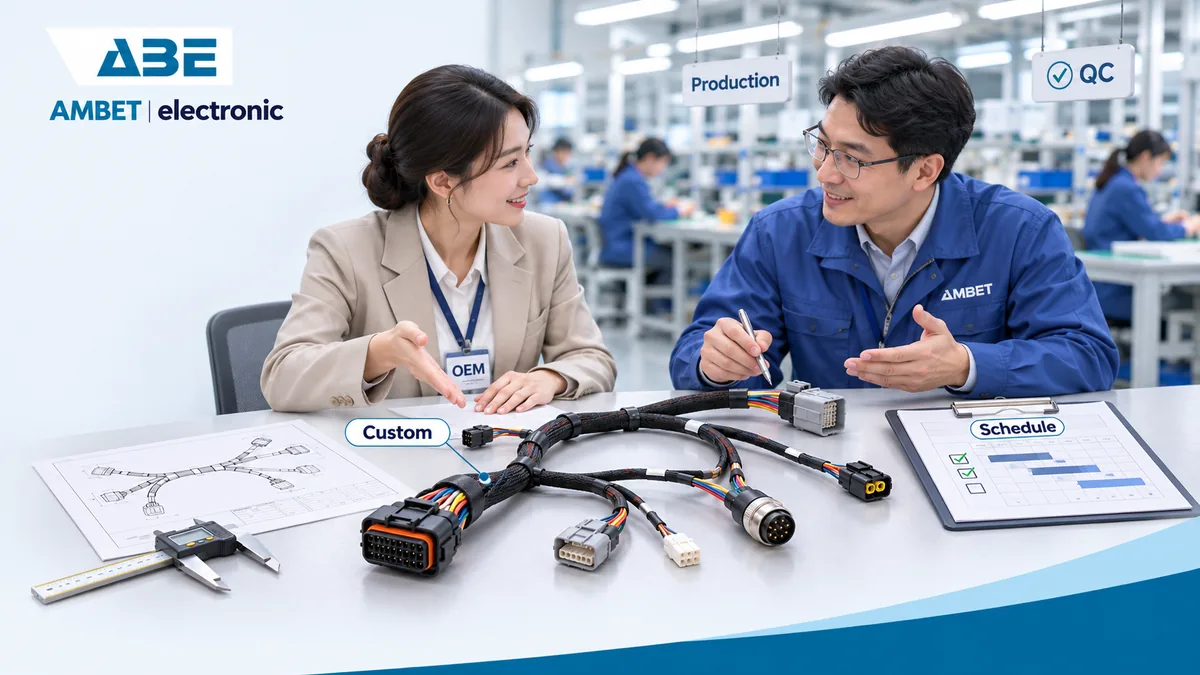
Can the Manufacturer Meet Your Technical and Quality Requirements?
I would start with the technical requirements.
Ask the manufacturer to explain how it will produce and inspect your specific harness.
Useful questions include:
- Can you work with our engineering drawings and BOM?
- Can you use our specified connectors and terminals?
- Can you follow our pinout and wire specifications?
- What crimping and electrical tests do you perform?
- Can you provide inspection records?
- How do you control drawing revisions?
I recommend asking for specific examples rather than accepting general statements.
For example, if the manufacturer says it can handle custom connector assemblies, ask how it verifies terminal compatibility and pin positions.
The answers should help you understand its actual capabilities.
Can They Support Both Prototype Orders and Mass Production?
A supplier may be able to produce a few samples but may not be suitable for your long-term production requirements.
I recommend checking whether the manufacturer can support the complete project lifecycle.
Ask:
- What is your minimum prototype quantity?
- Can you build samples using the specified production materials?
- Can you support design revisions?
- What production quantities can you handle?
- How do you prepare for mass production?
- Can you maintain the approved sample specifications?
I would also ask how the manufacturer manages production changes when the order quantity increases.
The objective is to avoid changing suppliers simply because the project moves from prototype development to regular production.
How Do They Handle Quality Issues and Production Changes?
No manufacturing process is completely free from risk.
What matters is how the supplier identifies problems, communicates with customers, and manages corrective actions.
I recommend asking how it handles nonconforming materials, assembly defects, and customer complaints.
You should also understand its change control process.
For example, if a connector becomes unavailable, can the manufacturer replace it without approval?
The answer should be no when the replacement affects an approved customer specification. Any required substitution should be evaluated and approved through the agreed change process.
Useful questions include:
- How do you record quality problems?
- How do you identify affected production batches?
- What corrective action process do you follow?
- How do you manage material substitutions?
- How do you communicate engineering changes?
- How do you prevent the same problem from happening again?
I consider these questions especially important for long-term OEM relationships.
A supplier should be able to explain not only how it produces a harness, but also how it maintains control when something changes.
Conclusion
I recommend choosing a wire harness manufacturer based on technical capability, quality control, customization support, and production reliability—not the lowest quotation alone.
Explains the American Wire Gauge (AWG) system and how wire gauge relates to conductor size. It helps buyers interpret wire specifications and compare them with the requirements in their engineering documents. ↩
Explains the IEC 60529 IP Code classification for protection against access, solid objects, and water ingress. It helps buyers understand IP ratings when dust or moisture protection is specified for an application; an IP rating should not be assumed to apply to every wire harness. ↩
Describes IPC/WHMA-A-620, a widely used industry standard covering requirements and acceptance criteria for cable and wire harness assemblies. It helps buyers understand the workmanship and inspection criteria that may be specified for a project. ↩
Explains IATF 16949, the automotive quality management system standard used in the automotive supply chain. It helps buyers understand automotive-specific quality management expectations and determine whether certification is required by their customer or contract. ↩
Provides manufacturer technical documentation for checking compatible connector housings, terminals, mating interfaces, and wire ranges. It helps buyers verify that the specified components belong to a compatible connector system rather than relying on appearance alone. ↩
Explains crimp quality evaluation methods such as crimp height measurement and pull force testing. It helps buyers understand common process checks while recognizing that acceptance limits must come from the applicable terminal specification and customer requirements. ↩
Describes electrical continuity testing for wiring assemblies and how it helps identify open circuits or unintended electrical paths. It helps buyers understand why continuity and pinout checks are important parts of a harness inspection plan. ↩
Explains the Production Part Approval Process (PPAP) used in parts of the automotive supply chain to document whether production processes can consistently meet engineering and customer requirements. It helps buyers understand formal production approval requirements where an OEM or customer specifies PPAP. ↩