What Is an Automotive Wiring System? A Practical Guide for Buyers

Imagine you are sourcing a replacement wiring harness for a truck. The connector looks right, and the supplier says it will fit. Is that enough to place an order?
Not necessarily. The connector may look identical while the pin positions, wire specifications, or branch lengths are different. A small mismatch can turn a straightforward installation into a difficult troubleshooting job.
Choosing the right automotive wiring system can feel overwhelming when you're sourcing parts across borders, comparing suppliers, and trying to avoid costly mistakes. One wrong connector or mismatched wire gauge can halt production or trigger a wave of returns. This guide breaks down what automotive wiring systems actually are and what buyers should verify before placing an order.
An automotive wiring system is the complete network of wires, connectors, terminals, and protective components that distributes electrical power and signals throughout a vehicle. It connects the battery, sensors, lights, motors, and electronic modules so they function as an integrated unit. For procurement professionals, understanding this system is essential for evaluating suppliers, verifying specifications, and preventing fitment errors.
That definition covers the basics — but the real questions start when you need to decide what to buy, from whom, and how to verify it. Below, I'll walk through how these systems work, what they're made of, where they're used, and what I focus on when evaluating wiring harness suppliers for B2B procurement.
What Is an Automotive Wiring System?
Most buyers hear "automotive wiring system" and think of a single cable. That's a misunderstanding that can lead to ordering the wrong parts entirely. A wiring system is not one component — it's the full electrical architecture of a vehicle.
An automotive wiring system refers to the organized assembly of all electrical wiring, connectors, terminals, fuses, relays, and protective coverings that enable power distribution and signal communication across a vehicle.1 It is the backbone of every electrical function, from headlights and ignition to advanced driver-assistance systems.
Why the Definition Matters for Buyers
I've seen procurement teams request a "wiring system" when they actually need a specific sub-harness or cable assembly. The terminology gap between engineering and purchasing creates real problems — wrong quotes, wasted sample cycles, and delayed projects.
Here's how I think about it. The automotive wiring system is the big picture — the vehicle-level electrical architecture. Within that system, you have individual wiring harnesses (also called wiring looms), cable assemblies, and various sub-assemblies. Each serves a defined zone or function inside the vehicle.
When you're sourcing, the first question to clarify is: are you buying the complete wiring system, or a specific harness or cable assembly within it?
For aftermarket buyers, you're almost always dealing with replacement wiring harnesses — trailer wiring harnesses, lighting harnesses, sensor harnesses — not the entire vehicle wiring system. For industrial equipment OEMs, you may be sourcing custom wiring looms or cable assemblies that function as the wiring system for your specific machine.
Key distinction: The wiring system is the architecture. The wiring harness is a physical, manufacturable assembly within that architecture.
Understanding this distinction prevents miscommunication with your supplier, ensures your RFQ covers the correct scope, and reduces the risk of receiving parts that don't match your actual application.
How Does an Automotive Wiring System Work?
If you've ever wondered why a single broken wire can disable an entire vehicle function, the answer lies in how the automotive wiring system distributes power and signals. Every circuit depends on the integrity of its connections.
An automotive wiring system works by creating dedicated electrical circuits that route power from the battery and alternator to every electrical consumer in the vehicle — lights, motors, sensors, and control modules — while simultaneously carrying data signals between electronic control units (ECUs). Fuses and relays protect these circuits from overload.2

Power Distribution
The battery supplies DC power. The wiring system routes this power through a fuse box or power distribution center, then through individual circuits to each load. Wire gauge (AWG or mm²) is selected based on the current each circuit carries. Using a wire that's too thin creates heat and fire risk. Using one that's too thick wastes cost and space.
Signal Transmission
Modern vehicles use dozens of sensors and ECUs. The wiring system carries low-current signal lines — sometimes shielded to prevent electromagnetic interference — between these components. In industrial applications, this is equally critical: a noisy signal line on a BMS harness or a sensor cable can cause false readings.
Protection and Grounding
Every circuit needs a return path to ground. The wiring system includes ground wires and ground points distributed across the vehicle chassis. Protective elements — fuses, fusible links, and relays — interrupt the circuit when current exceeds safe levels.
| Function | What It Does | Why Buyers Should Care |
|---|---|---|
| Power routing | Delivers current from battery to loads | Wire gauge and terminal ratings must match application current |
| Signal routing | Carries sensor and control data | Shielding and connector quality affect signal integrity |
| Circuit protection | Fuses and relays prevent overload | Incorrect ratings cause failures or fire risk |
| Grounding | Completes electrical circuits | Missing or corroded grounds cause intermittent faults3 |
For procurement, the practical takeaway is this: every specification on a wiring harness drawing — wire gauge, terminal type, connector pin count, shielding, and fuse rating — exists because of how that circuit functions within the larger system. Changing any of these without engineering review introduces risk.
What Are the Main Components of Automotive Wiring Systems?
When I review a supplier's sample or quotation, I don't just look at the finished harness. I want to know what's inside it — because the components determine whether the harness will perform reliably over time.
The main components of an automotive wiring system include wires/cables (the conductors), connectors (the interface points), terminals (the metal contact elements inside connectors), and protective coverings such as corrugated tubing, braided sleeving, heat-shrink tubing, and electrical tape. Supporting components include fuses, relays, grommets, clips, and cable ties.
Wires and Cables
This is the backbone. Key specifications include:
- Conductor material: Copper is standard; some applications use tinned copper for corrosion resistance.
- Wire gauge: AWG (American Wire Gauge) or mm² cross-section. Must match the circuit's current rating.
- Insulation type: PVC, cross-linked polyethylene (XLPE), silicone, or Teflon — each rated for different temperature ranges.
- Color coding: Used to identify circuits during installation and troubleshooting.
I always ask: does the wire carry a UL listing or other applicable material certification? Material certification is not the same as finished-product certification, but it tells me the supplier is sourcing traceable, tested materials.
Connectors
Connectors are where most fitment problems occur. The connector housing, pin configuration, locking mechanism, and sealing (for waterproof applications) must all match the mating component on the vehicle or equipment.
For aftermarket buyers, this is critical. A trailer wiring harness with the wrong connector housing — even if the pin count looks right — won't mate correctly. I've seen returns that came down to a connector variant that looked identical in photos but had a different latch design.
Terminals
Terminals are the metal contacts crimped onto wire ends and inserted into connector housings. Crimp quality directly affects electrical conductivity and mechanical strength. This is why pull-force testing and crimp-height measurement matter during production — not just at final inspection.
Protective Coverings
- Corrugated tubing (split or unsplit): Protects against abrasion and routing damage.
- Braided sleeving: Used where flexibility and heat resistance are needed.
- Heat-shrink tubing: Seals splice points and connector transitions.
- Electrical tape and foam tape: Wrapping and noise dampening.
Buyer tip: When you receive a sample, check the protective materials — not just the electrical connections. Cheap tubing cracks in cold climates. Inadequate sealing fails in wet environments.4 These aren't visible in product photos.
What Are the Different Types of Automotive Wiring Systems?
Not all wiring systems are the same, and the type you need depends entirely on the application. Confusing these categories leads to sourcing the wrong product.
Automotive wiring systems can be categorized by function (body wiring, engine wiring, chassis wiring, infotainment wiring), by vehicle zone (front, rear, door, roof), or by market segment (OE production, aftermarket replacement, trailer and towing). Industrial wiring systems for equipment follow similar principles but are designed to application-specific drawings and electrical requirements.

By Vehicle Function
| Type | Typical Circuits | Key Specifications |
|---|---|---|
| Body wiring | Lights, windows, locks, mirrors | Medium gauge, many branches, multiple connectors |
| Engine wiring | Fuel injection, ignition, sensors | Heat-resistant insulation, shielding, tight tolerances |
| Chassis wiring | ABS, steering, suspension sensors | Vibration resistance, waterproof connectors |
| Infotainment wiring | Audio, displays, cameras | Shielded cables, low-noise signal lines |
By Market Segment
For aftermarket procurement, the most commonly sourced types include:
- Trailer wiring harnesses: Connect tow vehicles to trailers for lighting, braking, and auxiliary power. Common configurations include 4-pin, 5-pin, and 7-pin.
- Replacement lighting harnesses: Headlight, taillight, and fog light wiring.
- Sensor and module harnesses: Replacement wiring for specific sensors or control modules.
For industrial equipment OEMs, common categories include:
- Control cabinet wiring looms: Route power and signal within enclosures.
- Motor and actuator cable assemblies: Connect drives to motors.
- BMS harnesses: Battery management system sampling and control wiring.
What I focus on as a buyer is whether the supplier has actual production experience in the specific type I need — not just whether their catalog lists it. A factory that primarily makes trailer harnesses may not have the process controls needed for engine bay wiring, and vice versa.
Where Are Automotive Wiring Systems Used?
This question seems obvious, but for procurement professionals evaluating a supplier's capabilities, the application context determines the technical requirements you need to verify.
Automotive wiring systems are used in passenger cars, commercial vehicles, trucks, trailers, motorcycles, recreational vehicles, and agricultural and construction equipment. Beyond vehicles, the same wiring and cable assembly technologies apply to industrial automation, motor control, battery management systems, outdoor lighting, and various electronic equipment.

Vehicle Applications
- Passenger cars and light trucks: The largest volume segment. Aftermarket replacement harnesses serve vehicles with increasing average age — reported at approximately 12.94 years for U.S. light vehicles in 2026 — driving ongoing replacement demand.5
- Trailers and towing: Trailer wiring harnesses are a high-demand aftermarket category, with standardized connector types but vehicle-specific adapter requirements.
- Commercial vehicles and buses: Higher current loads, longer wire runs, and stricter durability requirements.
- Agricultural and construction machinery: Exposure to vibration, moisture, dust, and temperature extremes demands robust materials and sealing.
Industrial and Equipment Applications
- Automation and robotics: Custom wiring looms and cable assemblies connect sensors, actuators, and controllers.
- BMS and energy storage: Battery management system harnesses require precise voltage sampling connections and signal integrity.
- Control panels and motor drives: Industrial wire harnesses route power and control signals within enclosures.
The practical point for buyers: the application dictates the specifications. A harness for an indoor control cabinet faces different environmental stress than one routed through a trailer frame exposed to road salt and water spray. When you discuss requirements with a supplier, specify the operating environment — not just the electrical parameters.
What Is the Difference Between a Wiring System and a Wiring Harness?
This is one of the most common points of confusion I see in procurement communications. Mixing up these terms can result in misaligned quotations and incorrect orders.
A wiring system is the complete electrical network architecture of a vehicle or machine — it encompasses every wire, connector, and protective component across all zones and functions. A wiring harness (or wiring loom) is a specific, physically bundled assembly of wires, terminals, and connectors designed for a particular zone or circuit within that system. The wiring harness is a manufactured component; the wiring system is the design-level concept.
How This Affects Procurement
| Aspect | Wiring System | Wiring Harness |
|---|---|---|
| Scope | Entire vehicle/machine electrical architecture | Specific sub-assembly for defined circuits |
| What you order | Rarely purchased as a single unit by aftermarket buyers | The actual product you source and receive |
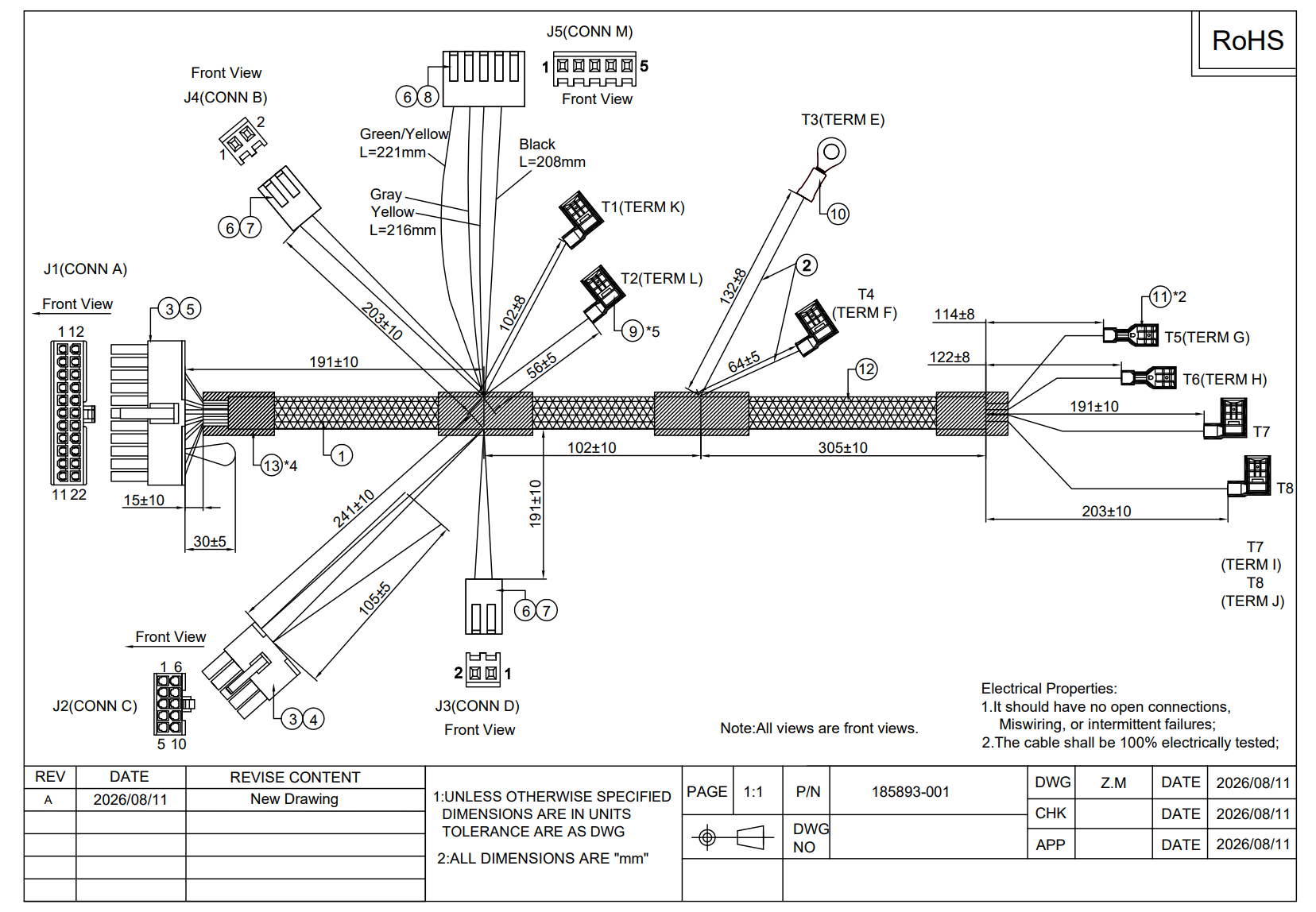
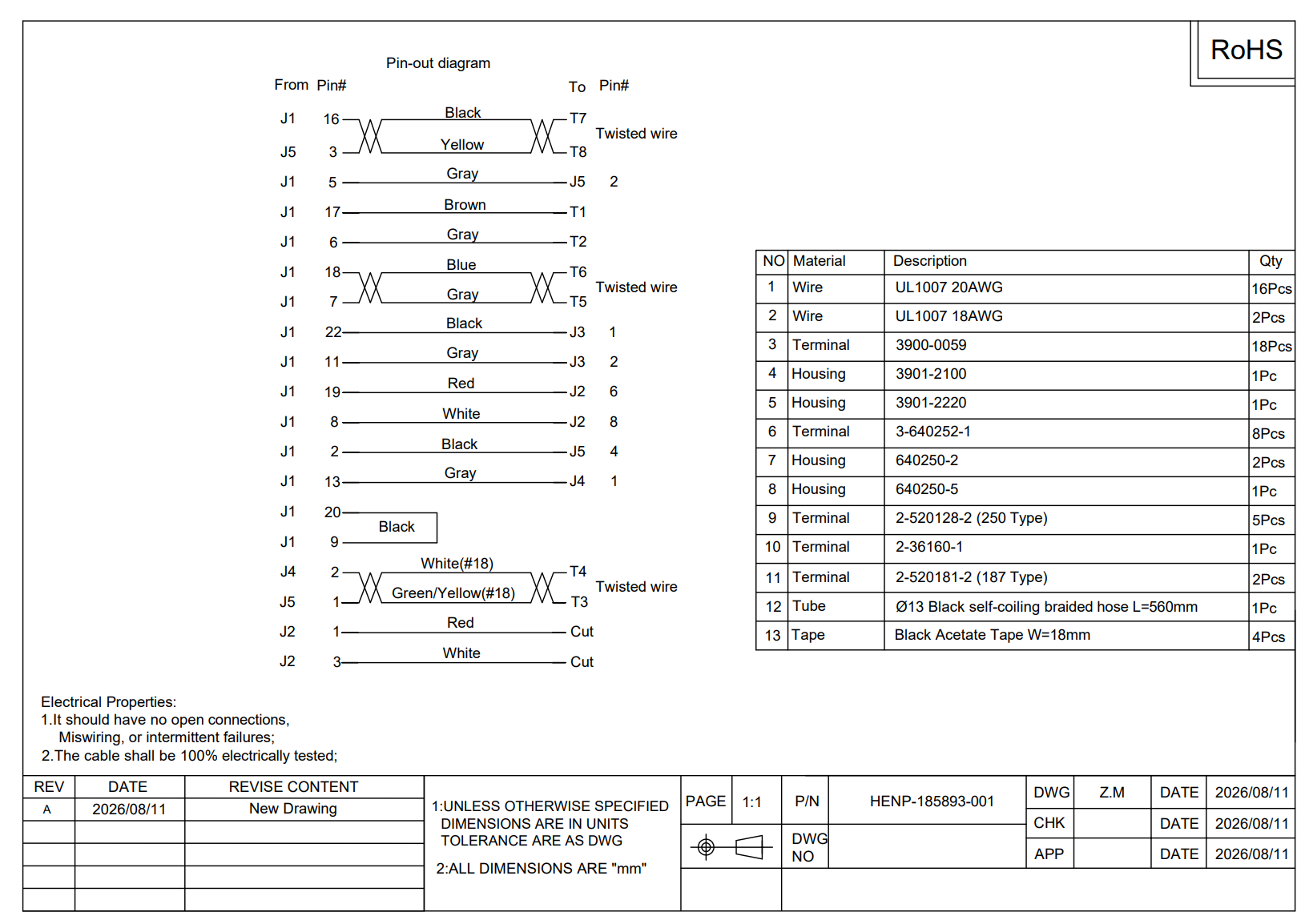
| Documentation | System-level wiring diagrams | Assembly drawings, BOM, pinout tables |
| Supplier deliverable | Typically the OE manufacturer's domain | Commonly outsourced to harness manufacturers |
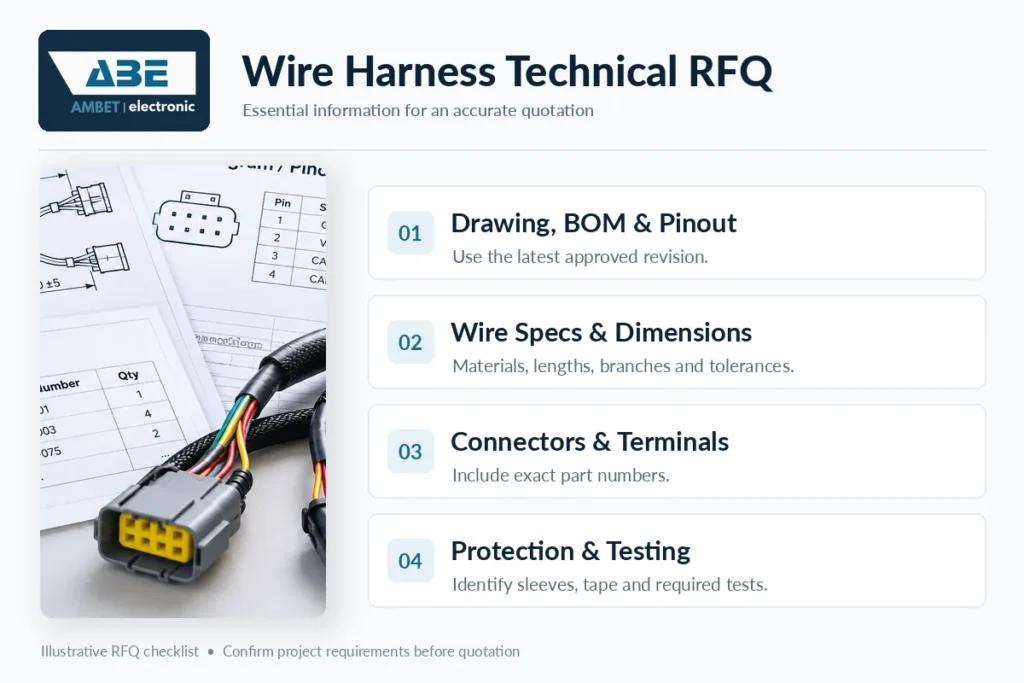
In international procurement, the terms "wire harness," "wiring harness," "wiring loom," and "cable assembly" are often used interchangeably — but they can have different structural meanings depending on the region and industry. What ultimately matters is the drawing and specification. I always make sure the supplier and I are referencing the same document, the same revision, and the same pinout before confirming a quotation.
A practical rule: If your supplier quotes based on a product name alone — without referencing a specific drawing, pinout, or BOM — that's a risk signal. Names can be ambiguous. Drawings are not.
A cable assembly, for reference, typically involves fewer conductors bundled together with connectors on each end, often without the complex branching found in a wiring harness. The lines between these categories can blur, especially for custom industrial products. The safest approach is to always provide or request technical documentation that defines the exact configuration.
What Should Buyers Consider When Choosing Automotive Wiring Harnesses?
This is where theory meets purchasing decisions. I've reviewed enough suppliers to know that the real risks don't show up in a product listing — they show up during production, delivery, and installation.
When choosing automotive wiring harnesses, buyers should evaluate technical fitment accuracy (connectors, pinout, wire gauge, and length), material quality and traceability, the supplier's quality control processes (including electrical testing and crimp inspection), MOQ and pricing structure, sample approval workflow, and production lead time from payment to shipment.

Technical Fitment and Specifications
The first question I ask is: does the supplier have the correct, approved drawing for this harness? Not a similar drawing. Not a "close enough" version. The exact revision the buyer has approved.
Key specs to verify on every quotation:
- Connector part numbers and housing variants
- Terminal types and plating
- Wire gauge (AWG/mm²) per circuit
- Wire color coding
- Overall length and branch dimensions with tolerances
- Pinout and wiring sequence
For aftermarket buyers, you also need to confirm vehicle compatibility — the specific makes, models, and model years the harness fits. A connector that looks right in a photo may have a different latch, seal, or pin arrangement for a different model year.
Material Quality
I don't just ask "what materials do you use?" I ask: whose connectors? What wire brand? Can you show me the material certifications?
Material-level certifications (like UL recognition for wire) are verifiable. They don't guarantee finished-product compliance, but they tell you the factory is using traceable, rated materials rather than unmarked substitutes.6
Quality Control and Testing
At a minimum, I expect to see:
- 100% continuity testing — every harness checked for open circuits and correct wiring sequence
- Crimp quality monitoring — pull-force testing and crimp-height measurement on a defined sampling basis
- Visual and dimensional inspection — per the control plan
Ask whether the factory tests every single unit for continuity and mis-wiring, or only samples from each batch. This distinction matters. A factory that only spot-checks electrical connections is taking a risk that may eventually become your problem.
MOQ, Pricing, and Total Cost
Don't evaluate unit price in isolation. Consider:
- MOQ per part number — not combined across different SKUs
- Tooling or fixture costs — especially for new custom harnesses
- Sample costs and whether they're credited against the production order
- Packaging, labeling, and shipping costs
- Landed cost — including freight, duties, and customs clearance
A lower unit price with higher MOQ may actually increase your total inventory cost. I've seen buyers choose the cheapest quote and end up holding slow-moving stock for months because they had to order 2,000 pieces of a SKU that only sells 300 per year.
Lead Time and Communication
Production lead time typically starts when both payment and all required technical approvals are complete — not when the PO is issued. For established, approved harnesses with materials in stock, lead times may be around 2–3 weeks. New custom or complex projects often require 4–6 weeks. These are general ranges and should be confirmed per project.
What I also evaluate is how the supplier communicates during the order. Do they confirm material availability before committing a ship date? Do they notify you proactively if something changes? These details reveal more about reliability than any certification logo on a website.
Frequently Asked Questions
How long does a custom automotive wiring harness sample take?
Sample production typically takes about 3 weeks, depending on material availability and tooling. This does not include international shipping or the buyer's testing and approval time. For standard, previously approved harnesses, the supplier may be able to ship from existing production without a new sample cycle.
Can I order different wiring harness part numbers in one shipment?
Yes, multiple part numbers can usually ship together. However, MOQ typically applies per individual part number — you generally cannot combine different SKUs to meet a single minimum quantity. Each harness type requires its own setup, materials, and inspection.
What certifications should I look for in a wiring harness supplier?
ISO 9001 and IATF 16949 are common quality management system certifications for automotive wiring harness manufacturers.7 However, certifications should be verified for scope, validity, and the specific production entity they cover. Material-level certifications like UL-listed wire are also worth confirming, though material certification does not equal finished-product certification.
What happens if a connector or material becomes unavailable during production?
A responsible supplier will notify you before substituting any material. If an equivalent specification from another approved source is available, production can continue. If the replacement involves a different specification, buyer written approval should be required before proceeding. This is a key process to verify with any supplier before placing an order.
What is the typical MOQ for custom wiring harnesses from China?
MOQ varies by supplier and product complexity. A common baseline is around 500 pieces per part number, though lower quantities may be considered on a case-by-case basis depending on material requirements, tooling, and production economics. Always confirm MOQ per SKU — not as a combined total — during the quotation stage.
Conclusion
An automotive wiring system is the complete electrical architecture of a vehicle, and the wiring harnesses within it are what you actually source, inspect, and install. Understanding the difference — and knowing which specifications, materials, and quality controls to verify — is what separates a smooth procurement process from one filled with returns and delays.
The core principle I come back to is this: don't evaluate a wiring harness supplier on price alone. Evaluate them on whether they can consistently deliver the right product, built to the approved drawing, with traceable materials and verified electrical testing. Everything else follows from that.
If you're sourcing custom wire harnesses or cable assemblies for automotive aftermarket or industrial equipment applications, I'd recommend starting with a clear technical package — drawing, BOM, and pinout — and requesting a formal quotation and sample evaluation. That's the most reliable way to determine whether a supplier can actually deliver what you need. Contact AMBET to discuss your project requirements and request a review.
"Cable harness", https://en.wikipedia.org/wiki/Cable_harness. Automotive electrical-system descriptions identify wiring and interconnections as the paths for distributing power and communicating signals among vehicle components; terminology for the system and its constituent harnesses varies across technical contexts. Evidence role: definition; source type: education. Supports: The functions and principal components of automotive electrical wiring and its relationship to harness assemblies.. Scope note: Terminology may vary, so a general electrical-system reference does not establish a universally accepted procurement definition. ↩
"Relay", https://en.wikipedia.org/wiki/Relay. Fuses interrupt circuits in response to excessive current, whereas ordinary electromechanical relays switch circuits in response to a control input; overload protection by a relay requires a protective sensing or control function. Evidence role: mechanism; source type: education. Supports: The distinction between fuse-based overcurrent protection and relay-based switching.. Scope note: This distinction supports the description of fuses but does not support attributing overload protection to all automotive relays. ↩
"Diagnosing Voltage Drops: Electrical Automotive ...", https://www.fluke.com/en-us/learn/blog/automotive/electrical-automotive-troubleshooting?srsltid=AYCX9vJeeims-CZ-yBg6tj_a_f3UfzVdDqp4f_wbujiFrRMgUDj_lVBc. An open or resistive ground connection can interrupt the return path or produce a load-dependent voltage drop, causing electrical equipment to malfunction; unstable contact can make the resulting symptoms intermittent. Evidence role: mechanism; source type: education. Supports: How impaired ground connections increase voltage drop or interrupt current flow and disrupt electrical operation.. Scope note: These mechanisms identify possible causes and do not establish that a particular intermittent fault originates in a ground connection. ↩
"Research Progress in High-Temperature-Resistant ... - PMC", https://pmc.ncbi.nlm.nih.gov/articles/PMC11122745/. Polymer flexibility and fracture behavior vary with temperature and formulation, while moisture resistance depends on sealing design and condition; these mechanisms can explain protective-covering failures under environmental exposure. Evidence role: mechanism; source type: paper. Supports: How polymer properties and sealing design affect performance under cold-temperature and moisture exposure.. Scope note: Material and environmental evidence does not establish that low-priced tubing necessarily cracks or that all wet exposures cause sealing failure. ↩
"Average Age of Automobiles and Trucks in Operation in the ...", https://www.bts.gov/content/average-age-automobiles-and-trucks-operation-united-states. Average vehicle-age statistics describe the age distribution of the defined fleet at a stated reference date; they provide context for vehicle maintenance needs but do not directly measure replacement-wiring-harness demand. Evidence role: statistic; source type: government. Supports: The measured average age of the U.S. light-vehicle fleet for the specified reporting year and population.. Scope note: The figure of 12.94 years requires explicit verification in a 2026 source, and an age statistic cannot independently substantiate the claimed effect on harness demand. ↩
"The UL Component Recognition Classification", https://www.ul.com/thecodeauthority/knowledge/ul-component-recognition-classification. UL component recognition applies to an identified component within specified conditions of acceptability and is distinct from certification of the assembled end product; certification records alone do not verify the identity of materials installed in a particular harness. Evidence role: definition; source type: institution. Supports: The scope of wire component recognition, its conditions of use, and its distinction from finished-product certification.. Scope note: Factory material use and traceability require procurement and production records beyond the existence of a component certification. ↩
"IATF 16949", https://en.wikipedia.org/wiki/IATF_16949. ISO 9001 specifies general quality-management-system requirements, while IATF 16949 specifies automotive-sector quality-management requirements; certification concerns the organization's system within its stated scope rather than independent approval of every harness product. Evidence role: definition; source type: institution. Supports: The general quality-management scope of ISO 9001 and the automotive production and relevant service-parts scope of IATF 16949.. Scope note: Official descriptions establish applicability, not how frequently wiring-harness manufacturers hold these certifications or whether any particular facility is currently certified. ↩