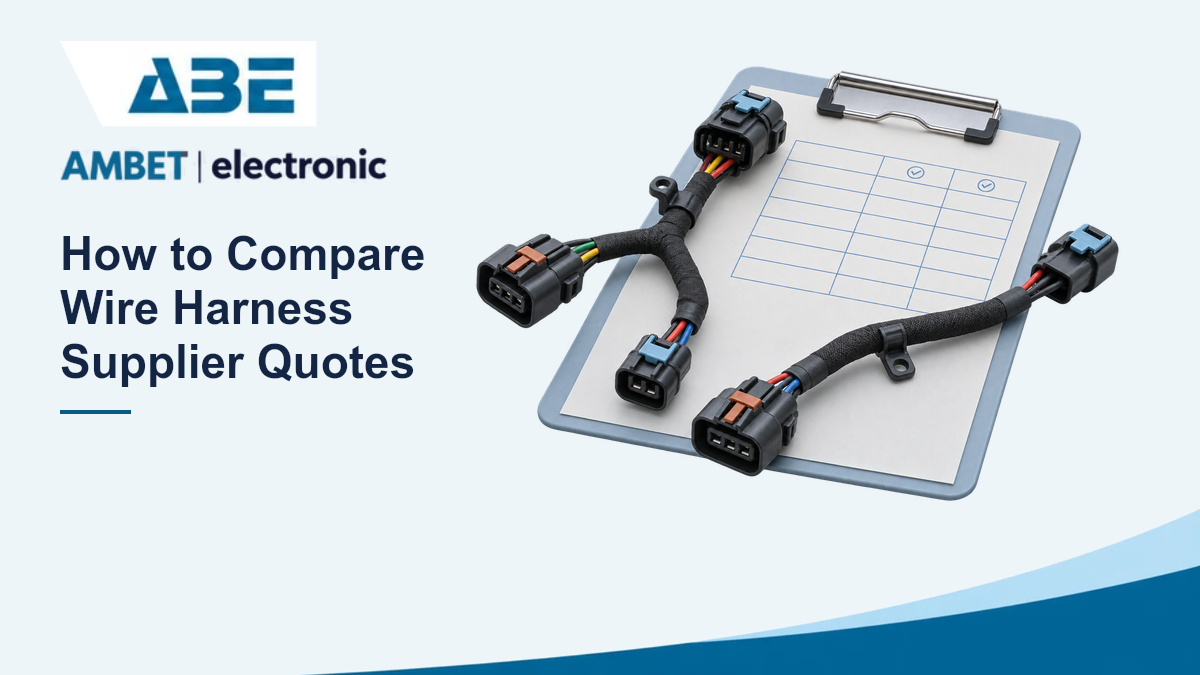
How to Compare Wire Harness Supplier Quotes

Two suppliers quote the same part number. One comes in at $2.60, the other at $3.10. The lower price could cost $1,260 more upfront.
Compare wire harness supplier quotes against the same drawing revision, part number, and delivery point. Calculate the first-order cost at the quantity you would actually order, then verify material availability, sample approval, and test coverage.
Start with the quotes you have in hand. Four decisions will tell you which offer is ready to buy and which needs clarification.
How Do You Confirm Both Quotes Cover the Same Harness?
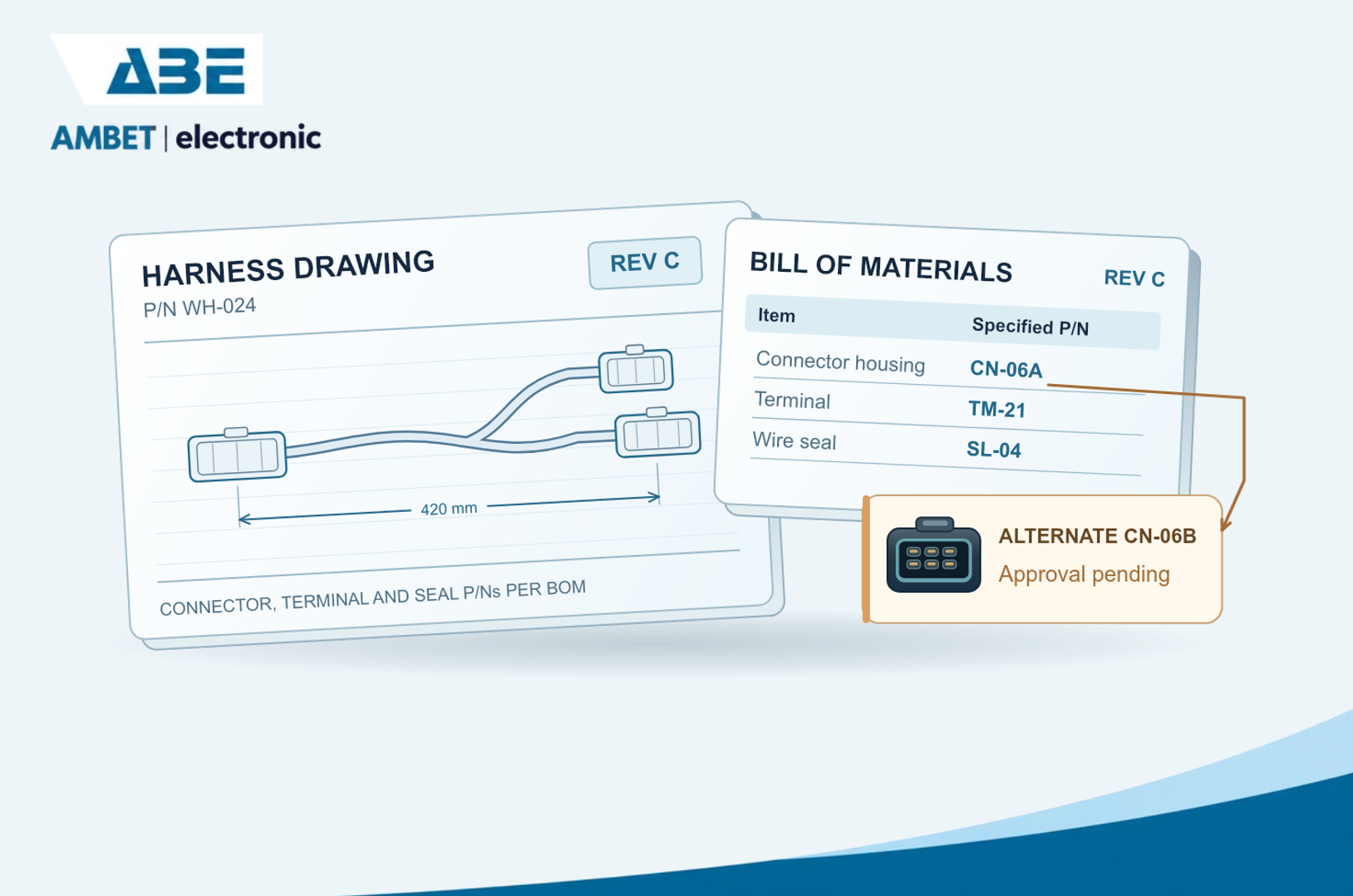
A price comparison breaks down when one supplier quotes the original connector and the other prices an alternate that engineering has yet to approve.
Get both suppliers to confirm the same drawing, bill of materials, and pinout revision in writing. Keep material or process deviations on a separate quote line so their price and lead-time effects stay visible.
Put the Quoted Revision on the Record
Ask both suppliers to identify the part number, drawing revision1, and bill of materials (BOM) revision on the quote. If the pinout lives in a separate file, give it a version too. When the drawing and BOM disagree on a terminal part number, have engineering resolve the conflict and send the same correction to both suppliers.
Read the quoted scope line by line. One supplier may include a branch sleeve, a clip, and a carton label that the other lists as optional. The same applies to assembly operations such as sealing a splice or fitting wire seals.
A quote that leaves these items open is useful for budgeting. Ask for a revised scope before you use its price to select a supplier.
Price Alternative Parts on a Separate Line
Suppose one supplier proposes an alternate connector so it can ship sooner. Ask for the original component price and lead time, if available, and a separate line for the alternate. Request the manufacturer part numbers for the housing, terminals, and seals, along with the effect on tooling, inspection, and delivery.
Send the alternate to the engineer who owns the mating interface. Have them identify which fit, retention, sealing, and electrical checks the change requires. Until that approval is recorded, keep the alternate outside the base-price ranking.
For a replacement harness, give both suppliers the same reference part number, variant details, and any required installation or fit evidence. That gives the team a specific item to approve before it buys stock.
Which Quote Costs Less for Your First Order?
A better price at 1,000 pieces can still strain the budget when the first release only needs 500.
Multiply the unit price by the quantity you must commit to. Add tooling, fees, and freight or import costs that fall to you, then compare both totals at the same receipt point and in the same currency.
Run the Numbers for One Part Number
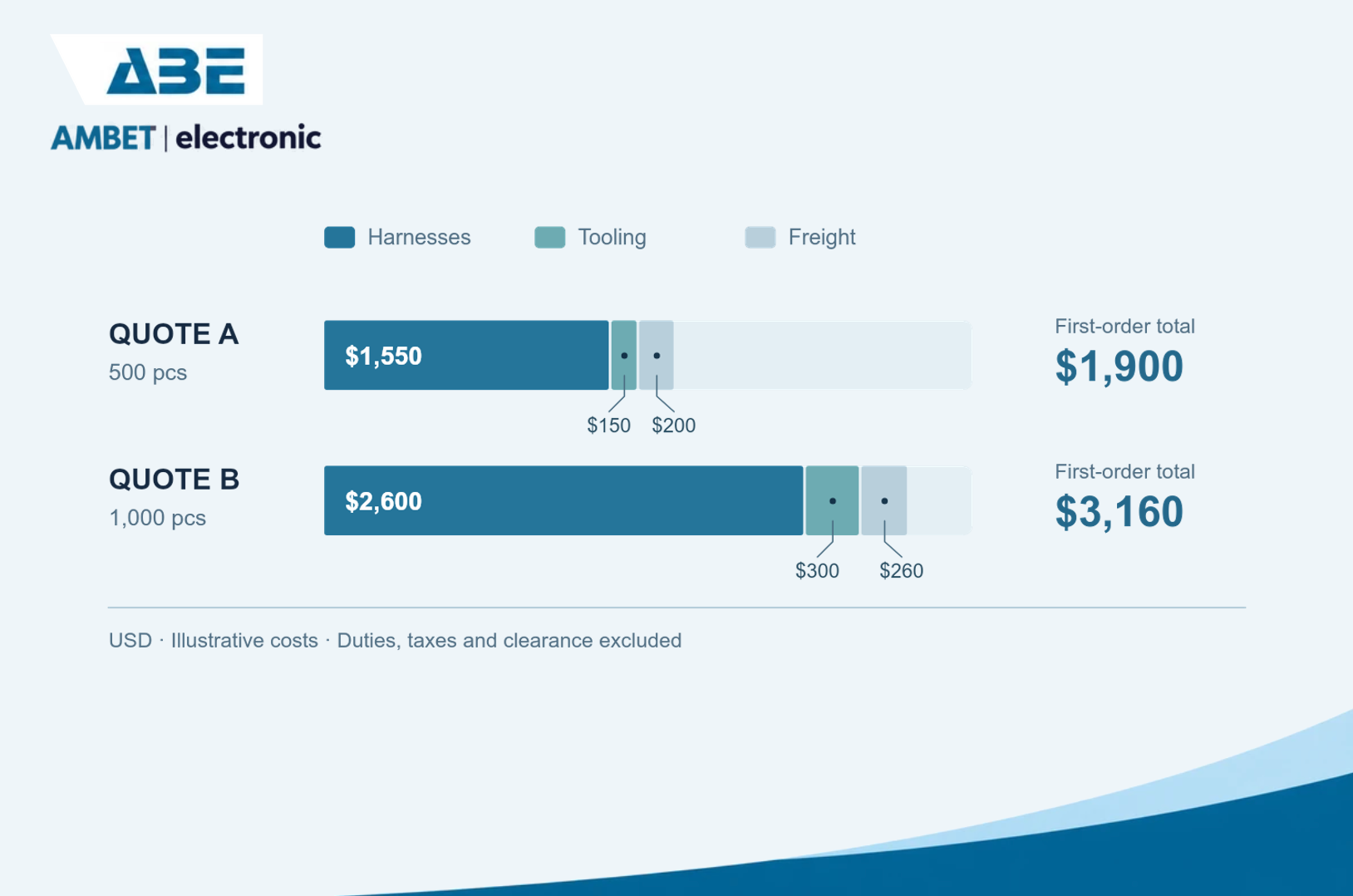
Assume an OEM needs 500 pieces for its first release. The prices are hypothetical, in USD, and cover the same approved scope, inspection, and packaging.
Freight is estimated to the same receipt point. Add duties, taxes, and separate clearance fees2 to your own comparison where applicable.
| First-order cost for one harness part number | Quote A | Quote B |
|---|---|---|
| Minimum order quantity (MOQ) | 500 pcs | 1,000 pcs |
| Quoted unit price | $3.10 | $2.60 |
| Harness subtotal | $1,550 | $2,600 |
| One-time fixtures and tooling | $150 | $300 |
| Estimated freight to the same receipt point | $200 | $260 |
| First-order total for the costs shown | $1,900 | $3,160 |
Quote B saves $0.50 per harness at its quoted quantity and requires $1,260 more on the first order. It also leaves 500 pieces beyond the immediate release.
If demand is uncertain or a revision is pending, favor the smaller commitment. If the second release is firm, ask Supplier A to price 1,000 pieces and compare both offers at that volume.
True or False:
The offer with the lower unit price always has the lower first-order cost.
False.
The spend depends on the quantity you must buy and the fees you take on. A lower piece price can still leave you paying for inventory months before you need it.
Separate the First Order from Repeat Orders
- Confirm the MOQ by part number. If you are buying three variants, ask for the order minimum for each. When a supplier offers scheduled releases, ask when you pay, who holds the stock, and who carries the cost if a revision makes it unusable.
- Request the repeat-order price. Ask which sample, fixture, or tooling charges recur, who owns dedicated tooling, and who pays for maintenance or replacement. Keep the quote’s validity date with the price break.
- Normalize the delivery costs. Ask for the Incoterms® 2020 rule3 and the precise named place or port. Use those terms to identify the freight and import-charge items you need to price separately. Confirm the payment schedule on its own line.
Can the Supplier Meet Your Actual Need-by Date?
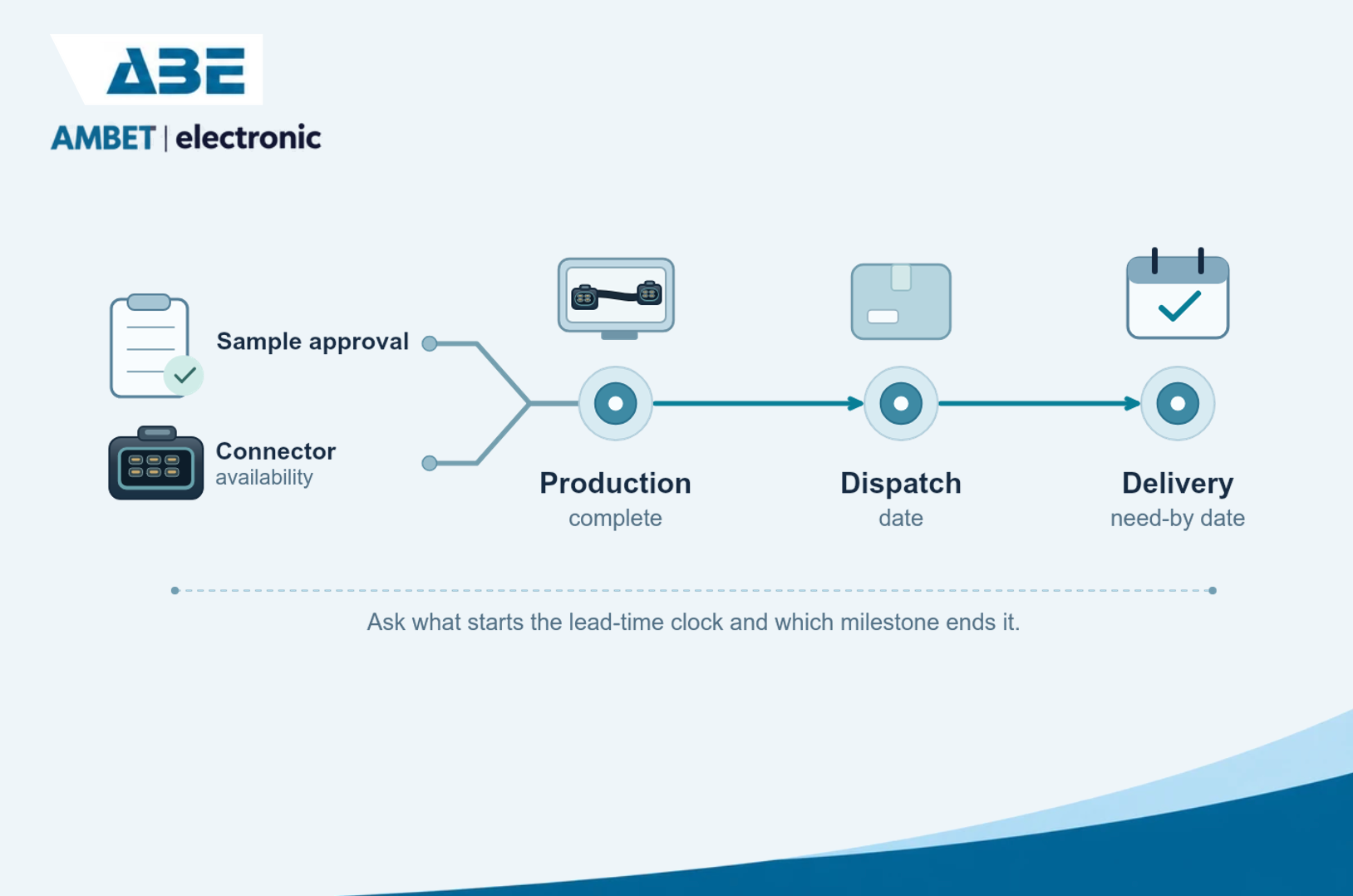
“Four weeks” can mean four weeks from sample approval to inspection completion. Your production team may need the harness on site within that same window.
Ask both suppliers for calendar dates covering sample approval, critical-component availability, production completion, dispatch, and arrival. Record what starts the quoted clock and which milestone it ends at.
Put a Date on Each Dependency
Set the receiving date first and work backward through transit, dispatch, and final inspection. For the 500-piece release, suppose you need the harnesses by June 24 and budget seven calendar days for transit plus two days for clearance. That puts the latest planned dispatch on June 15.
If a quote promises inspection by June 15, ask for the dispatch date before you commit the build slot.
Ask what has to happen before the supplier can start. It may need a deposit, a drawing release, sample sign-off, or confirmed availability of a specific connector and terminal. Ask which milestones can overlap and whether they rely on a buyer decision. If engineering cannot complete the fit check until next week, use that date in both schedules.
Take a closer look at the longest material lead time. Ask whether the approved part is physically in stock, allocated to your order, or due from a component supplier.
A projected replenishment date can support a provisional schedule. When the part is still unallocated, ask for a dated recovery option before you schedule your own build around it.
Sometimes a split shipment is enough to protect a first build. Ask how many approved units the supplier can dispatch first, when the balance will follow, and what extra freight you will pay. Agree on who can accept the split and make sure the earlier shipment still goes through the same release checks.
What Should You Verify Before You Award the Order?
A persuasive sample and a clean quote leave an important question open. What evidence will you receive when production units are ready to ship?
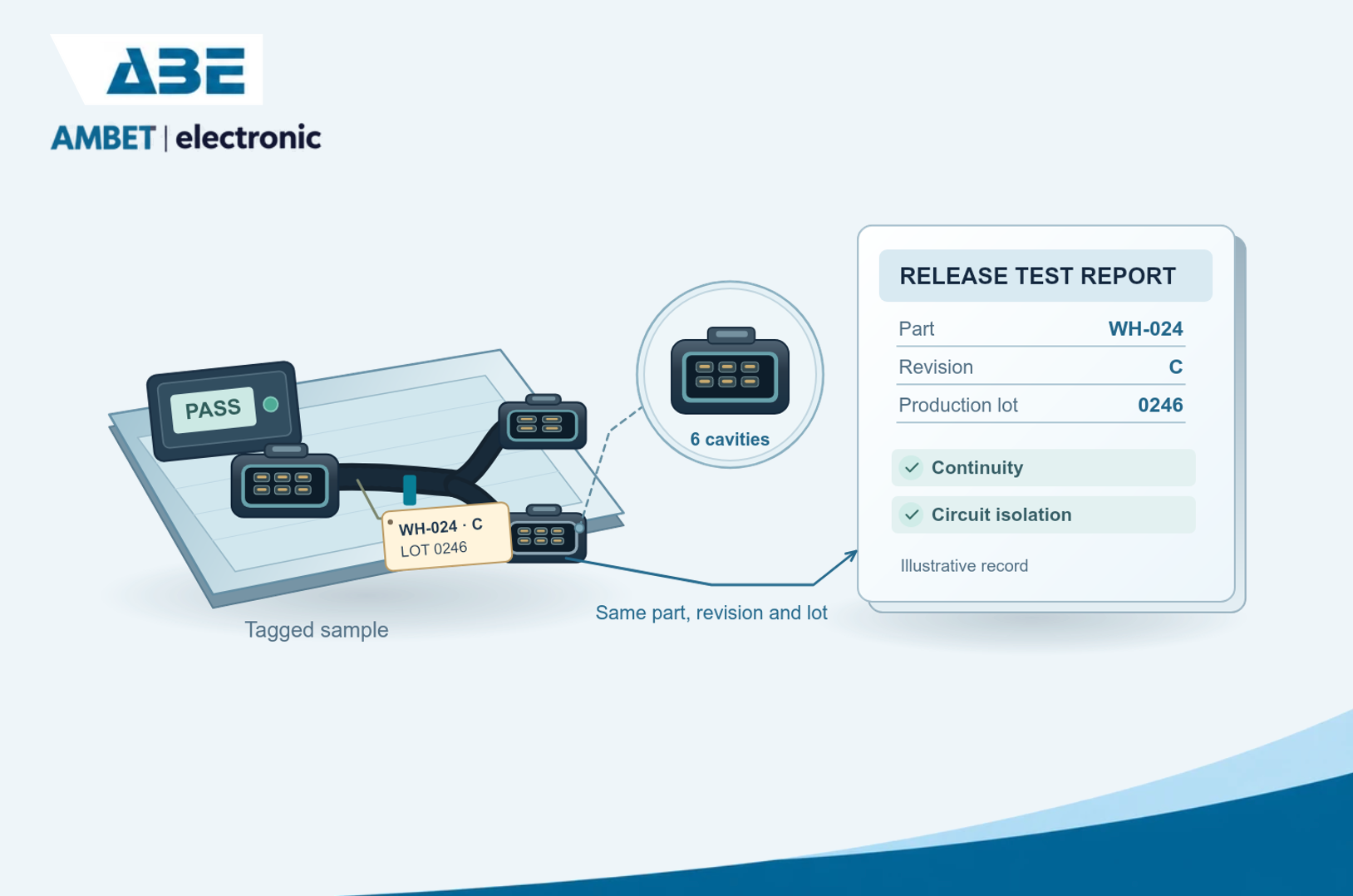
Match the quote and purchase order to the approved revision. Have engineering sign off on the sample and any deviations, and have quality agree on the inspection scope and release records before volume production.
Use One Approval Record for Procurement, Engineering, and Quality
Give each reviewer something specific to sign off on:
- Procurement reconciles the purchase order line with the written quote. It records the part number and revision, ordered quantity, separate fees, and agreed delivery point and date.
- Engineering approves the fit and function of the sample and confirms the approved connector, terminals, wire, and pinout. If a late revision changes a cavity assignment, ask for a revised sample or documented verification before you release the build.
- Quality clears the production acceptance plan. It agrees on the wiring checks performed on each unit, the dimensional or crimp checks performed on a sample when applicable, and the lot records the supplier should provide.
Ask for an example of the release report4 before you award the order. At receiving, you need to match the results to your part number, revision, and production lot.
If the quote says “100% tested,” request the specific electrical checks and agree on how results will be reported.
Record the Conditions of the Award
For the 500-piece example, select Quote A if its build, dated milestones, and inspection scope meet your requirements. Keep Quote B in contention for a confirmed 1,000-piece release.
If the offer you prefer still depends on an unapproved connector or unallocated critical part, assign an owner to resolve it and hold the volume release until that owner confirms the evidence in writing.
For an AMBET quote, share your drawing or reference sample, BOM and pinout if available, quantity by part number, delivery destination, and need-by date. If you need an alternate component or a separate test report, list that as its own quote item so you can compare the offers on the same basis.
Conclusion
Compare the same revision and delivery point, price the quantity you must buy, and release the order when the material, schedule, and inspection evidence support it.
Explains how an approved technical baseline and change control keep product information consistent. ↩
Lists the costs that can enter a landed-cost estimate, including freight, insurance, duties, taxes, and fees. ↩
Explains how the named place and chosen Incoterms® rule affect delivery, risk transfer, and cost responsibilities. ↩
Shows how one ground-support cable harness procurement clause ties electrical test records to the harness ID and revision. ↩