Wire Harness Trade Shows: A Buyer’s Guide

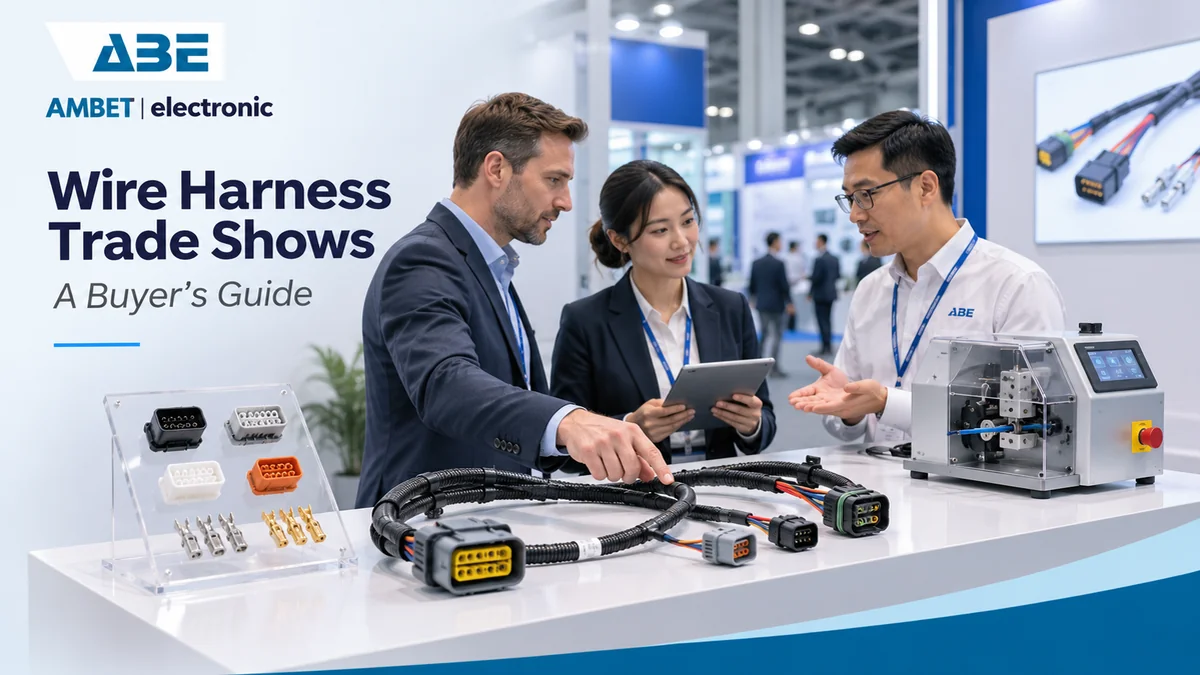
A large trade show can introduce you to hundreds of suppliers. But finding the right manufacturer for your wiring harness project requires more than collecting catalogs and business cards.
The most useful wire harness trade shows bring together assembly manufacturers, component suppliers, and wire processing specialists. Choose events according to your sourcing goals, check their exhibitor directories, and arrange technical discussions before visiting.
For OEM customers and aftermarket buyers, I recommend starting with the product you need rather than the size of the exhibition. This guide covers relevant 2027 trade shows and how to turn exhibition contacts into qualified manufacturing partners.
Which Wire Harness Trade Show Fits Your Sourcing Goal?
Some exhibitions focus on wire processing equipment. Others are more useful for sourcing connectors, custom cable assemblies, or finished automotive replacement parts.
Choose a trade show based on whether you need finished wire harnesses, electrical components, or manufacturing technology. Compare the product categories, confirmed exhibitors, technical programs, and regional market focus before committing to a visit.
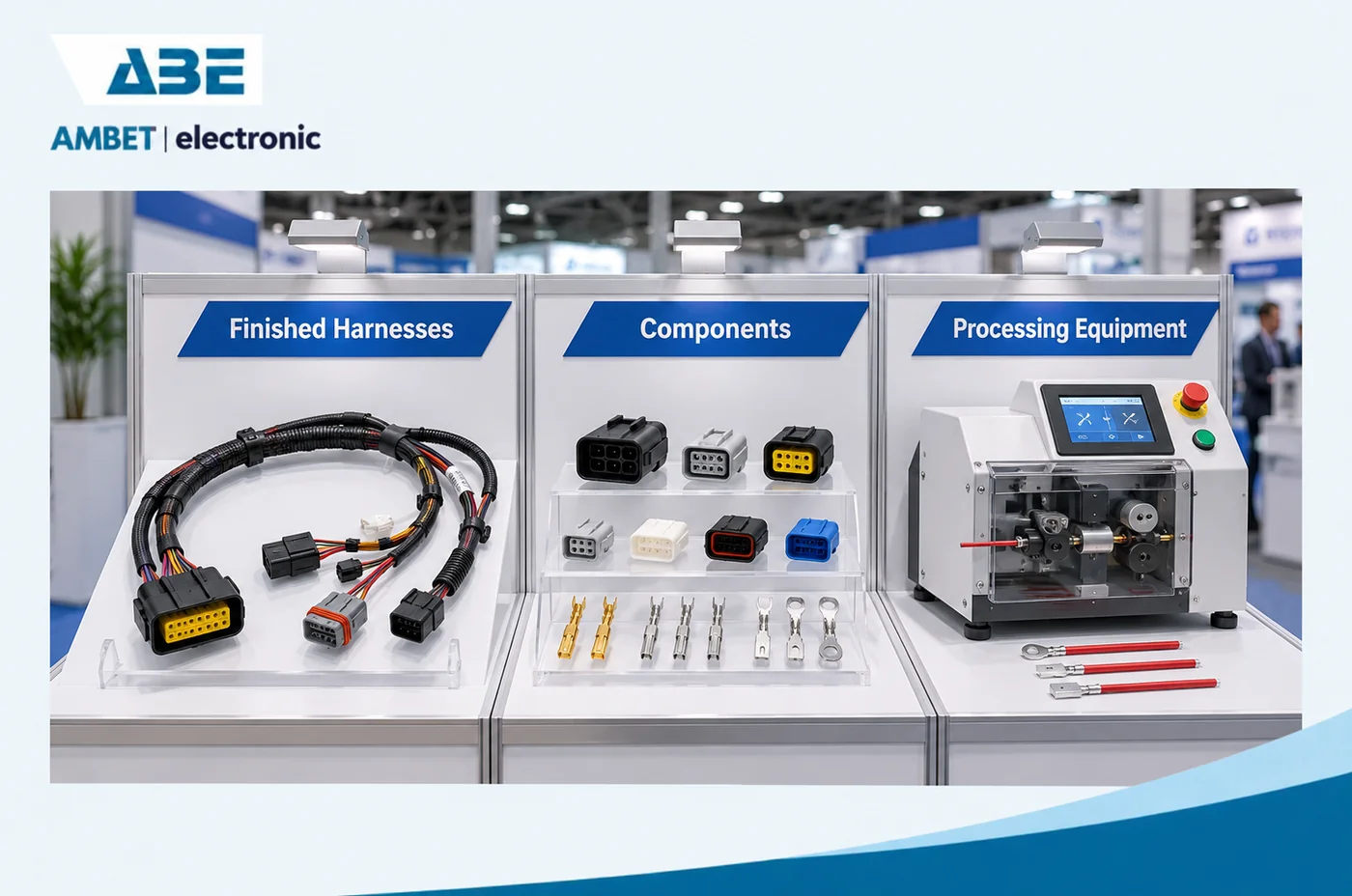
What Types of Trade Shows Are Relevant to Wire Harness Buyers?
There is no single type of exhibition that covers every wiring harness purchasing requirement. The industry includes manufacturers of finished assemblies, producers of individual components, and suppliers of the equipment used to process and assemble wires.
Understanding these differences can save a buyer considerable time.
| Exhibition type | What you may find | Who benefits most |
|---|---|---|
| Dedicated wire processing exhibitions | Crimping tools, wire processing machines, testing equipment, assembly technology | Manufacturing engineers and quality teams |
| Electronics and component exhibitions | Connectors, terminals, cables, sensors, and assembly suppliers | Industrial OEMs and engineering procurement teams |
| Electronics manufacturing exhibitions | Automated processing, tooling, inspection, and production systems | Manufacturers evaluating production technology |
| Automotive aftermarket exhibitions | Replacement parts, electrical accessories, distributors, and potential assembly suppliers | Importers, wholesalers, distributors, and private-label buyers |
For an industrial OEM developing a custom control harness, a broad electronics exhibition may help identify connector sources and potential assembly partners. For an automotive distributor looking for replacement pigtails or trailer wiring harnesses, an aftermarket exhibition may be more closely aligned with its purchasing needs.
A connector manufacturer's booth is valuable when a project requires technical information about a particular connector. However, it may not be the right place to obtain a quotation for a finished multi-branch harness.
Similarly, an automatic crimping machine demonstration can provide useful information about production technology without establishing the quality of a particular harness supplier's manufacturing process.
Which Wire Harness Trade Shows Should Buyers Consider in 2027?
The following five exhibitions cover different parts of the wire harness and automotive electrical supply chain.
| Trade show | 2027 dates | Location | Main sourcing focus |
|---|---|---|---|
| Electrical Wire Processing Technology Expo (EWPTE)1 | May 4–6 | Baird Center, Milwaukee, USA | Wire processing, crimping, testing, and manufacturing technology |
| electronica China2 | April 14–16 | Shanghai New International Expo Centre, China | Electronic components, connectors, and potential wire harness suppliers |
| productronica3 | November 16–19 | Trade Fair Center Messe München, Munich, Germany | Electronics manufacturing, cable processing, and production equipment |
| AAPEX4 | November 2–4 | Las Vegas, USA | Automotive aftermarket sourcing and distribution |
| Automechanika Dubai5 | November 9–11 | Dubai Exhibition Centre, Expo City, UAE | Automotive aftermarket sourcing, particularly for Middle Eastern and African markets |
These are examples, not a ranking. Check current organizer information for changes to dates, venues, registration, exhibit opening hours, and conference access. Published event dates do not necessarily mean that the exhibition floor is open on every program day. An event's overall product scope also does not guarantee that a particular harness supplier will attend.
What Can You Expect From Each Exhibition?
Electrical Wire Processing Technology Expo (EWPTE)
EWPTE is particularly relevant to the production side of the wire harness industry. Technical buyers can investigate wire preparation, crimping, tooling, assembly methods, electrical testing, and workmanship requirements.
For an OEM quality engineer, the event can also be useful for understanding which manufacturing methods and inspection technologies to discuss with an assembly supplier. Check the final technical program before selecting sessions.
electronica China
This Shanghai exhibition covers a wide range of electronic products and technologies. Buyers can investigate connectors, wiring assemblies, and related components, particularly for automotive electronics and industrial control applications.
Its broad scope means that careful exhibitor filtering is important. A company listed under connectors or wiring harnesses may manufacture individual components rather than complete customer-specific assemblies.
productronica
The Munich exhibition focuses on electronics manufacturing technology. Its Cables, Coils & Hybrids area offers a useful starting point for investigating cable processing and associated production solutions.
It is especially relevant when a purchasing or engineering team wants to understand automation, testing, tooling, or manufacturing process improvements. Buyers seeking finished replacement parts should verify that the exhibitor mix matches their needs before traveling.
AAPEX
AAPEX focuses on the automotive aftermarket. Importers, distributors, and private-label buyers can use it to investigate replacement-part categories, electrical accessories, packaging expectations, and possible supply partners.
For a wiring harness sourcing project, look for relevant exhibitors in lighting, electrical products, and international sourcing rather than assuming that every automotive parts supplier produces wiring assemblies.
Automechanika Dubai
Automechanika Dubai brings together businesses serving the automotive aftermarket, including markets across the Middle East and Africa. It can be relevant to distributors developing replacement-part ranges for regional vehicle applications.
A buyer evaluating pigtail connectors, lighting harnesses, or other electrical replacement products should confirm the relevant exhibitors, vehicle coverage, and manufacturing or distribution role before arranging meetings.
Which Show Is Suitable for Your Particular Business?
Consider an importer developing a range of replacement automotive connectors. Its main concerns may be vehicle compatibility, repeat availability, packaging, and MOQ per SKU. An aftermarket exhibition is a logical place to identify candidates.
An industrial equipment manufacturer may have a different objective: locating an assembly partner that can work from engineering drawings and produce several cable configurations. A component and electronics exhibition may offer useful contacts.
A manufacturer reviewing a bottleneck in terminal crimping may instead benefit from a specialized wire processing exhibition.
The decision should follow the project. A trade show is useful when it gives you access to the people, products, and technical information needed for the next purchasing decision.
How Can You Find the Right Exhibitors and Set Up Meetings?
A trade show directory may contain hundreds of companies in related categories. The challenge is identifying which ones can actually support your project.
Use the organizer's exhibitor directory to filter by product, application, and exhibition edition. Verify each company's manufacturing role, shortlist suitable candidates, and arrange meetings around specific technical or purchasing questions.
How Do You Search Exhibitor Directories Effectively?
Start with several industry terms rather than relying on a single search phrase. Different companies may describe similar assemblies using different terminology.
Useful search terms include:
- Wire harness manufacturer
- Wiring harness assembly
- Automotive wiring harness
- Cable assembly manufacturer
- Wiring loom
- Automotive pigtail connector
- Trailer wiring harness
- Industrial cable assembly
Then combine the relevant product category with your intended application, such as automotive electronics, industrial control, commercial vehicles, or equipment manufacturing.
The preliminary electronica China exhibitor catalogue6 illustrates this approach. It provides filters for product categories and application areas, along with hall information. Its 2027 list is preliminary, so confirm the exhibitor's current participation and booth assignment before visiting.
The productronica exhibitor directory7 still linked to the 2025 edition when reviewed on November 28, 2026. A previous exhibitor list is useful for identifying potential companies and learning the organizer's categories. It is not confirmation that those companies will exhibit in 2027.
The same caution applies to any exhibition website that has not yet published its new-edition directory.
How Can You Distinguish a Manufacturer From Other Exhibitors?
Not all businesses selling wiring products perform the same work. Before requesting a meeting, check whether the exhibitor is a finished assembly manufacturer, component producer, distributor, or processing equipment supplier.
| Exhibitor role | Useful first question |
|---|---|
| Custom wire harness manufacturer | Can you build a finished assembly from a customer's drawing, BOM, pinout, or reference sample? |
| Connector or terminal manufacturer | Which contact systems, wire ranges, tooling, and technical specifications apply to your products? |
| Wire and cable manufacturer | Which conductor constructions, insulation materials, and ratings are available? |
| Distributor or trading company | Which products do you stock, and who manufactures the proposed assemblies? |
| Equipment or tooling supplier | Which wire and terminal combinations can the proposed equipment process? |
A distributor can be a suitable source of components or existing replacement parts. A finished harness project, however, also needs clear responsibility for assembly, inspection, engineering changes, and production quality.
When screening an assembly supplier, identify the actual production site and which operations it performs there. Subcontracting is not automatically a problem, but the responsibility for the finished product and the controls applied to outsourced processes should be clear.
What Should Buyers Prepare Before a Trade Show?
A productive supplier conversation starts with enough information to make the discussion specific. A photograph may help identify a product, but it rarely establishes the entire manufacturing requirement.
For custom wire harness sourcing, prepare the following details where available:
- Application and intended operating environment.
- Finished harness part numbers, drawings, BOM, and pinout.
- Photographs or an identified reference sample.
- Required connector brands, wire specifications, and approved alternatives.
- Prototype quantities and expected production quantities per part number.
- Required inspection, labeling, packaging, and delivery conditions.
For aftermarket products, include the relevant vehicle models, production ranges, original part references, and any known fitment differences. For industrial OEM projects, identify the equipment interfaces, branch dimensions, and installation constraints.
Confidential drawings should be shared only through an appropriate authorized channel. A general, non-confidential summary is usually enough to establish whether a booth meeting is worthwhile.
How Should You Organize Your Exhibition Visit?
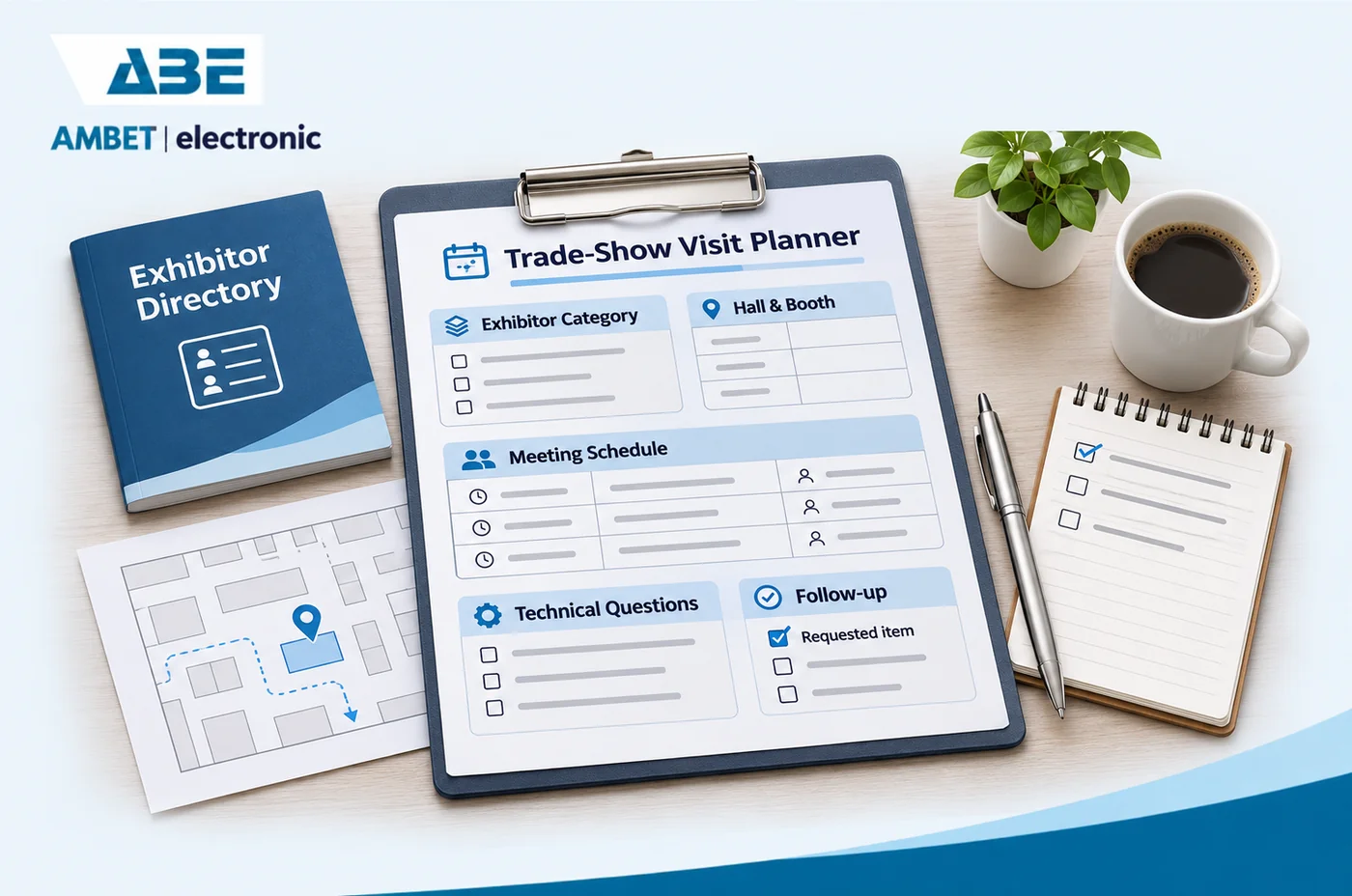
Create a visit sheet with a purpose for each meeting. It can be a simple spreadsheet shared between purchasing, engineering, and quality team members.
| Visit sheet field | What to record |
|---|---|
| Exhibition details | Event name, edition, organizer listing, and last verification date |
| Company and role | Manufacturer, distributor, component supplier, or equipment specialist |
| Location | Hall and confirmed booth number |
| Meeting | Contact person, agreed time, and discussion topic |
| Technical question | One or two specific issues to resolve |
| Evidence request | Product data, sample, drawing review, or relevant inspection example |
| Follow-up | Quotation, technical clarification, sample plan, or site evaluation |
Prioritize meetings that are directly related to your purchasing decision. Reserve additional time for promising suppliers, unexpected technical questions, and movement between halls.
If a company is not yet confirmed for the current edition, contact it directly rather than assigning an unverified booth number. If it will not attend, a separate technical meeting or factory visit may still be worthwhile.
True or False:
A company listed in last year's exhibition directory is confirmed to attend the next edition.
False.
A previous listing identifies a potential contact, not a confirmed future exhibitor. Verify the current edition, participation, and booth details before relying on them in your visit plan.
What Evidence Should You Bring Back From the Show?
A neatly assembled display harness can attract attention, but it cannot prove that the manufacturer will consistently produce your specific configuration at the required volume.
Use trade-show meetings to review relevant products, technical capabilities, quality controls, and commercial terms. After the event, verify the information through a drawing-based RFQ, sample evaluation, and any required supplier qualification process.
What Questions Should You Ask a Wire Harness Manufacturer?
A short exhibition meeting cannot replace a complete factory evaluation. It can, however, help determine which manufacturers deserve further consideration.
From the manufacturing side, questions about a specific assembly are more useful than general requests for a catalog or a price list. They help establish whether the manufacturer understands the customer's product and can propose a practical production approach.
| Evaluation area | Questions to discuss |
|---|---|
| Product experience | Have you manufactured assemblies with similar applications, connectors, or branch layouts? |
| Technical support | Can you review customer drawings and identify missing or conflicting specifications? |
| Component sourcing | Can you obtain the specified connectors, terminals, and wires? What happens if a part becomes unavailable? |
| Manufacturing scope | Which operations take place at the intended production site? Which are outsourced? |
| Quality control | What crimping, dimensional, and electrical checks would apply to this harness? |
| Customization | Can you support samples, design revisions, and customer-specific packaging? |
| Commercial terms | What quantities, tooling requirements, and lead-time assumptions should be discussed? |
| Repeat supply | How are approved revisions, material changes, and production lots controlled? |
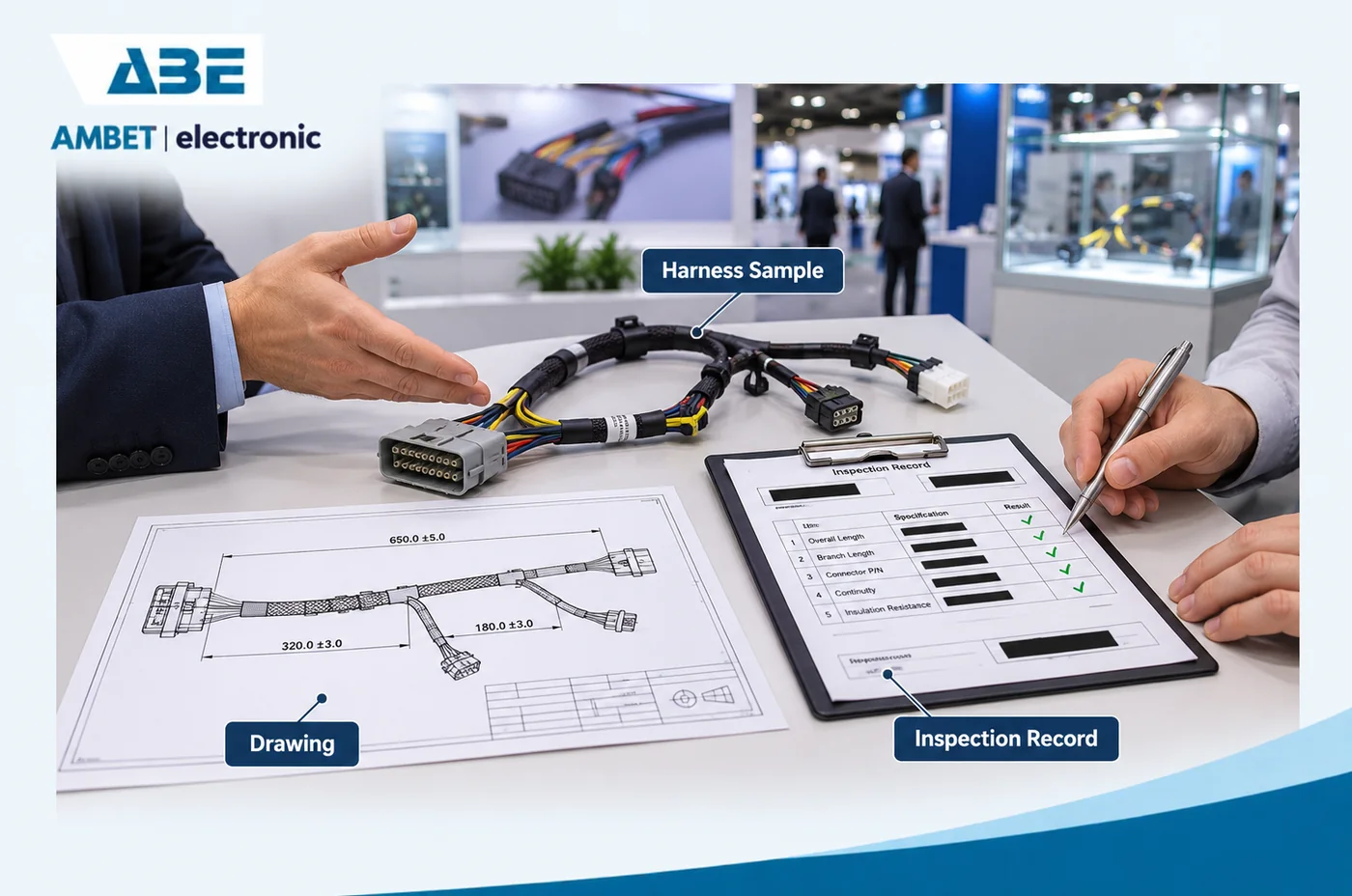
Ask for relevant evidence rather than relying on broad claims. A redacted inspection record or a production example can help explain the proposed quality process without disclosing another customer's confidential information.
For private-label and aftermarket programs, ask about fitment verification, label artwork, packaging, SKU identification, and repeat-order requirements. For industrial OEMs, focus on the technical package, production readiness, and the evidence required for sample approval.
What Should You Look for in a Display Sample or Equipment Demonstration?
A harness sample can reveal visible workmanship, branch arrangement, connector assembly, protective coverings, and identification details. It is a useful starting point for technical discussion.
However, visible appearance does not establish the crimp height, mechanical retention, electrical performance, or environmental suitability of the finished assembly. Ask which specifications the displayed product follows and whether the same production site would manufacture your part.
A machine demonstration requires a similar approach. The equipment may be processing a carefully selected wire and terminal combination. Confirm which materials, tooling, settings, and checks were used before drawing conclusions about its suitability for another application.
If your project requires a particular terminal or wire construction, identify which tests would need to be repeated with representative production materials. With permission, record photographs or technical references and identify their source.
True or False:
A relevant-looking wire harness sample at an exhibition is enough to qualify its manufacturer.
False.
A display sample can support an initial assessment. Supplier qualification still depends on the intended manufacturing site, approved product specifications, applicable inspection evidence, and the customer's acceptance requirements.
How Can You Compare Suppliers After the Exhibition?
Record your findings while the discussions are still fresh. Separate what you observed at the booth from what the exhibitor reported and what has been verified independently.
For example, suppose a distributor meets three potential suppliers of a replacement lighting harness. One has a relevant sample but no confirmed pinout. Another can discuss the drawing but has not confirmed component availability. The third quotes a low price but has not explained its inspection scope.
None of these candidates should automatically be selected or rejected based on a single meeting. Each needs a specific follow-up action.
| Meeting outcome | Next action |
|---|---|
| Relevant product on display | Request a drawing-based review and applicable sample information. |
| Unconfirmed connector availability | Ask for part-specific sourcing information and realistic timing. |
| Attractive preliminary price | Obtain a quotation against the same technical and commercial scope. |
| Unclear production site | Confirm the responsible manufacturer and relevant production processes. |
| Promising custom assembly capability | Arrange technical clarification and define sample approval requirements. |
This is an illustrative example, not a report of actual AMBET exhibition meetings.
How Do You Turn a Trade Show Contact Into a Qualified Supplier?
The exhibition is the beginning of supplier evaluation, not the end. A practical follow-up process may include:
- Confirm the supplier's product scope and intended manufacturing location.
- Submit a common RFQ package so quotations cover the same assembly, materials, quantities, and inspection requirements.
- Resolve technical questions and review any proposed alternatives before the sample is built.
- Evaluate the quotation, component availability, tooling, sample costs, and delivery assumptions.
- Approve the production-intent sample against agreed dimensions, circuit mapping, fitment, and other applicable criteria.
- Complete any required supplier audit, documentation review, or production approval before placing repeat orders.
The exact qualification process depends on the application and the customer's requirements. A simple aftermarket accessory may need different evidence from a safety-related OEM assembly.
At AMBET, you can start a custom wire harness or cable assembly inquiry with your available drawing, BOM, pinout, or identified reference sample. Include the application and expected quantity per part number so the project can be reviewed against your actual requirements. You do not need to wait for a trade show to begin that discussion.
Conclusion
Choose trade shows around your sourcing goals. Use confirmed exhibitor information, focused technical meetings, and follow-up sample evaluation to identify suitable wire harness manufacturing partners.
The EWPTE organizer lists May 4–6, 2027, at the Baird Center in Milwaukee and outlines technical topics for its conference and professional development program. Confirm individual exhibition and session schedules before travel. ↩
The electronica China organizer's November 17, 2026 announcement confirms April 14–16, 2027, at the Shanghai New International Expo Centre. ↩
The productronica organizer lists November 16–19, 2027, at Trade Fair Center Messe München and identifies Cables, Coils & Hybrids among its manufacturing topics. ↩
The AAPEX organizer confirms November 2–4, 2027, in Las Vegas and describes the automotive aftermarket product categories. Check the current organizer information for the final venue and program details. ↩
The Automechanika Dubai organizer lists November 9–11, 2027, at Dubai Exhibition Centre, Expo City, and describes the exhibition's automotive aftermarket focus. ↩
The preliminary electronica China 2027 catalogue provides filters for product categories, application areas, and halls. Exhibitor participation and assignments may change. ↩
The productronica directory landing page linked to its 2025 exhibitor directory as of November 28, 2026. A previous edition is not confirmation of future participation. ↩