Why Does Wire Harness Traceability Matter?

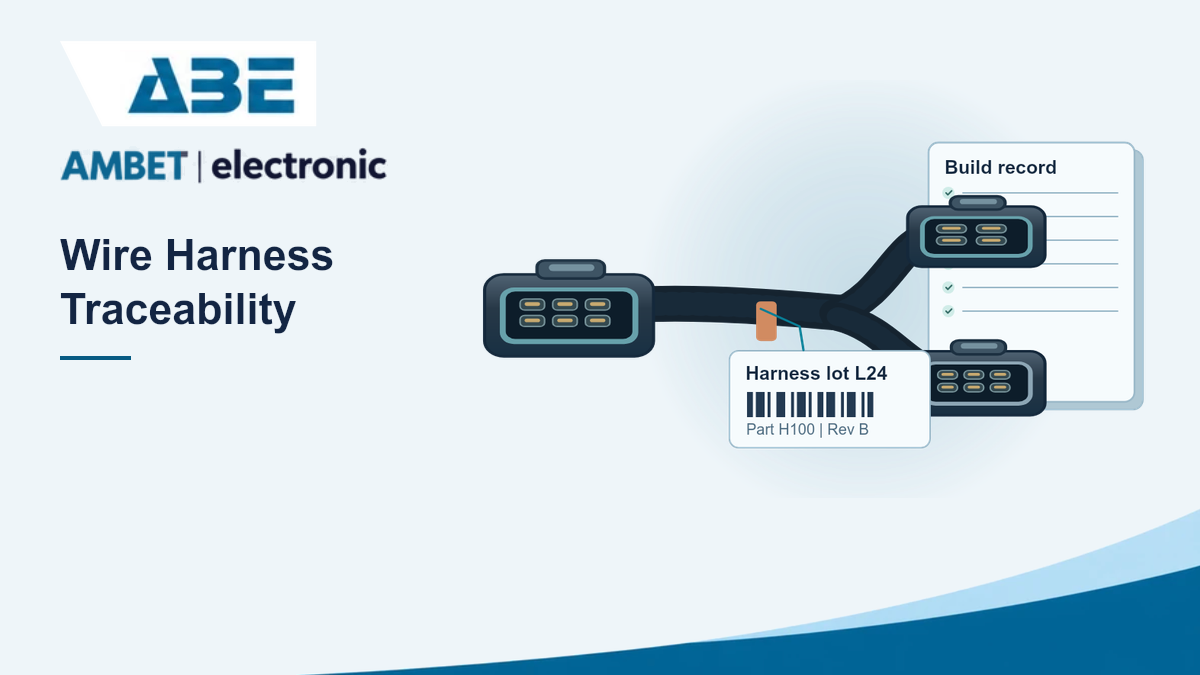
A wire harness may pass inspection and still develop a problem in service. Without traceability, one returned assembly can put several production batches under suspicion.
Wire harness traceability connects a finished assembly or production batch to its materials, approved specifications, manufacturing records, inspection results, and shipments. It helps manufacturers investigate defects, identify potentially affected products, and maintain consistency across repeat orders.
From a manufacturer's perspective, a label is only the starting point. Its real value becomes clear when a customer reports a problem months after delivery and the relevant production records need to be retrieved.
What Should a Wire Harness Lot Be Traceable To?
A part number tells you which product you ordered. But can it tell you which materials were used, when the harness was produced, and how it was inspected?
A wire harness lot should be linked to its part number, approved drawing revision, production records, inspection results, and shipment information. Material batch details and individual test records should also be traceable where the project requires them.
What Is Wire Harness Traceability?
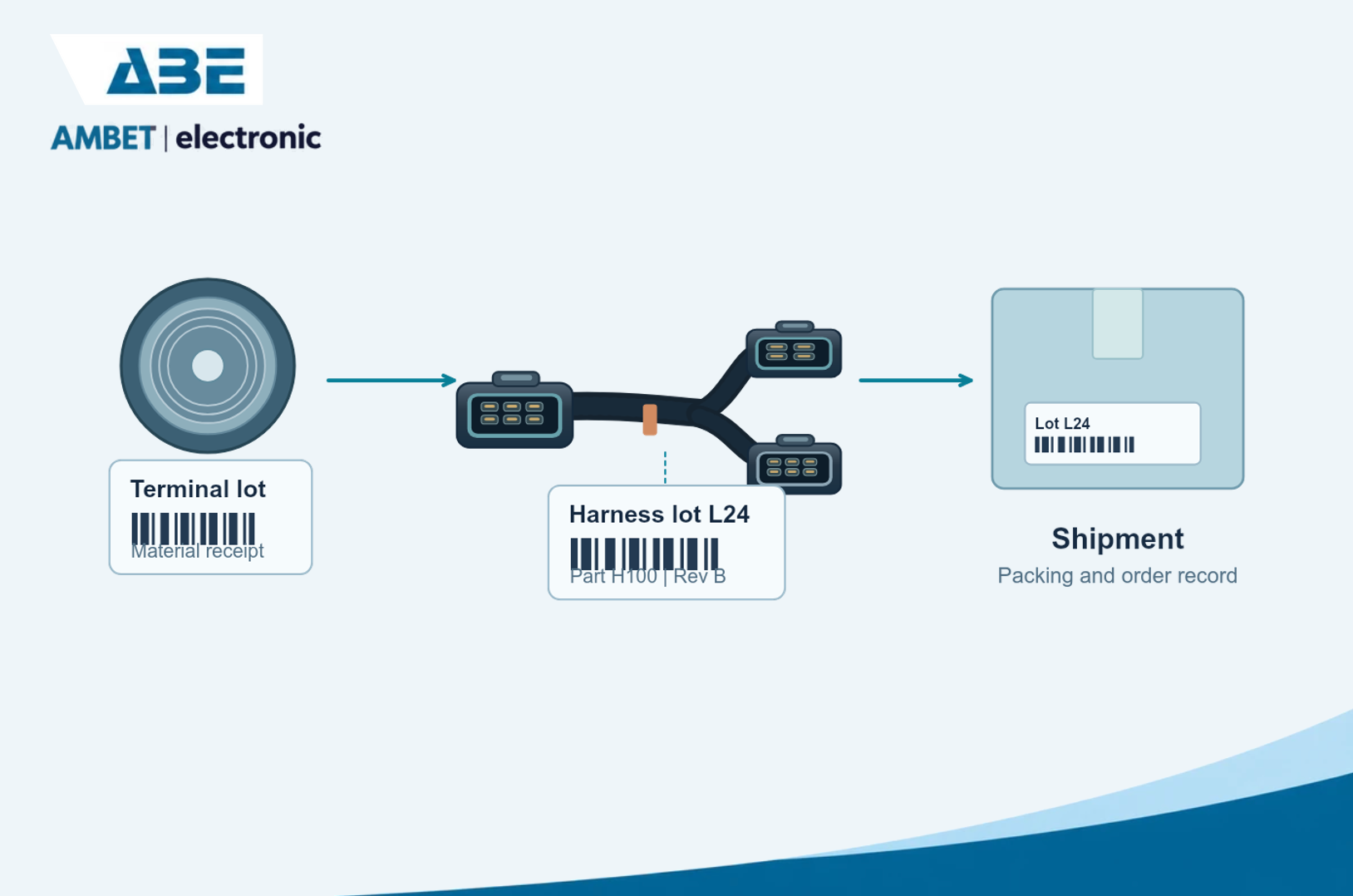
Wire harness traceability is the ability to follow the history of an assembly through identifiable records. It connects what the manufacturer physically produces with the information recorded during purchasing, production, inspection, and delivery.
Consider a custom industrial wire harness with three connectors and several wire branches. The customer may order the same part number several times throughout the year. Each order may use different material batches, even though the finished assemblies follow the same approved drawing.
If a problem appears later, the part number alone may not identify which production run is involved. A batch identifier can help the manufacturer locate the relevant production and inspection records.
Four identifiers serve different purposes in a traceability system:
| Term | What It Identifies |
|---|---|
| Part number | A defined product or assembly configuration |
| Drawing revision | The approved version of the product design |
| Lot or batch number | A defined group of manufactured assemblies |
| Serial number | An individual assembly, where serialization is required |
A barcode or QR code can make these identifiers easier to capture. However, the code is only useful for traceability if it connects to accurate records that the manufacturer can retrieve.
What Materials and Production Records Should Be Linked?
The material records should cover the components that affect the electrical or mechanical performance of the harness, at the level of detail agreed with the customer. Depending on the project, these may include wires, connectors, terminals, seals, and protective materials.
For example, a terminal reel may be used across several production orders. If the manufacturer needs to investigate that terminal lot later, it must be able to identify which orders received the material at the agreed level of traceability.
The GS1 Global Traceability Standard1 provides a general framework for linking identifiable items to events such as receiving, packing, and shipping. Wire harness manufacturers can apply the same principle when designing their own record systems.
| Record Type | Information Worth Linking | Why It Matters |
|---|---|---|
| Incoming materials | Supplier, part number, material lot, receipt date | Helps identify potentially affected components |
| Engineering documents | Drawing revision, BOM, approved changes | Identifies the specification used for production |
| Production records | Work order, finished lot, material usage where required | Connects the assembly to its manufacturing history |
| Quality records | Inspection results, test plan, release status | Shows which checks were performed |
| Rework records | Affected lot, repair details, reinspection results | Helps preserve the history of corrected products |
| Shipping records | Carton identifier, lot, quantity, order and destination | Helps locate finished assemblies after delivery |
The required level of detail varies. For a customer-specified connector, the buyer may want the exact component batch recorded. For another project, tracking the finished harness by production batch and linking the relevant inspection records may be sufficient.
Buyers and manufacturers should agree on the scope before production, since record-keeping practices can vary between suppliers.
What Is the Difference Between Lot-Level and Unit-Level Traceability?
Not every wire harness needs an individual serial number.
Lot-level traceability identifies a defined group of assemblies. Unit-level traceability identifies each assembly separately. A serial number can also be linked to individual electrical test results when the system captures and stores those results against the correct identifier.
| Comparison | Lot-Level Traceability | Unit-Level Traceability |
|---|---|---|
| Identification | One identifier for a defined batch | Unique identifier for each assembly |
| Investigation scope | Normally starts with the affected batch | Can identify individual units and their recorded history |
| Inspection records | Batch or other agreed inspection records | Individual records where specified and captured |
| System requirements | Batch identification and record links | Individual identification and reliable data capture |
| Suitable approach | Projects where batch-level evidence meets requirements | Projects requiring finer identification or individual test evidence |
The manufacturer's definition of a production lot is equally important. Does it cover a work order, a particular production period, or a group of assemblies made under specified conditions? How does the factory record a material change during the run?
These questions matter because a large batch may contain products made with different input materials. The record system needs to preserve the distinctions required by the customer.
True or False:
Every traceable wire harness must have its own serial number and individual test report.
False.
Lot-level traceability can be suitable when it meets the agreed requirements. Unit-level identification and individual test records are separate requirements that need to be defined and supported by the manufacturer's system.
How Does Traceability Limit the Scope of a Quality Hold?
When a buyer discovers a defective harness, the immediate question is often not just what went wrong, but how many other products may be affected.
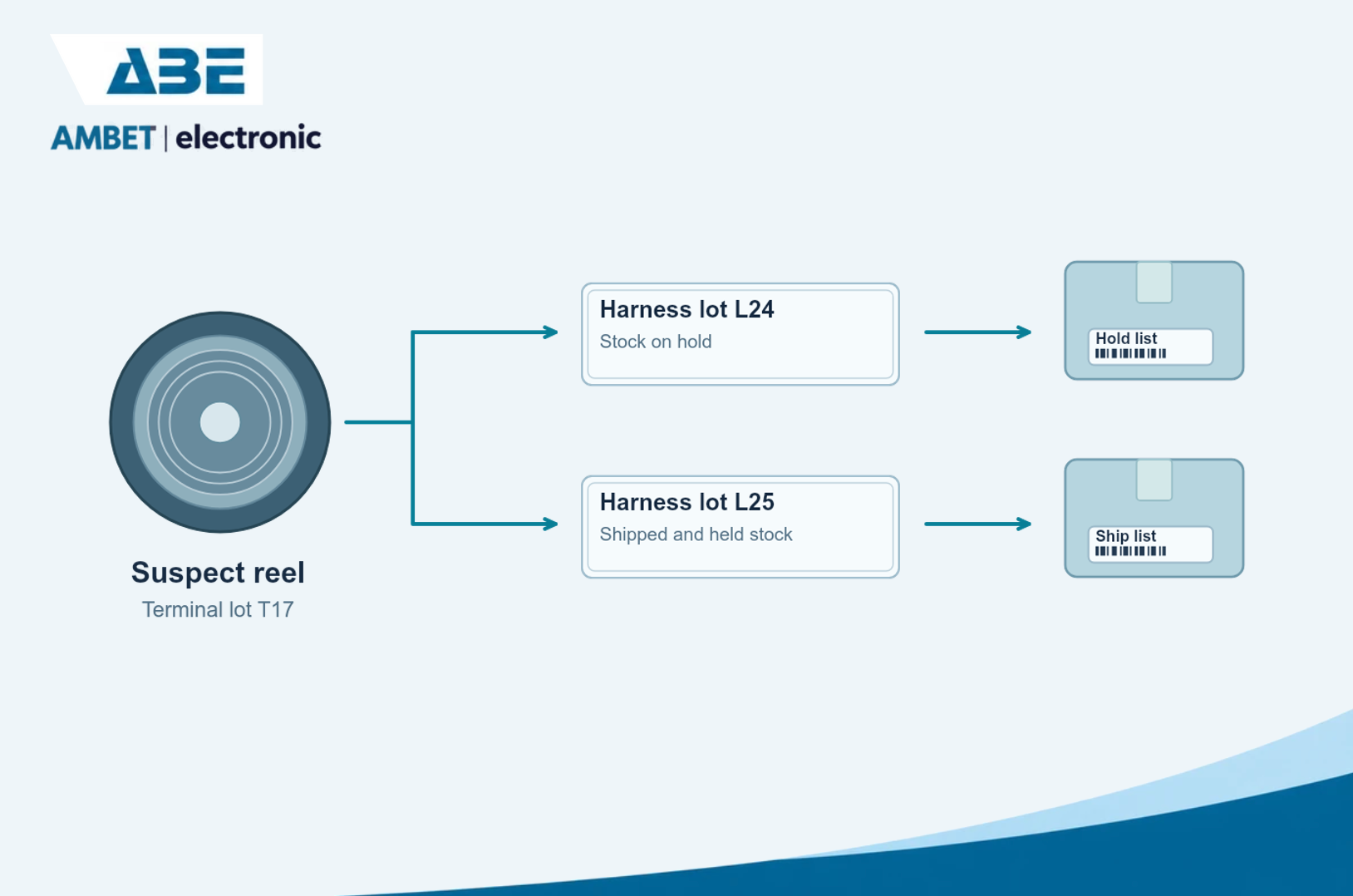
Traceability helps quality teams identify potentially affected wire harnesses by linking a reported defect to material lots, production history, inspection records, and shipment destinations. Reliable records can narrow containment and support root cause investigation.
Why Does Traceability Matter for Quality Management?
A quality problem can affect more than the defective assembly itself. Buyers may need to stop using stock, delay installation, inspect additional products, or inform downstream customers.
For an aftermarket distributor, a suspect batch may already be spread across several warehouses. For an industrial OEM, the harnesses may already be installed in machines awaiting shipment.
Without reliable records, it may be difficult to distinguish potentially affected assemblies from unrelated production batches. The buyer may need to place a broader group of products on hold until the risk is understood.
Traceability also helps with problems that are not immediately visible. For example, a complaint involving intermittent electrical contact may require the manufacturer to review the terminal material, crimping process, and electrical inspection records.
As a representative of a wire harness manufacturer, I see traceability as a tool for answering specific quality questions, not a guarantee that defects will never occur. It does not replace incoming inspection, crimp quality control, or electrical testing. It helps the quality team investigate what happened when those controls do not prevent or detect a problem.
How Does Backward and Forward Traceability Work?
There are two directions in a traceability investigation.
Backward traceability starts with a finished product and follows its records back through production and relevant materials. Forward traceability starts with a suspect material lot or production condition and follows the potentially affected products through inventory and shipment records.
| Trace Direction | Starting Point | Questions to Answer |
|---|---|---|
| Backward | Returned harness or finished lot | Which drawing, work order, materials and inspection records apply? |
| Forward | Suspect component lot or process | Which harness lots used it, and where are those products now? |
Consider an illustrative example. A customer reports an intermittent connection at a crimped terminal. The manufacturer identifies the returned assembly as belonging to Lot H001. Its production records link it to terminal lot T01, which was also used in Lot H002.
The next step is to determine whether those links are relevant to the reported failure. A common material lot is a reason to investigate, but it is not proof that the terminals caused the defect. Inspection and failure analysis are still needed.
How Can Traceability Reduce Unnecessary Stock Holds?
Suppose the records show the following production and inventory information for the example above.
| Finished Harness Lot | Terminal Lot | Finished Quantity | Shipped | In Stock |
|---|---|---|---|---|
| H001 | T01 | 500 | 400 | 100 |
| H002 | T01 | 300 | 200 | 100 |
| H003 | T02 | 700 | 500 | 200 |
| Total | — | 1,500 | 1,100 | 400 |
These figures are hypothetical and do not describe an actual AMBET quality incident.
If terminal lot T01 is the suspected input, the initial material-based investigation identifies 800 assemblies in H001 and H002. Of these, 600 have been shipped and 200 remain in stock.
Lot H003 is not linked to that terminal lot in this example. However, the quality team should still consider whether shared tooling, production conditions, or other evidence require a wider hold. Traceability informs the decision; it does not determine the final scope by itself.
GS1's guidance on batch and serial identifiers2 illustrates how identifiers can help locate products for targeted removal from stock. The same general principle is useful for harness distribution when the relevant production and shipping links are maintained.
The manufacturer should reconcile quantities, including any scrap, rework, or transfers, where these apply. Missing quantities or mixed cartons can make containment less precise.
True or False:
A shared terminal lot proves that all harnesses made with those terminals have the same defect.
False.
The shared lot identifies a potential connection between products. The manufacturer still needs to investigate the failure mechanism and determine which products are affected before deciding on the appropriate corrective action.
Why Does Traceability Matter for Repeat Orders?
Traceability is not only useful when something goes wrong. It also helps buyers manage products that remain in production for several years.
A customer may order the same harness every quarter. During that time, a connector supplier may discontinue a part, the customer may revise a branch length, or the manufacturer may introduce new tooling.
Manufacturing records should identify which production batch first used an approved change. If old and new stock are still in circulation, the buyer needs enough information to distinguish them when the difference affects compatibility or service requirements.
For example, a revised connector may require a different mating component. If the change is approved but the affected batches cannot be identified, the customer may have difficulty deciding which replacement part to use.
Traceability and change control work together. One records the history of the assembly, while the other manages which changes are authorized and when they take effect.
How Can Buyers Verify a Supplier’s Traceability?
A supplier may show a neatly printed label during a factory visit. But can the factory retrieve the correct material, production, and inspection records when you select a shipment yourself?
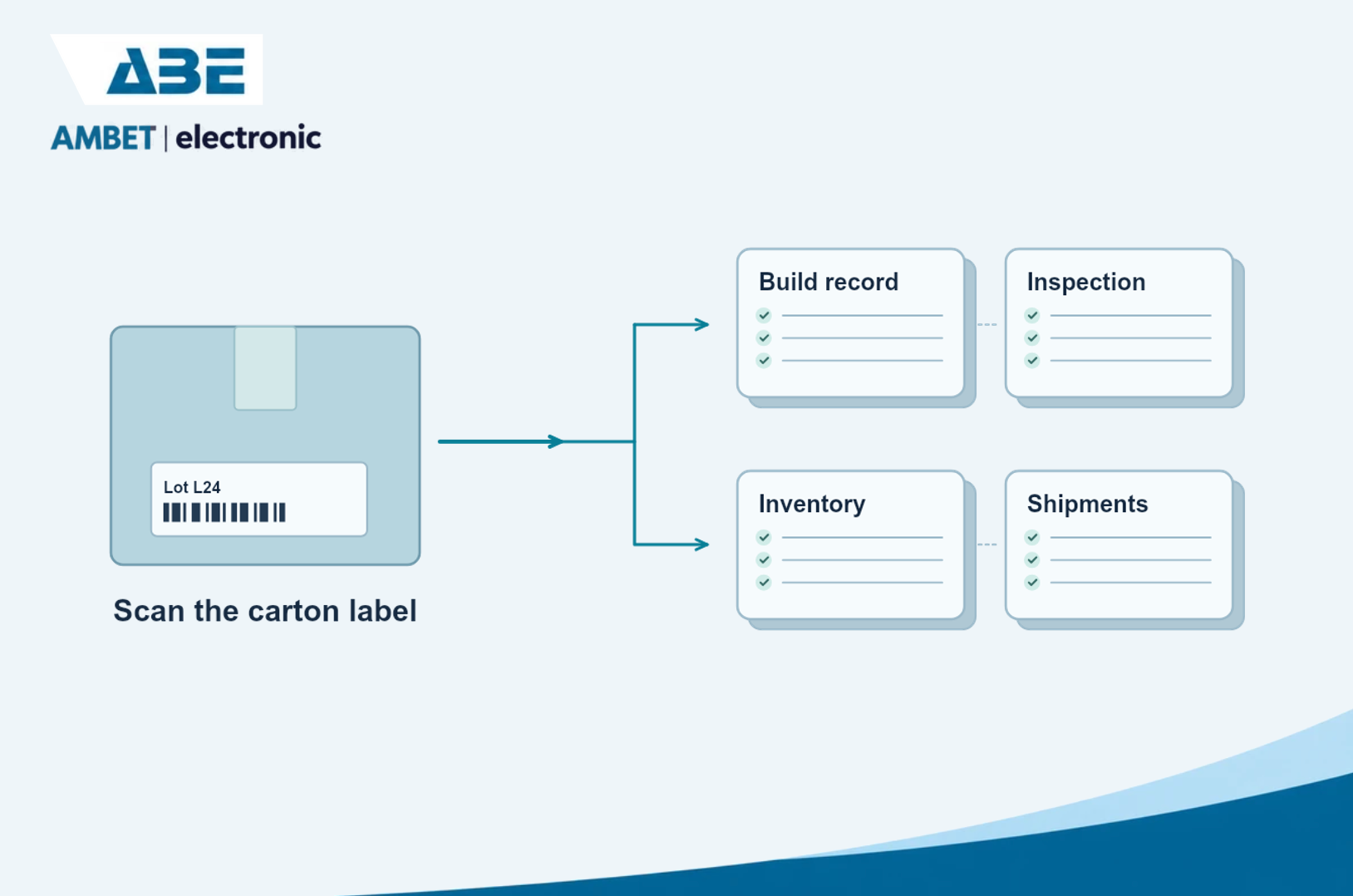
Buyers can verify wire harness traceability by requesting a sample trace exercise, checking the links between labels and production records, reviewing shipment quantities, and agreeing on identification, inspection, and record retention requirements before placing an order.
What Should Buyers Check on a Harness or Carton Label?
The first check is whether the identifier on the product or packaging connects to the manufacturer's records.
A harness label does not need to contain every detail of its production history. It may carry a short identifier that links to a work order or batch record. Depending on the project, the label may be placed on the harness, individual packaging, or outer carton.
| Label Information | What to Verify |
|---|---|
| Customer or manufacturer part number | Matches the approved product |
| Revision, where specified | Identifies the applicable design version |
| Lot or serial identifier | Links to the correct production record |
| Quantity on carton | Matches the packing and shipment record |
| Barcode or QR code, where required | Encodes the correct identifier and can be read |
The label format and location should suit the installation, handling, and customer requirements. A carton label may be enough for some projects, but if the harness must remain identifiable after unpacking, the buyer should specify a suitable product-level identification method.
True or False:
Adding a QR code to every wire harness automatically establishes full traceability.
False.
A QR code is a way to carry information. Traceability depends on the accuracy and availability of the records linked to that information. A readable code cannot recover production data that were never recorded.
How Can You Request a Live Trace Exercise During a Factory Audit?
A prepared quality report can explain a manufacturer's procedures, but a live trace exercise gives buyers a clearer picture of how those procedures work. Ask the supplier to demonstrate the traceability of an actual shipment, subject to appropriate customer confidentiality controls.
A practical exercise can follow these steps:
- Select a finished lot or carton from a recent shipment.
- Ask the supplier to identify the relevant work order and approved drawing revision.
- Review the linked material records at the agreed traceability depth.
- Check the inspection results and the production release status.
- Select a relevant material lot and follow it forward to the linked finished assemblies.
- Compare production, stock, shipment, and other relevant quantity records.
The manufacturer may use paper records, spreadsheets, an ERP system, or dedicated manufacturing software. What matters is whether the information is complete, consistent, and retrievable, regardless of the software brand.
Ask the supplier to explain any missing links. For example, if cartons are repacked or a batch is split across two shipments, how does the warehouse preserve its original identification?
The exercise can reveal limitations that a general statement about traceability cannot.
What Traceability Requirements Should Be Agreed Before Production?
The buyer and manufacturer should define the required level of traceability before the quotation and sample approval stages. This is particularly important when a customer requires individual test reports, specific component-lot records, or a particular label format.
The following questions help buyers and manufacturers agree on the scope:
| Requirement | Question to Ask the Manufacturer |
|---|---|
| Identification | Will products be identified by lot or individual serial number? |
| Material records | Which component lots must be linked to the finished assembly? |
| Inspection evidence | Are batch inspection records or individual test results required? |
| Label format | What information and barcode formats must appear on the product or packaging? |
| Record retention | How long will the agreed records be kept? |
| Retrieval | How quickly should records be available after a complaint? |
| Change control | How will approved material and design changes be recorded? |
| Rework and packing | How will identifiers be preserved through these operations? |
The principle of an approved configuration baseline3 is useful when managing drawing revisions. The manufacturer should be able to identify the approved requirements used for a particular build and record authorized changes. The exact documentation process for a commercial harness project should reflect its own contract and quality requirements.
At AMBET, production and inspection records are traced through order or production batch records. If your project requires individual serialization, deeper component-lot traceability, or test results for every assembly, please include these requirements in your RFQ so they can be reviewed for the specific project.
How Should a Manufacturer Respond When a Quality Issue Occurs?
Both parties should agree on the complaint handling process as well as the traceability requirements. A useful response needs to explain which products are under investigation, where they are located, and what information is still missing.
For example, the supplier should distinguish confirmed affected products from potentially exposed lots that still need investigation. The buyer and supplier can then agree on containment, additional inspection, replacement arrangements, and any required corrective actions.
Traceability records should support this process even after the immediate issue has been resolved. If a similar complaint appears later, the manufacturer should be able to compare it with the earlier investigation using the retained records.
For a larger or higher-risk project, the manufacturer and customer can consider a mock complaint exercise during pilot production. Testing the record links before a real quality problem occurs can help both parties identify gaps while they are easier to correct.
Conclusion
Reliable traceability connects each harness identifier to usable records, supporting targeted containment, effective quality investigations, and consistent production across repeat orders.