Top 8 Wiring Harness Manufacturers in China

Finding a wiring harness manufacturer in China is not difficult. Finding one that understands your specifications, order quantities, and quality requirements can be much more challenging.
Eight wiring harness manufacturers in China worth considering are THB, AMBET Electronic, Huguang, Luxshare, UNICONN, Deren, MIND, and Yingkou Abe. Their product ranges cover automotive wiring systems, industrial wire harnesses, custom cable assemblies, and new-energy vehicle applications.
When I evaluate a wire harness supplier, I do not just look at the size of the factory or its product catalog. I want to know whether the manufacturer is suitable for the actual project. A large automotive supplier and a custom harness manufacturer may serve very different customer needs.
Which Eight Wiring Harness Manufacturers Should Buyers Shortlist?
A manufacturer that supplies complete vehicle wiring systems may not be the right choice for an aftermarket importer. Different projects require different manufacturing and engineering capabilities.
The right wiring harness manufacturer depends on your application, technical requirements, order volume, and customization needs. Buyers should compare manufacturers by their product focus and project suitability rather than company size alone.
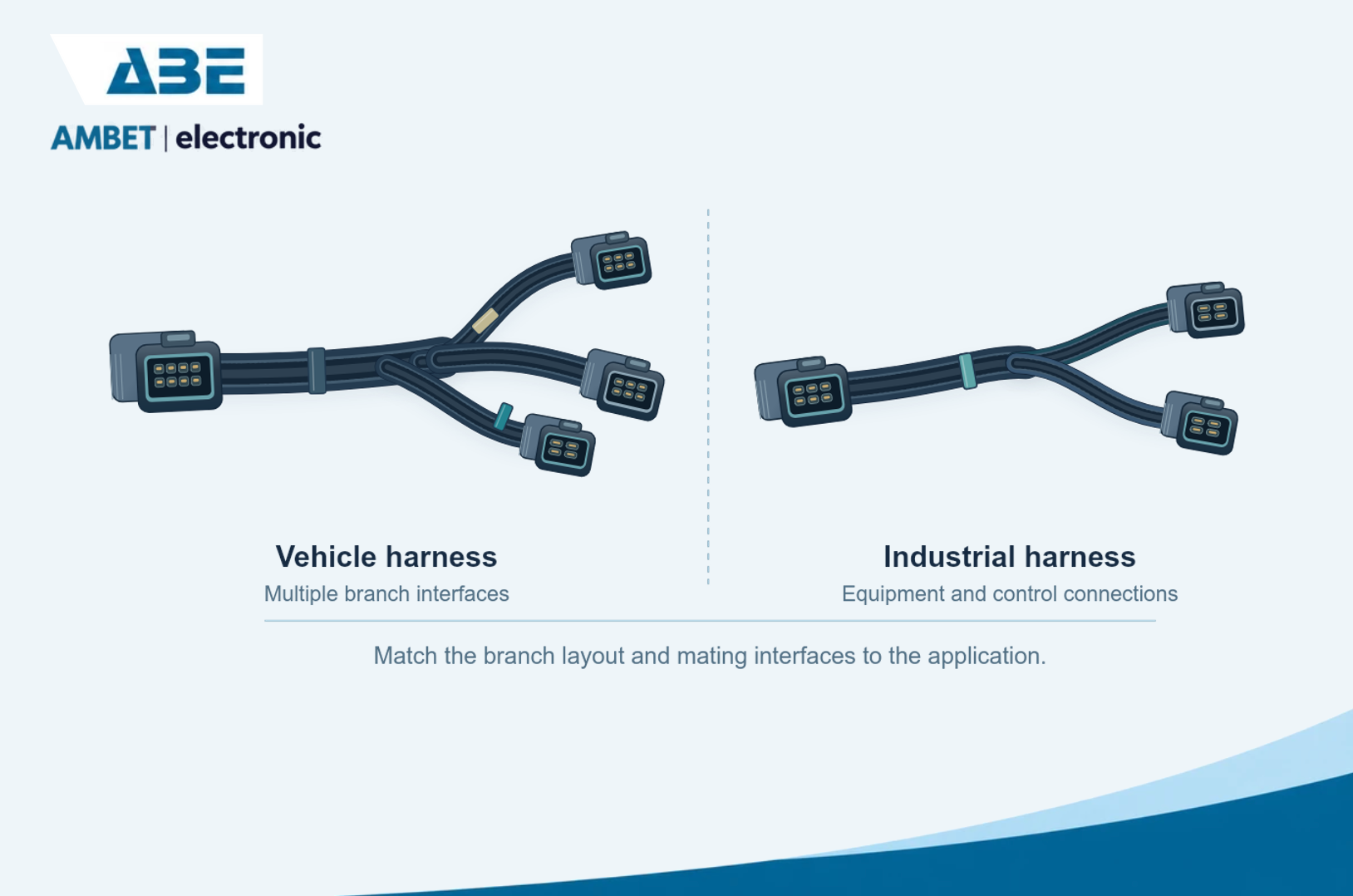
A Quick Comparison of Eight Wiring Harness Manufacturers in China
Before looking at each manufacturer individually, I have put together a comparison based on their publicly described product ranges.
| Manufacturer | Main Product Focus | Projects Worth Exploring |
|---|---|---|
| THB | Automotive connectors, high- and low-voltage wiring harnesses | Vehicle OEM programs |
| AMBET Electronic | Custom automotive and industrial wire harnesses, trailer harnesses, cable assemblies | Aftermarket sourcing and industrial OEM projects |
| Huguang | Complete vehicle wiring harnesses and automotive subsystem harnesses | Passenger vehicle OEM programs |
| Luxshare | Automotive wiring harnesses and electrical connection systems | Integrated automotive electrical projects |
| UNICONN | High- and low-voltage harnesses, battery connection systems | Electric vehicle and battery-related projects |
| Deren | Electrical connectors and wiring harnesses | Automotive and electronic equipment projects |
| MIND | Vehicle wiring systems and electrical system development | Complete vehicle and automotive subsystem projects |
| Yingkou Abe | Automotive lighting, body, safety, and control system harnesses | Automotive subsystem wiring projects |
AMBET Electronic is my company and the publisher of this guide. This list is a sourcing reference based on product focus, not an independent ranking by revenue, production capacity, or market share.
1. THB — Tianhai Auto Electronics Group
Location: Hebi, Henan, China
Main business: Automotive connectors, vehicle wiring harnesses, and automotive electronic products.
THB is an established automotive electrical component manufacturer in China. Its business covers automotive connectors and wiring harness systems for different vehicle applications.
Its published product range includes:
- Low-voltage automotive wiring harnesses
- High-voltage automotive wiring harnesses
- Engine wiring harnesses
- Battery cables and battery-pack harnesses
- Automotive electrical connectors
THB operates multiple manufacturing facilities. Different factories may focus on different products and vehicle applications.
This is an important detail for buyers.
When evaluating a manufacturing group with several factories, I would not simply ask whether the company can produce a particular harness. I would ask which factory will actually manufacture the product and whether that facility has the necessary production and testing capabilities.
Who should consider THB?
THB is worth reviewing for vehicle manufacturers and automotive component buyers looking for wiring systems and connector solutions for larger vehicle programs.
Buyers should confirm the relevant manufacturing site, minimum order requirements, engineering support, and project approval procedures before proceeding.
2. AMBET Electronic — Custom Wire Harness Manufacturer
Location: Changsha, Hunan, China
Main business: Custom wire harnesses, wiring looms, and cable assemblies for automotive aftermarket and industrial applications.
AMBET Electronic, officially known as Changsha Ambet Electronic Technology Co., Ltd., focuses on manufacturing custom electrical harness assemblies based on customer requirements.
Unlike manufacturers whose main business is complete vehicle wiring systems, our focus includes individual harness assemblies and customized wiring products for different automotive and industrial applications.
Our main product categories include:
- Automotive wire harnesses
- Trailer wiring harnesses
- Industrial wire harnesses
- Wiring looms
- Cable harnesses
- Custom cable assemblies
Buyers can explore our wire harness and cable assembly product examples to understand the types of assemblies we work with.
Most of these products are customized. The configurations shown on our website are manufacturing references rather than standard products available from stock.
For a custom project, we review technical details such as connector references, pinouts, wire specifications, harness dimensions, and protection requirements.
A customer may already have a complete engineering drawing. Another customer may only have an existing harness sample that needs to be reproduced or modified.
The starting point can be different, but the final manufacturing requirements need to be clear.
Our published general order references are:
| Order Information | Reference |
|---|---|
| Business model | OEM and ODM |
| Minimum order quantity | 500 pieces |
| Sample lead time | 20 days |
| Production lead time | 30 days |
| Trade term | FOB |
| Manufacturing approach | Based on customer-approved specifications |
These are general references. Actual quantities, prices, and delivery schedules depend on the product design, material availability, and project requirements.
Who should consider AMBET Electronic?
I would recommend considering AMBET if you are:
- An automotive aftermarket importer sourcing customized replacement harnesses.
- A wholesaler or distributor developing a range of wiring products.
- An industrial equipment manufacturer requiring custom electrical assemblies.
- A private-label brand with specific product, labeling, or packaging requirements.
- A commercial vehicle or trailer parts buyer looking for application-specific harnesses.
For these buyers, the ability to understand individual product requirements and manage customization is often more important than complete vehicle wiring system development.
3. Huguang — Kunshan Huguang Auto Harness
Location: Kunshan, Jiangsu, China
Main business: Passenger vehicle wiring harnesses and automotive electrical connection systems.
Kunshan Huguang Auto Harness is an automotive wiring harness manufacturer with a strong focus on passenger vehicle applications.
Its publicly described products cover complete vehicle wiring systems and individual vehicle subsystem harnesses.
Its main product areas include:
- Complete vehicle wiring harnesses
- Engine wiring harnesses
- Instrument panel wiring harnesses
- Door and body wiring harnesses
- Roof and rear wiring harnesses
- High-voltage harnesses for new-energy vehicles
A complete vehicle wiring system is more complex than an individual cable assembly.
The manufacturer needs to consider electrical connections, vehicle architecture, branch routing, installation space, and coordination between different vehicle components.
For this type of project, the supplier may need to work closely with the customer's engineering team during vehicle development.
Who should consider Huguang?
Huguang is worth evaluating for passenger vehicle manufacturers and automotive OEM buyers sourcing complete wiring systems or major vehicle subsystem assemblies.
If your project only requires an individual aftermarket harness, I would first confirm whether the manufacturer accepts your product type and order volume.
A company's ability to handle complex vehicle programs does not automatically mean that its business model fits smaller, customized sourcing projects.
4. Luxshare — Luxshare Precision
Main business: Electrical connection systems, automotive wiring harnesses, and electronic component solutions.
Luxshare Precision has a broad business portfolio covering consumer electronics, automotive electronics, communication products, and electrical connection solutions.
Within its automotive business, Luxshare offers products related to vehicle wiring and electrical connections.
Relevant product areas include:
- Low-voltage vehicle wiring harnesses
- Automotive high-voltage connection systems
- High-speed automotive electrical connections
- Automotive connectors
- Integrated electrical and electronic component solutions
The difference between Luxshare and a more specialized harness manufacturer is the breadth of its product portfolio.
For example, an automotive project may require wiring harnesses alongside connectors, electronic modules, or other electrical system components.
A supplier with several related product areas may be worth considering for this type of integrated sourcing project.
Who should consider Luxshare?
Luxshare is worth reviewing for automotive OEMs and buyers requiring wiring harnesses as part of a broader electrical or electronic system.
I would clarify the manufacturing scope before requesting a quotation.
Do you need one individual cable assembly? Several vehicle wiring harnesses? Or a complete package of electrical connection components?
The answer helps determine whether the supplier's capabilities and commercial requirements match your project.
5. UNICONN — Shenzhen Uniconn Technology
Location: Shenzhen, Guangdong, China
Main business: Electrical connection components, battery connection systems, and high- and low-voltage wiring harnesses.
UNICONN focuses on electrical connection products, with a product range that includes solutions for new-energy vehicles and battery-related applications.
Its main product areas include:
- High-voltage wire harnesses
- Low-voltage wire harnesses
- Cell contact systems (CCS)
- Flexible printed circuits (FPC)
- Electrical connection components
Battery-related electrical assemblies can have different requirements from conventional automotive wiring harnesses.
For example, a battery sensing assembly may require specific electrical connections, insulation properties, connector interfaces, and environmental performance.
Some projects also require the manufacturer to work with other components within a battery system.
I would pay particular attention to the exact product scope when sourcing these assemblies.
A high-voltage power harness, a low-voltage sensing harness, and a cell contact system serve different purposes.
Who should consider UNICONN?
UNICONN is worth evaluating for electric vehicle manufacturers, battery system developers, and buyers sourcing specialized electrical connection assemblies.
Before selecting the supplier, confirm the required voltage, current, connector specifications, insulation requirements, and validation procedures.
6. Deren — Shenzhen Deren Electronic
Location: Shenzhen, Guangdong, China, with a manufacturing operation in Heshan, Jiangmen.
Main business: Electrical connectors and wiring harnesses for automotive and electronic applications.
Deren Electronic develops and manufactures electrical connection products.
Its Heshan manufacturing operation identifies connectors and wiring harnesses as major product areas, serving automotive and consumer electronics applications.
This combination may be relevant to buyers whose products require both electrical connectors and complete harness assemblies.
For example, a customer may need a custom connector-based assembly rather than a standard cable with commonly available connectors.
In this situation, connector design, terminal compatibility, and harness assembly need to be considered together.
I would ask whether the connector and harness manufacturing processes are handled at the same facility or through different production operations.
This helps buyers understand who controls each manufacturing stage and how quality responsibilities are managed.
Who should consider Deren?
Deren is worth reviewing for automotive and electronic equipment projects involving connectors and custom wiring assemblies.
Buyers should confirm the exact manufacturing scope, tooling requirements, component specifications, and availability of engineering support.
7. MIND — MIND Electronics
Location: Baoding, Hebei, China
Main business: Automotive electrical systems, wiring harness development, and related automotive component solutions.
MIND Electronics has a product portfolio covering automotive electrical systems and other vehicle component areas.
Its electrical system business includes wiring harness products and engineering support related to vehicle electrical connections.
Relevant capabilities described in its public product information include:
- Low-voltage vehicle wiring harnesses
- High-voltage wiring harnesses
- Complete vehicle harness development
- Vehicle wiring layout development
- Electrical system design and engineering support
Vehicle wiring layout is an important part of developing a complete automotive electrical system.
The manufacturer needs to consider where each electrical component is installed, how the wires are routed, and how different electrical circuits connect.
For larger OEM programs, this work may start before the final harness drawing is released.
Who should consider MIND?
MIND is worth reviewing for automotive OEMs that require wiring harness development or vehicle electrical system support.
I would distinguish between two types of projects when contacting the supplier.
One customer may already have a complete, approved harness drawing and only need manufacturing.
Another customer may need assistance with electrical architecture, wire routing, design validation, and engineering changes.
These projects require different levels of supplier involvement.
8. Yingkou Abe Harness
Location: Yingkou, Liaoning, China
Main business: Automotive wiring harnesses for vehicle electrical control systems and new-energy vehicle applications.
Yingkou Abe Harness specializes in automotive wiring assemblies for different vehicle systems.
Its publicly described product categories include:
- Automotive lighting control system harnesses
- Automotive body control harnesses
- Automotive safety control system harnesses
- Automotive electronic control system harnesses
- New-energy vehicle wiring harnesses
These product areas are relevant to buyers sourcing wiring assemblies for specific vehicle functions.
For example, a lighting harness may need suitable current capacity and protection against moisture and vibration.
A body control harness may require several connectors and signal connections within a limited installation space.
Although both products are automotive wiring harnesses, their electrical and physical requirements can be different.
Who should consider Yingkou Abe?
Yingkou Abe is worth evaluating for automotive OEM and subsystem wiring projects, particularly those involving lighting, body, and electrical control systems.
I recommend providing the installation environment, connector specifications, electrical requirements, and required testing information before requesting a quotation.
Does a Larger Wire Harness Manufacturer Mean a Better Supplier?
This is a question I think buyers should consider carefully.
Imagine two different sourcing projects.
The first buyer is a vehicle manufacturer developing a new passenger car platform. The project requires complete vehicle wiring systems, engineering coordination, and large-scale production.
The second buyer is an automotive aftermarket distributor. The distributor needs several customized trailer and automotive wiring harnesses, with different quantities for each part number.
Both buyers need wire harness manufacturers. But they do not necessarily need the same type of supplier.
| Buyer Type | Main Supplier Evaluation Priorities |
|---|---|
| Vehicle OEM | System development, production capacity, and formal validation |
| Automotive aftermarket importer | Product compatibility, customization, MOQ, and replenishment |
| Industrial equipment OEM | Drawing accuracy, application requirements, and engineering communication |
| Wholesaler or distributor | Product variety, commercial terms, and supply consistency |
| Private-label brand | Product configuration, quality consistency, labeling, and packaging |
True or False:
Is the largest wiring harness manufacturer always the best choice for a custom wiring harness project?
False.
A large manufacturer may have extensive production capabilities, but it may not be the best match for your order quantity, product type, or customization requirements. The suitability of a supplier depends on the actual project.
How Can You Compare Wiring Harness Quotes on the Same Basis?
Two manufacturers may quote the same wiring harness at very different prices. But are they actually quoting the same materials, specifications, and manufacturing requirements?
To compare wiring harness quotations accurately, provide every manufacturer with the same approved specifications. Compare connector brands, wire materials, testing requirements, MOQ, tooling costs, unit prices, and delivery terms before making a decision.
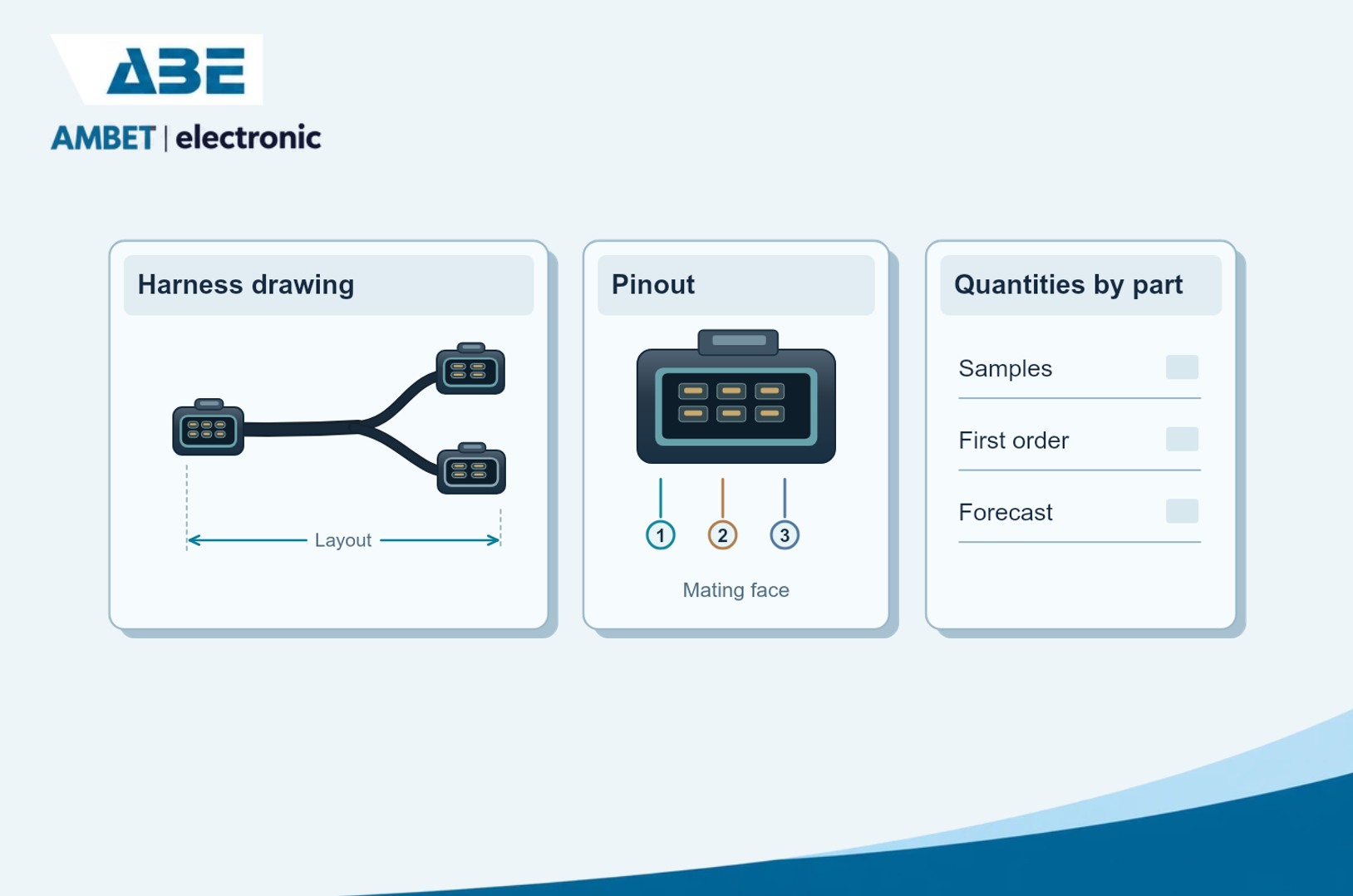
What Should Every Supplier Receive in the RFQ?
When I compare quotations, the first thing I want to know is whether all suppliers are quoting the same product.
For example, one manufacturer may quote the original connector specified in your drawing. Another manufacturer may quote a compatible alternative.
Both quotations may describe the product as a four-pin automotive wiring harness, but their material costs can be different.
The same applies to wires, terminals, seals, and protective materials.
I recommend preparing a clear request for quotation (RFQ) before contacting several manufacturers.
| RFQ Information | What Buyers Should Provide |
|---|---|
| Application | Vehicle, equipment, or electrical system |
| Engineering drawing | Latest approved drawing revision |
| Connector information | Brand, part number, and mating connector |
| Pinout | Wire-to-terminal connections and connector viewing direction |
| Wire specification | Gauge, conductor, insulation, and color |
| Harness layout | Overall length, branch dimensions, and tolerances |
| Protection | Sleeves, tapes, conduits, and sealing requirements |
| Order quantity | Samples, initial order, and expected future demand |
| Testing requirements | Electrical and mechanical inspection requirements |
| Packaging | Product labels, individual packaging, and carton requirements |
If you only have a reference sample, the manufacturer may need additional information before preparing an accurate quotation.
I would provide the sample together with its application, required electrical connections, and any features that need to be changed.
For example, you may want the manufacturer to reproduce an existing harness but increase one branch length or change a connector.
These changes should be confirmed in the approved specification before production.
Which Quote Terms Change Your Total Cost?
The unit price is important, but it is not the only cost that buyers need to consider.
For example, suppose two manufacturers offer the following hypothetical quotations for the same custom wiring harness.
| Quotation Item | Supplier A | Supplier B |
|---|---|---|
| Unit price | $3.80 | $4.20 |
| MOQ | 2,000 pieces | 500 pieces |
| Minimum order value | $7,600 | $2,100 |
| One-time tooling cost | $800 | $200 |
| Initial product and tooling cost | $8,400 | $2,300 |
These figures are illustrative examples, not actual manufacturer quotations.
Supplier A offers a lower unit price. However, the buyer needs to purchase four times as many products and pay a higher tooling cost.
For a distributor testing a new product in the market, Supplier B may be more practical.
For a buyer with stable, high-volume demand, Supplier A may become more attractive over time.
This is why I would not compare suppliers based only on the price per piece.
Other important quotation details include:
| Cost or Commercial Term | What to Confirm |
|---|---|
| Material specifications | Original or approved alternative components |
| MOQ | Minimum quantity per part number |
| Sample cost | Engineering, materials, and sample preparation |
| Tooling cost | Applicators, fixtures, molds, and ownership |
| Unit price | Pricing at different order quantities |
| Testing cost | Included tests and additional validation charges |
| Lead time | Material purchasing, production, and inspection |
| Delivery terms | Named delivery location and applicable Incoterms rule1 |
For an aftermarket importer, MOQ deserves particular attention.
You may have ten different wiring harness models, but not every model sells at the same speed.
If the manufacturer requires a high minimum order quantity for every model, you may need to hold more inventory than expected.
I recommend discussing the quantity of each part number separately instead of only sharing the total order quantity.
Delivery time also needs clarification.
When a supplier quotes 30 days, I would ask when the 30-day period starts.
Does it start when the purchase order is confirmed? When the drawing is approved? Or when all materials become available?
These are different situations, especially when the harness contains specialized connectors.
True or False:
Does a lower unit price always mean a lower sourcing cost?
False.
Minimum order quantities, tooling fees, testing costs, transportation, and inventory requirements can affect the total cost. Buyers should compare quotations using the same technical specifications and commercial conditions.
What Should You Verify Before Approving a Manufacturer?
A supplier may provide an attractive quotation and a good-looking sample. But can the factory maintain the same quality during repeat production?
Before approving a wiring harness manufacturer, verify its production site, material control, crimping process, electrical testing, sample quality, and change control procedures. Certification and sample approval should support, rather than replace, product-specific quality checks.
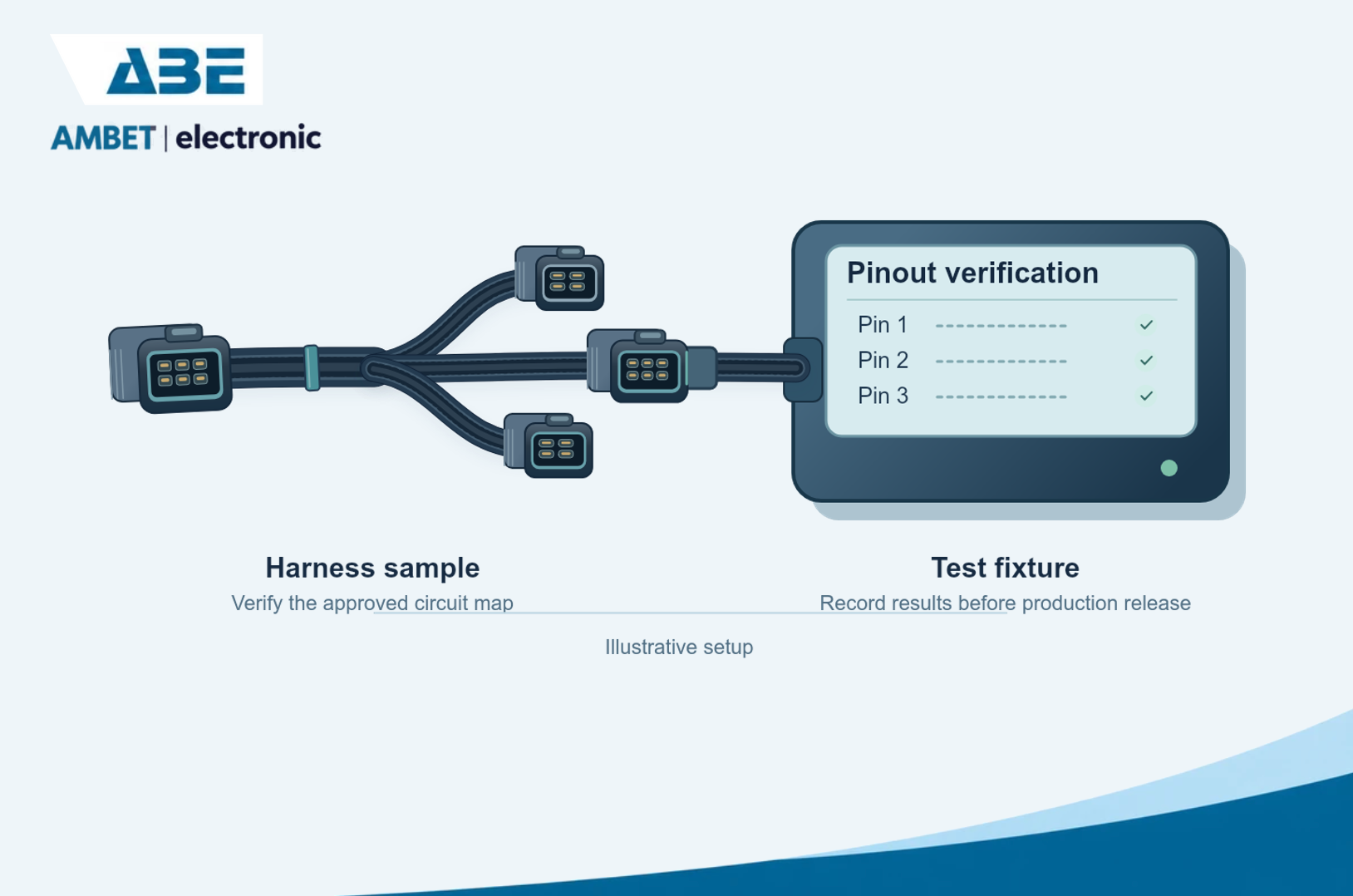
Which Factory and Quality Records Apply to Your Part?
When evaluating a factory, I would not start by looking at how large the workshop is.
I would start by looking at the materials, manufacturing processes, and inspection procedures that apply to my product.
For example:
- Which brands of wires and terminals are being used?
- How does the factory verify incoming connector part numbers?
- How are terminals crimped onto the wires?
- How does the factory check crimp quality?
- How are incorrect pin assignments detected?
- Can the manufacturer trace the materials used in a production batch?
These questions tell me more about the manufacturing process than the number of machines alone.
I recommend focusing on five areas during a supplier evaluation.
| Quality Control Area | What Buyers Should Verify |
|---|---|
| Incoming materials | Wire, connector, terminal, and material specifications |
| Crimping process | Tooling setup, crimp height, and pull force requirements |
| Harness assembly | Wire lengths, terminal insertion, and branch positions |
| Electrical testing | Continuity, pinout, and specified electrical checks |
| Final inspection | Appearance, dimensions, labeling, and packaging |
The required inspection methods and frequency should depend on the product and customer specifications.
Certifications are another important consideration.
For automotive projects requiring IATF 16949 certification, buyers should check whether the certificate covers the relevant manufacturing site and business scope.
I recommend using the appropriate verification service to cross-check certificate validity2.
For wire harness workmanship and assembly acceptance, buyers may also specify requirements based on IPC/WHMA-A-6203.
The applicable revision, product class, and customer-specific requirements should be agreed before production.
However, not every custom automotive aftermarket or industrial harness project requires the same certifications or approval procedures as a complete vehicle OEM program.
The requirements should match the application.
True or False:
Does a valid quality management system certificate prove that every finished wiring harness meets the customer's specifications?
False.
A quality management system certificate covers the management system within its stated scope. Buyers still need product-specific inspection records, sample validation, and electrical test results to confirm that their harness meets the agreed requirements.
What Should a Sample Prove Before Production Release?
I consider sample approval one of the most important steps when choosing a custom wire harness manufacturer.
But what should buyers actually check when they receive a sample?
I would not approve a harness just because it looks similar to the original product.
The sample needs to be checked against its intended application and approved specifications.
A practical sample inspection should cover the following areas:
| Inspection Item | What to Check |
|---|---|
| Connectors | Correct models and mating compatibility |
| Terminals | Correct type, installation, and retention |
| Wire specifications | Gauge, insulation, and color |
| Pinout | Correct wire-to-terminal connections |
| Harness dimensions | Overall length and individual branch lengths |
| Installation | Fitment, routing, and mounting positions |
| Electrical performance | Required continuity and electrical tests |
| Protection | Sealing, sleeving, and abrasion protection |
Where possible, the buyer should also test the sample in the actual vehicle or equipment.
A harness may meet the drawing dimensions but still be difficult to install because the available space or routing conditions were not fully considered.
Once the sample is approved, I recommend keeping the approved drawing, bill of materials, pinout, and relevant test records together.
For projects requiring a formal automotive Production Part Approval Process (PPAP)4, the submission requirements should be agreed before production begins.
For other custom harness projects, buyers and manufacturers can define an appropriate sample approval and production inspection process based on the application.
How Does the Manufacturer Maintain Quality After Sample Approval?
A good sample is important, but sample approval and mass production approval are not the same thing.
For example, a manufacturer may produce an acceptable sample using the correct connector and terminal combination.
Several months later, the original connector may become difficult to source.
What happens next?
Will the manufacturer inform the buyer and request approval for an alternative? Or will it replace the component without communication?
This is why I pay attention to change control.
I recommend asking the manufacturer these questions before placing a bulk order:
- How do you control approved wire and connector specifications?
- Can you trace the materials used in each production batch?
- How do you manage crimping tooling adjustments?
- Which electrical tests are performed during production?
- How do you handle failed inspection results?
- What happens when a specified component becomes unavailable?
- Will you obtain customer approval before changing materials or designs?
For a long-term sourcing relationship, these answers are just as important as the initial sample quality.
A reliable manufacturer needs to maintain the approved specifications and communicate changes before they affect the finished product.
Conclusion
I recommend choosing a wiring harness manufacturer based on project suitability, technical capabilities, quality control, and long-term supply reliability rather than company size or price alone.
Explains delivery responsibilities, costs, and the transfer of risk under Incoterms. ↩
Explains how to verify IATF 16949 certification for the relevant manufacturing site. ↩
Introduces workmanship and acceptance requirements for cable and wire harness assemblies. ↩
Explains production part approval requirements for applicable automotive manufacturing projects. ↩