OEM vs Aftermarket Wiring Harness: What’s the Difference?

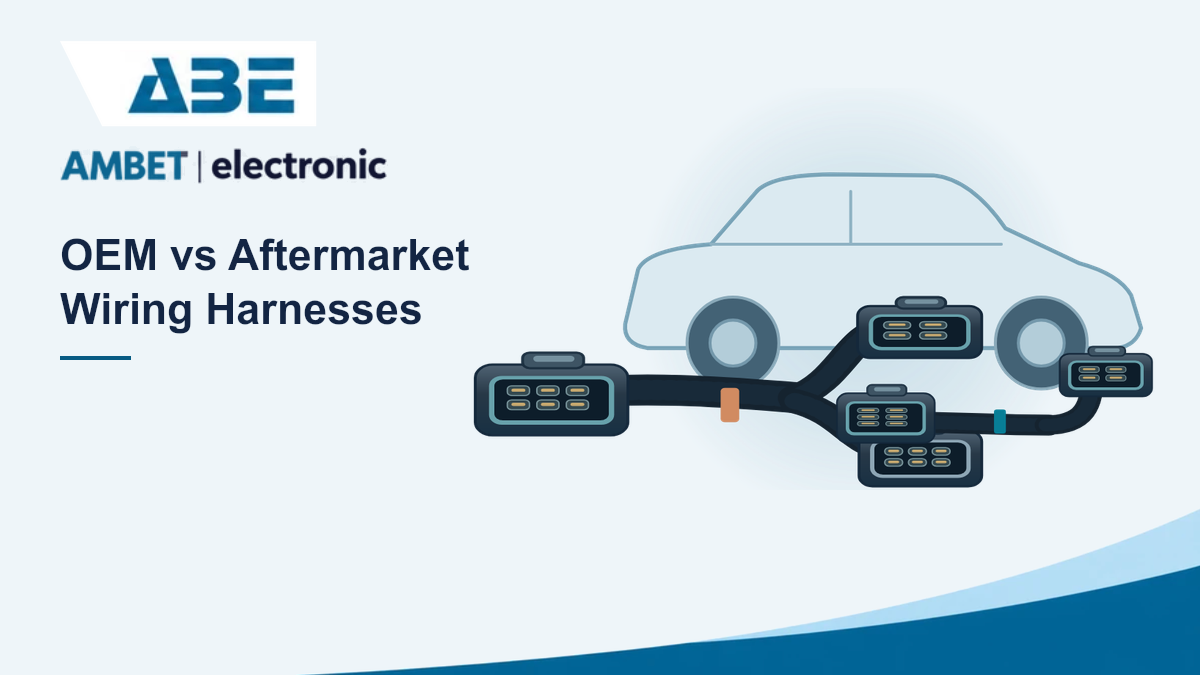
Two harnesses can look alike in a catalog and still fit different vehicle builds. For a distributor, one wrong application can turn a bulk order into returns.
An OEM wiring harness is built for an original vehicle program. An aftermarket harness serves the replacement, repair, or accessory market. Either can be suitable for bulk purchase if the fitment, pinout, and build requirements are verified.
Start with the job the harness has to do. Then use the vehicle interface and approval documents to compare the available supply options.
What Do OEM and Aftermarket Mean for a Wiring Harness?
Supplier listings apply these labels to the same basic part in different ways. It helps to ask how each supplier uses the term.
OEM describes the original vehicle program or supply channel. Aftermarket describes the market served after the vehicle is sold. Check the exact part and application when a listing says OEM-grade, OEM replacement, or direct fit.
Separate Supply Channel from Application
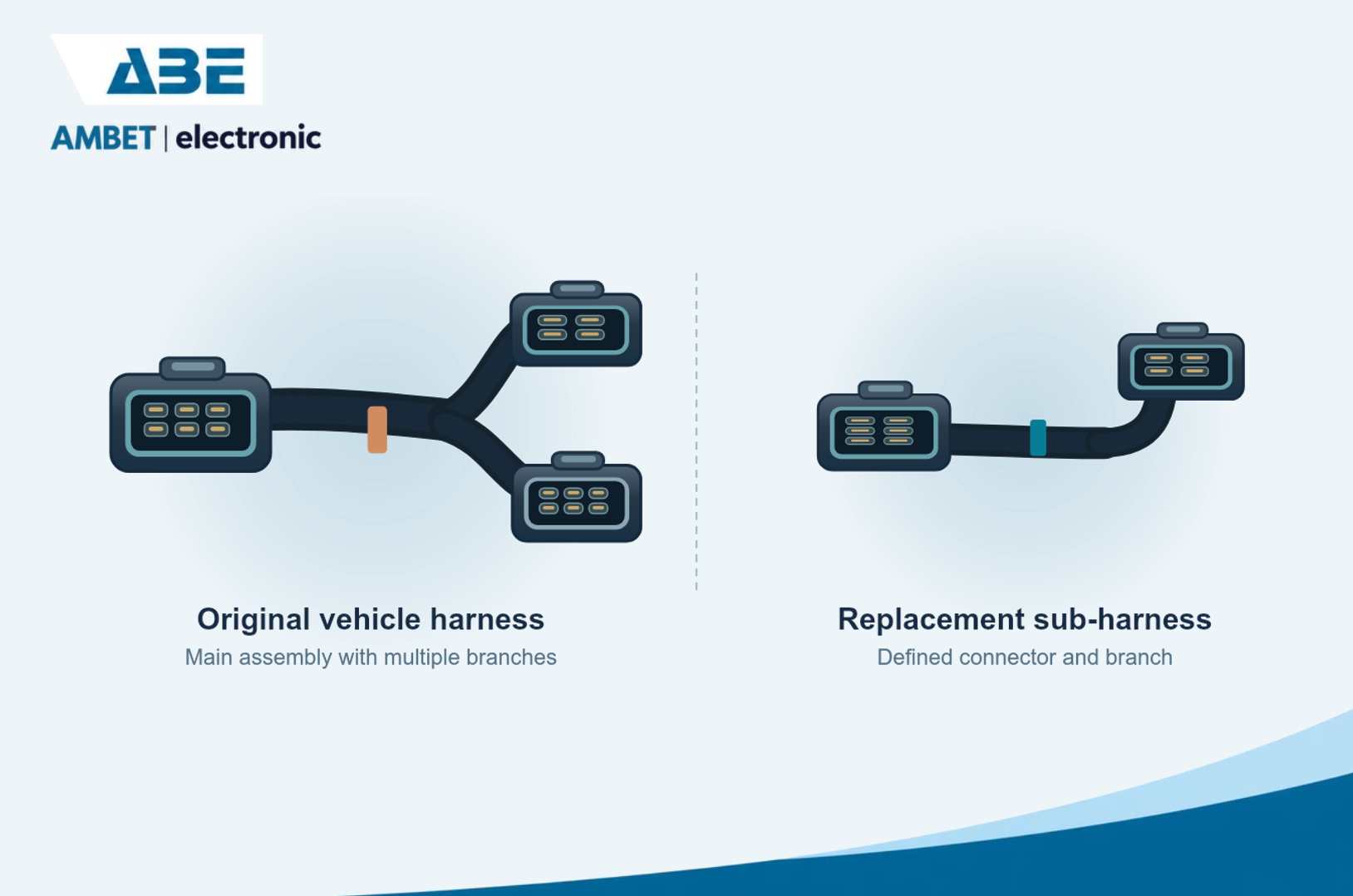
An original-equipment harness is specified for a vehicle build. A genuine service replacement may later be sold through the vehicle maker’s parts channel. Buyers should confirm the service part number and any supersession because the number molded onto a connector shell may identify the housing, rather than the complete harness.
The aftermarket covers several jobs. A direct-fit replacement aims to match a defined vehicle interface. A repair pigtail may replace only a damaged connector and a short section of wire, while an accessory adapter can add a trailer connection or another feature with its own installation requirements.
Compare the Harnesses on the Same Basis
Ask each vendor what is included in the assembly and what work remains for the installer. A product described as a full replacement and a pigtail kit may both refer to the same connector, but their prices cover different parts and install labor.
| Supply option | What it may cover | Buyer check |
|---|---|---|
| Genuine service part | Vehicle maker’s specified replacement assembly | Service number, supersession, vehicle build |
| Direct-fit aftermarket part | Defined replacement application | Cavity map, geometry, verified fitment range |
| Repair pigtail | Local connector or damaged lead replacement | Terminal and seal fit, approved repair instructions |
| Accessory adapter | Added function within a stated application | Required modules, included parts, install scope |
Words such as OEM-grade describe a seller’s claim unless the seller defines the specification and evidence behind it. Compare the two offers against the same acceptance criteria and ask which configuration each sample actually represents.
How Can Buyers Verify Fit Before Ordering?
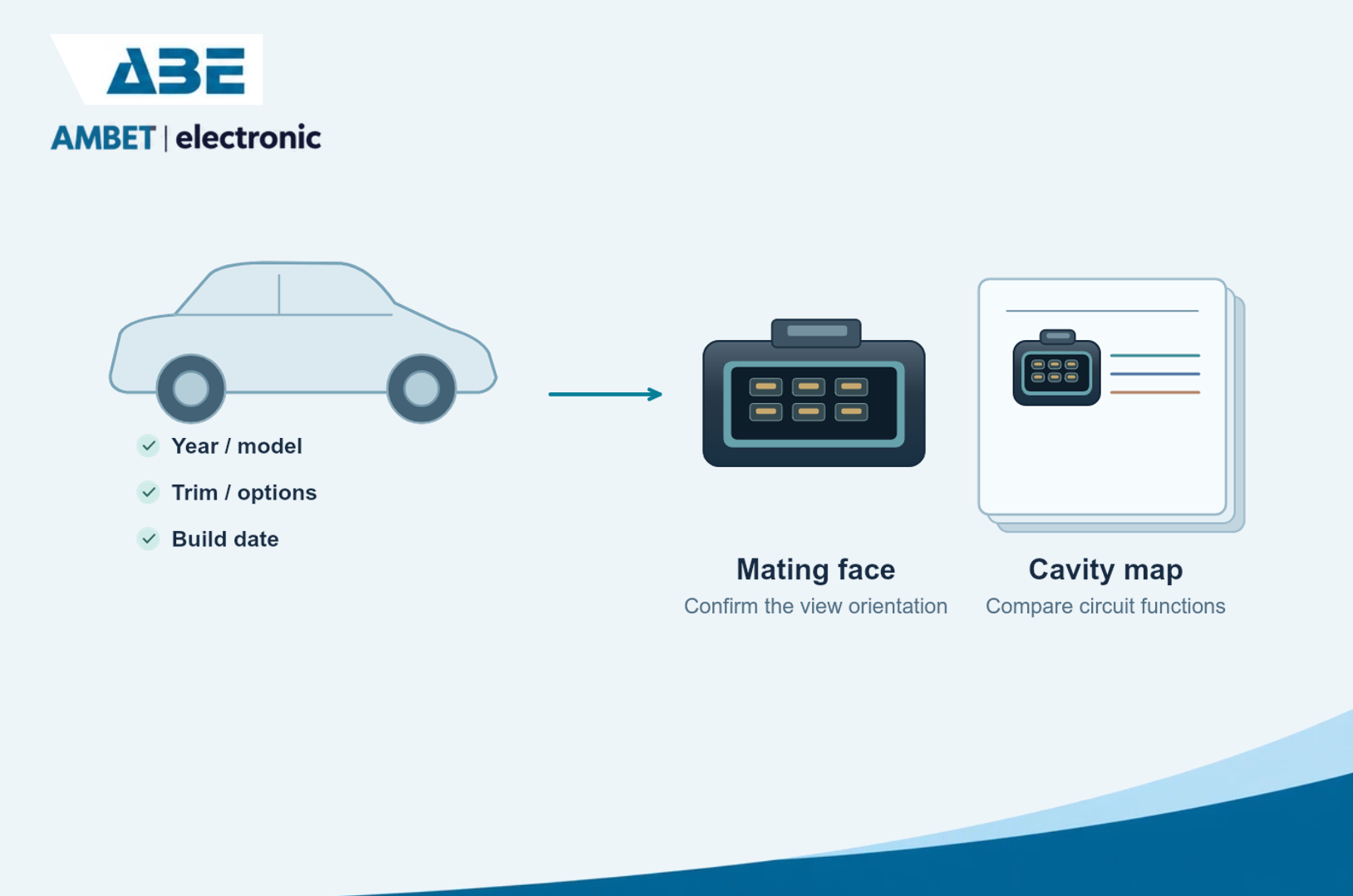
A matching year and model can still cover several trim levels or factory option packages. The application data needs enough detail to separate those variants.
Confirm the OE service reference and exact build attributes, then compare connector keying, cavity orientation, circuit assignments, and physical routing. Validate the approved sample on a representative vehicle or fixture before you commit to production quantities.
Check the Vehicle Configuration and Connector Interface
Record the year, make, model, relevant engine or trim, and build-date or option break where needed. Give the supplier a complete reference number and clear connector photos from both sides. Mark whether the pinout is drawn from the mating face or the wire side.
For trading partners that use it, the Aftermarket Catalog Exchange Standard1 provides a structured way to exchange fitment data. The underlying vehicle-to-part mapping still needs evidence. A broad catalog range cannot resolve a pinout or option change by itself.
True or False:
If the two connector housings mate, the replacement harness is electrically interchangeable.
False.
Housings can share the same physical interface while using different terminal positions, wire sizes, or circuit assignments. Check the pinout and circuit requirements for the exact build before approving the sample.
Validate the Installed Sample
Look beyond whether the connector clicks into place. On a representative vehicle or fixture, check that the clips reach their mounting points, the bends clear nearby hardware, and the branch lies without pulling on terminals.
- Compare the sample against the approved drawing and original assembly.
- Verify the cavity map with the agreed electrical test.
- Check for chafe, connector access, and branch strain in the installation.
- Record which vehicle option, sample revision, and test set were reviewed.
If the part carries a fitment claim for more than one configuration, define which variants need independent checks. Use the approval record to set accurate catalog exclusions for unverified combinations.
Which Option Makes Sense for Repeat Orders?
The cheapest quoted harness may leave compatibility work, installation labor, or repacking for your team to absorb.
Choose the supply option that delivers the approved configuration at a viable cost per saleable SKU. Include fitment validation, packaging, minimum quantity by part number, and the evidence needed to approve changes or replenish stock.
Compare the Full Cost per Saleable SKU
For a low-volume service item, compare the availability and total purchase cost of a genuine replacement with the cost of developing a matching aftermarket assembly. A repeat aftermarket program may justify sample approval and packaging work when the application is clear and demand supports the order.
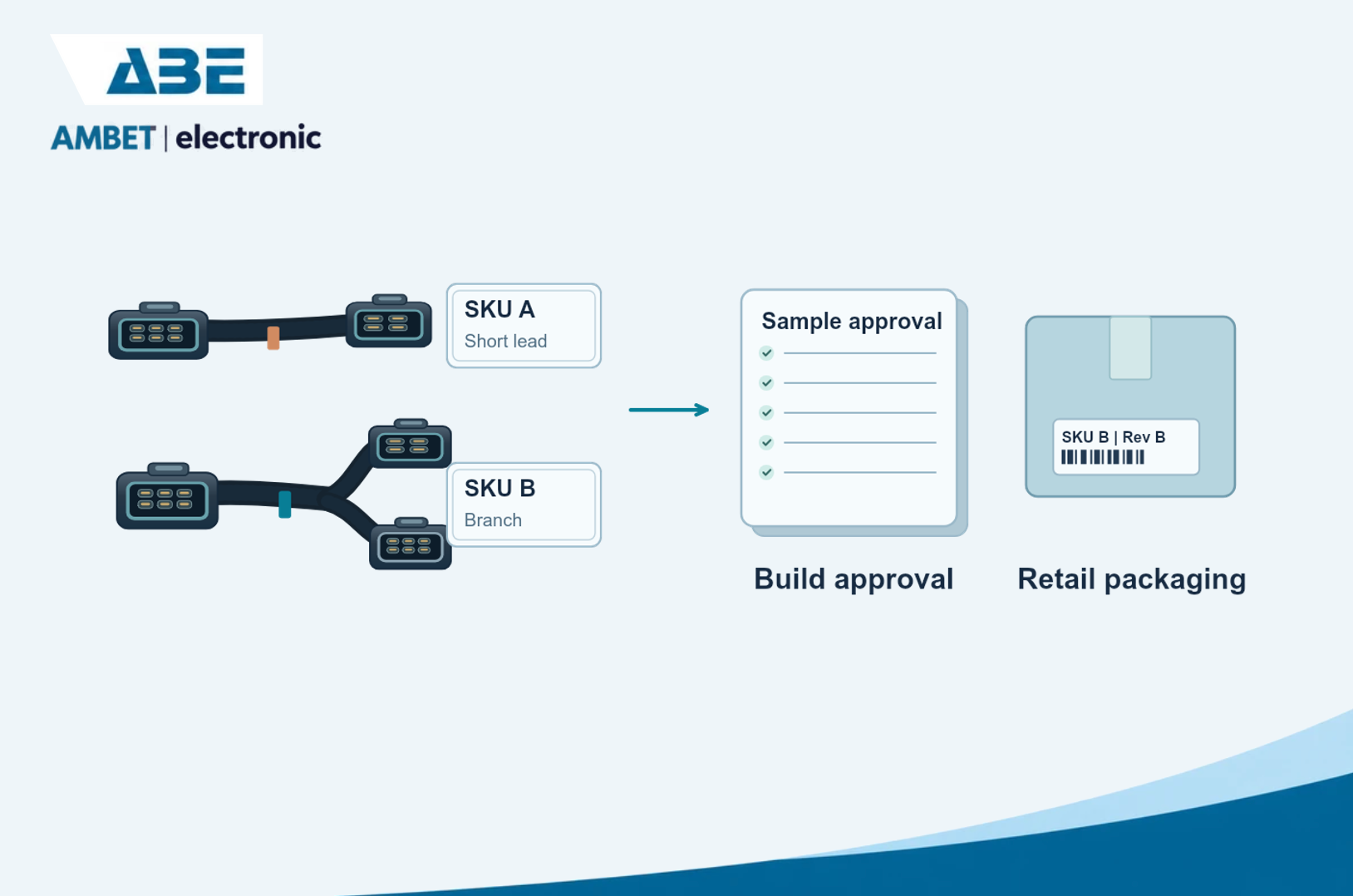
Quote each part number separately. Record tooling, required testing, labeling, packing, and freight terms as well as the minimum quantity. For a multi-SKU buy, ask whether the order minimum applies to each item and which charges are shared. Account for expected returns and the time spent answering fitment questions.
Approve the Build and Packaging Together
For a private-label program, confirm the label text, SKU barcode, pack contents, and installation notes against the approved physical build. The Product Information Exchange Standard2 is a way for participating companies to exchange product data such as classifications and attributes alongside their fitment workflow.
Ask for a sample with the proposed packaging early enough to catch a mismatch before the bulk run. Keep an approved sample, the released revision, test requirements, and packaging artwork under the same part number. Require review before changes to the connector, cavity map, or fitment claim.
When requesting a quote from Ambet, include the current part number or labeled sample and the expected quantity per SKU. A clear reference gives engineering a basis for reviewing the replacement assembly and identifying questions before the sample order.
Conclusion
Buy against a verified application and approved build. Confirm fitment, installation, and repeat-order controls before you compare the quoted prices.