Custom Wire Harness MOQ: A Buyer’s Guide

A purchase order can meet a headline quantity while several harness variants still fall below their individual minimums. Check what the minimum applies to first.
Custom wire harness MOQ is the minimum production order quantity for a specified part number. Component purchasing limits, tooling, setup, and inspection can affect it. Compare quantities on the same approved design and ask what smaller orders would require.
The answer can change the decision between a sample, a small production order, and a replenishment plan for several SKUs.
Why Is MOQ Quoted per Part Number?
A buyer may need the same total number of harnesses for two projects while asking the factory to build two distinct products.
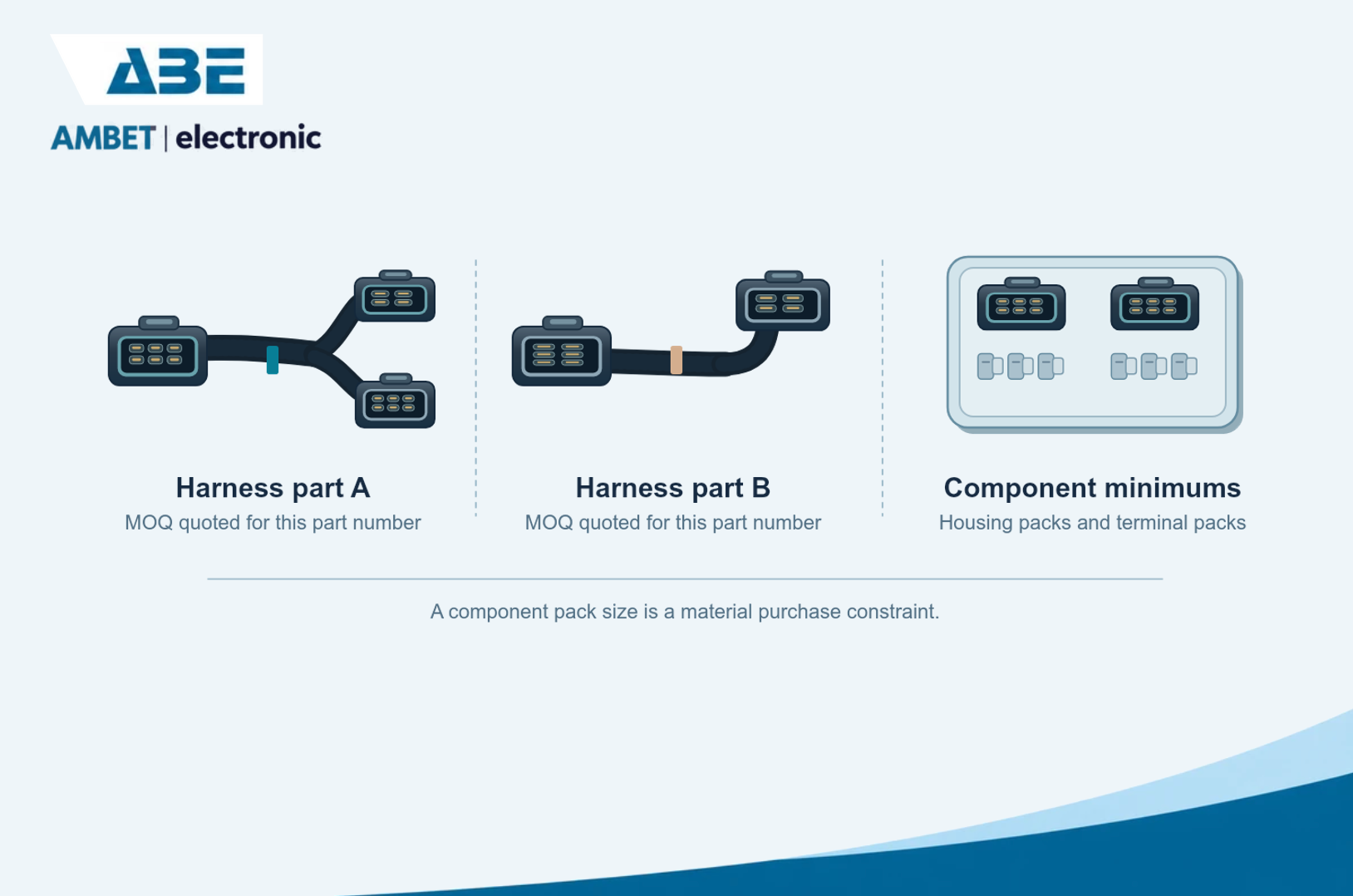
A production MOQ typically applies to the finished harness identified by its part number. Component purchase quantities and sample quantities are separate. Ask the supplier to quote distinct variants on separate lines.
How Do Component Minimums Differ from Harness Minimums?
The production MOQ describes an order of finished harnesses. A component supplier may have its own minimum quantity, standard pack, or order multiple. Ask which line items have component packaging multiples1 and whether approved stock or smaller packs are available. For example, a short harness may consume a few contacts per assembly while the selected contact is packaged on a much larger reel. Its packaging quantity helps explain how the material is supplied. The actual purchase minimum depends on the quote and available sources.
AMBET usually quotes 500 pieces per separate finished harness part number. An order with 250 pieces each of two variants is two separate 250-piece requests. Matching housings may help the material plan, but each finished part still needs its own build and acceptance scope. Smaller quantities are reviewed order by order and require approval from the responsible sales lead. Confirm the approved quantity for each part on the written quote.
How Do Sample Runs Differ from Production Orders?
A sample checks the design, fit, or test requirements before a production order. For a new custom design, agree on the sample quantity and what needs approval. Ask whether sample charges are separate from production pricing and whether the quote specifies any credit toward a later order.
A sample or prototype can use available materials and a dedicated setup. A production quote also has to cover the parts, process, and inspection plan for the intended batch. Agree on when the sample is accepted and which drawing and bill of materials will govern subsequent orders.
What Drives the Minimum Order for a Custom Harness?
The constraint can sit at a connector distributor, at a fixture, or at a production step that takes time to prepare.
Material availability and purchasing quantities can set a lower bound. Special tools, assembly fixtures, changeovers, and inspections can also affect the smallest practical run. Ask which factors apply to your specific harness.
How Do Materials, Tooling, and Setup Affect the Quote?
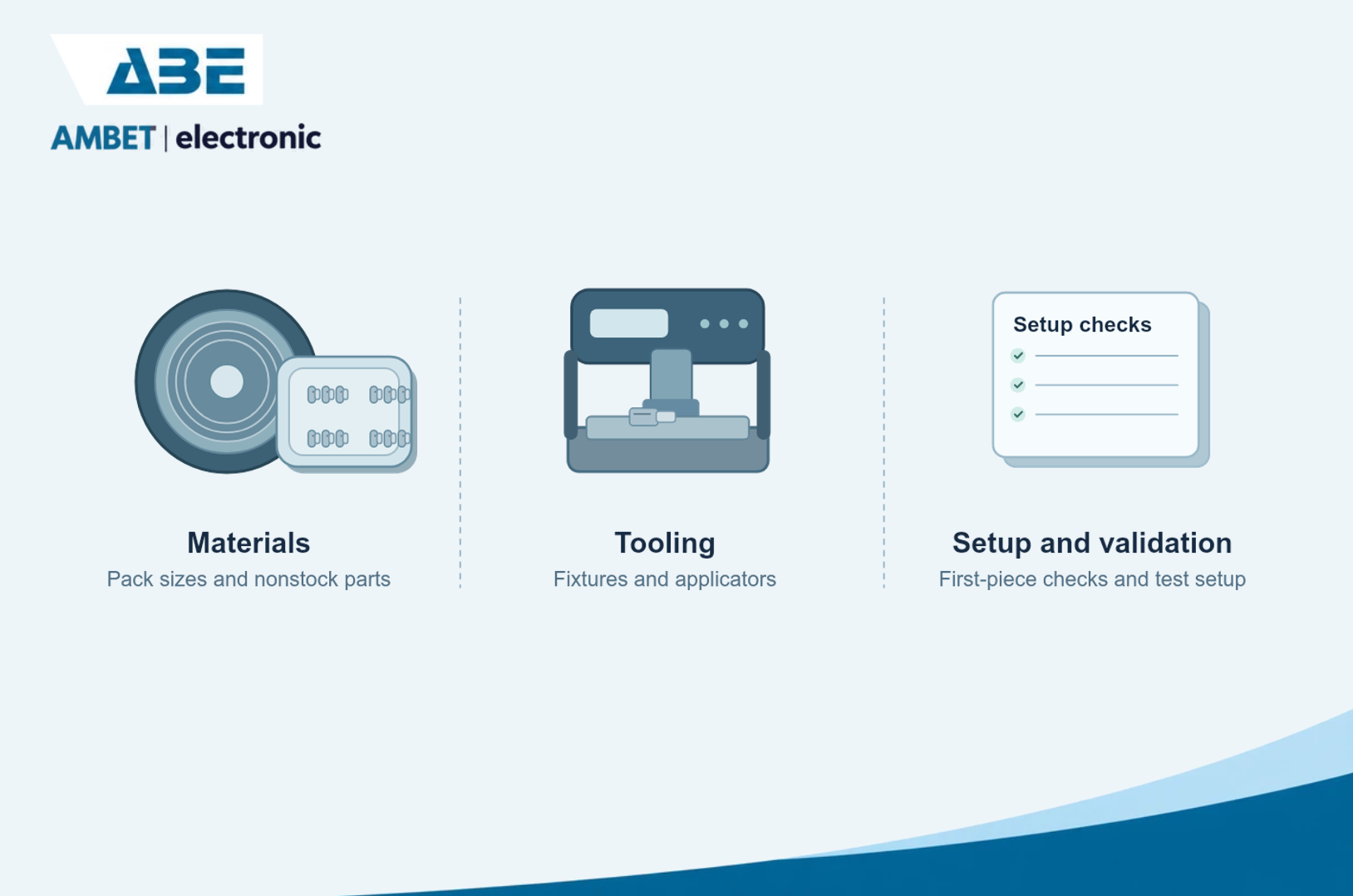
Begin with the drawing and bill of materials. A specified housing, seal, terminal, or wire color may be a standard stock item or require a special purchase. Ask which items are available for the intended run and which must be ordered against it. Confirm the quantities needed for the build and how the supplier would handle unused components. Two harnesses with similar connector counts can have different purchasing requirements if their actual parts differ.
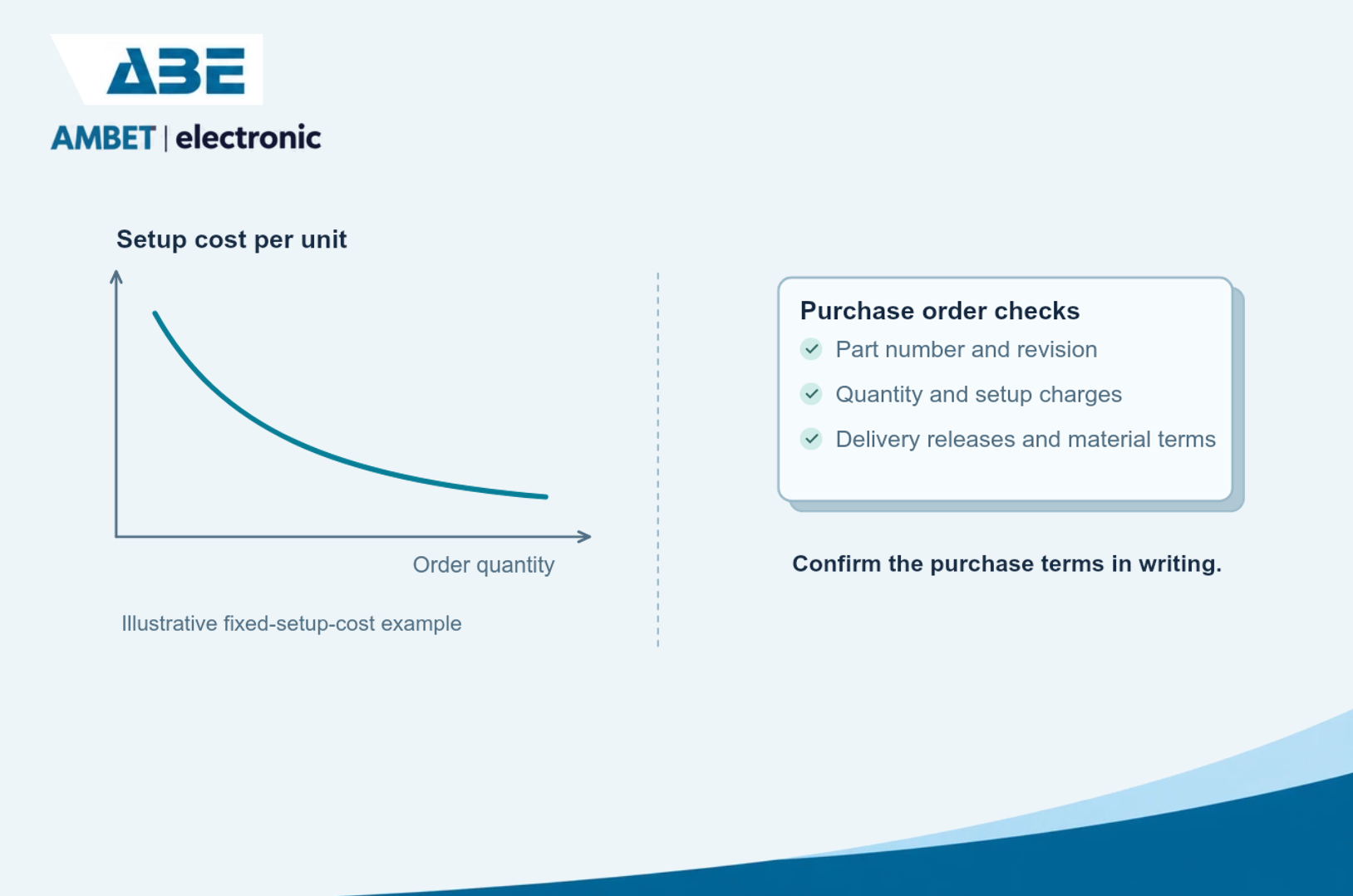
Tooling and setup costs2 cover different work. A build may need an applicator, assembly board, or electrical test fixture. The production team still has to prepare the equipment, verify the first pieces, and complete the required inspection for the run. Ask which costs are charged once, which are charged per run, and what is included in the quoted unit price. A smaller lot can carry a higher unit cost when the same setup work is spread across fewer pieces.
When Can an Existing Design or Stocked Component Help?
An approved repeat design may use retained fixtures and materials already available. Ask whether the drawing, tool, and test setup still match what was approved. Confirm how much usable material is allocated and whether the supplier expects to reorder components for the next run.
If a specified component is unavailable, request a documented alternative for review. Compare the proposed connector interface, terminals, fit, and applicable checks with the approved design. Have your engineering team authorize any specification change before it enters the quote or production plan. Saving on component purchases is useful when the replacement also meets the application requirements.
How Can Buyers Make a Low-Volume Order Work?
A buyer may need a few harnesses now and a steadier replenishment schedule after the first shipment reaches the market.
Offer a quantity forecast by part number and ask about a smaller approved lot, phased delivery, or later releases. Confirm the total commitment and agree who pays for excess material before the supplier purchases it.
How Can Buyers Use a Forecast or Phased Delivery?
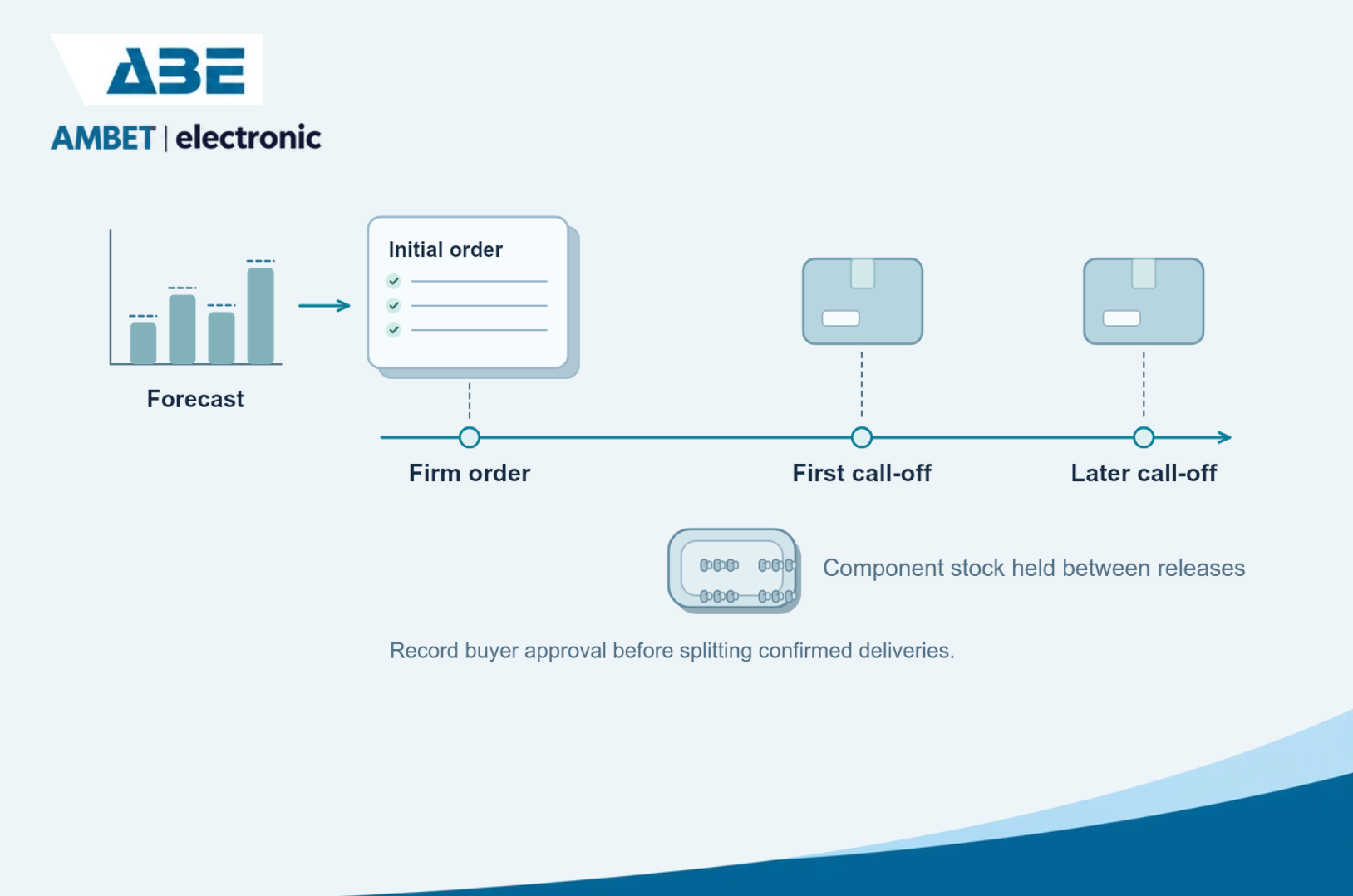
Share the expected demand by part number and date, including a realistic first quantity. Explain which figures are forecasts and which are confirmed orders. This gives the supplier a basis for checking component availability and planning whether a later run could use the same setup. Ask whether the supplier would accept a smaller production lot for your design and what change in unit price or fees it would require.
A phased shipment can stagger receipts against one accepted order. The total order commitment should be set out in writing, along with the quantity and due date of each delivery. If repeat demand is more certain, ask whether a blanket purchase order3 with agreed releases would fit. Confirm the minimum release, notice period, and price or material terms. Each option depends on the supplier accepting the proposed arrangement.
What Options Can Buyers Review for Excess Materials?
When a component buy exceeds what the first run consumes, ask how much would remain and whether those parts can be used on approved repeat orders. Agree on the inventory record, storage conditions, and how long stock may be held. Discuss how the parties will handle any balance if demand falls or a drawing revision makes the stock unsuitable.
Possible arrangements include paying a separate material charge, reserving specific stock for later releases, or supplying approved components under agreed incoming checks. Confirm who owns any remaining material and who authorizes its return, reuse, or disposal. Review the relevant price and terms for each option before confirming the first order.
What Should Buyers Confirm Before Accepting an MOQ?
A lower unit price can increase cash tied up in inventory if the order quantity exceeds the demand you can sell or use.
Compare the total order cost and expected inventory at each quantity. Record the accepted part number, revision, quantities, charges, shipment terms, and any commitments about reserved or unused materials on the purchasing documents.
How Do You Compare the Cost of Different Quantities?
Request prices at the quantities you are actually considering for the same design and inspection scope. Multiply the quantity by the quoted unit price and add charges listed separately. Review tooling, sample fees, additional testing, packaging, and freight. Count a recurring charge at the frequency stated in the quote. Check how much stock will remain after the first planned use and how long it may take to use or sell.
Consider a hypothetical buyer who needs 250 harnesses now and can choose between an approved order of 250 and an order of 500. Compare both on the same delivery terms before deciding.
| Quote detail | 250-piece option | 500-piece option |
|---|---|---|
| Total purchase spend | Quantity times unit price plus separately quoted charges | Same calculation at the quoted price for 500 |
| Stock after the first 250 units are used | None from this order | 250 units remain |
| Follow-up question | What would a reorder cost and when could it ship? | Who stores the retained stock and how is it released? |
What Should You Put in the Purchase Order?
List the finished harness part number and approved drawing revision4 on each order line. Identify the applicable bill of materials, test requirements, packaging, quantity, unit price, and separately accepted charges. When shipments will be split, include the agreed total and the quantities, dates, and delivery terms for each release. Attach or reference the quote and any written material arrangement.
Ask the supplier to confirm any assumptions about future approvals, components, or materials you will provide. If the technical package changes, review the effect on order quantities, stock, tooling, and pricing before accepting the revision. That keeps the purchase tied to the harness and terms you reviewed.
Conclusion
Confirm MOQ per part number, compare total cost at realistic quantities, and document the accepted production, delivery, and material commitments before placing the order.
Shows a distributor example of full-reel quantities and available packaging options for smaller component orders. ↩
Explains how recurring setup costs and inventory costs affect production lot-size decisions. ↩
Explains how individual purchasing releases operate within a blanket agreement. ↩
Explains how revision identification and change approval keep manufacturing records tied to an approved design. ↩