How to Approve Wire Harness Material Substitutions

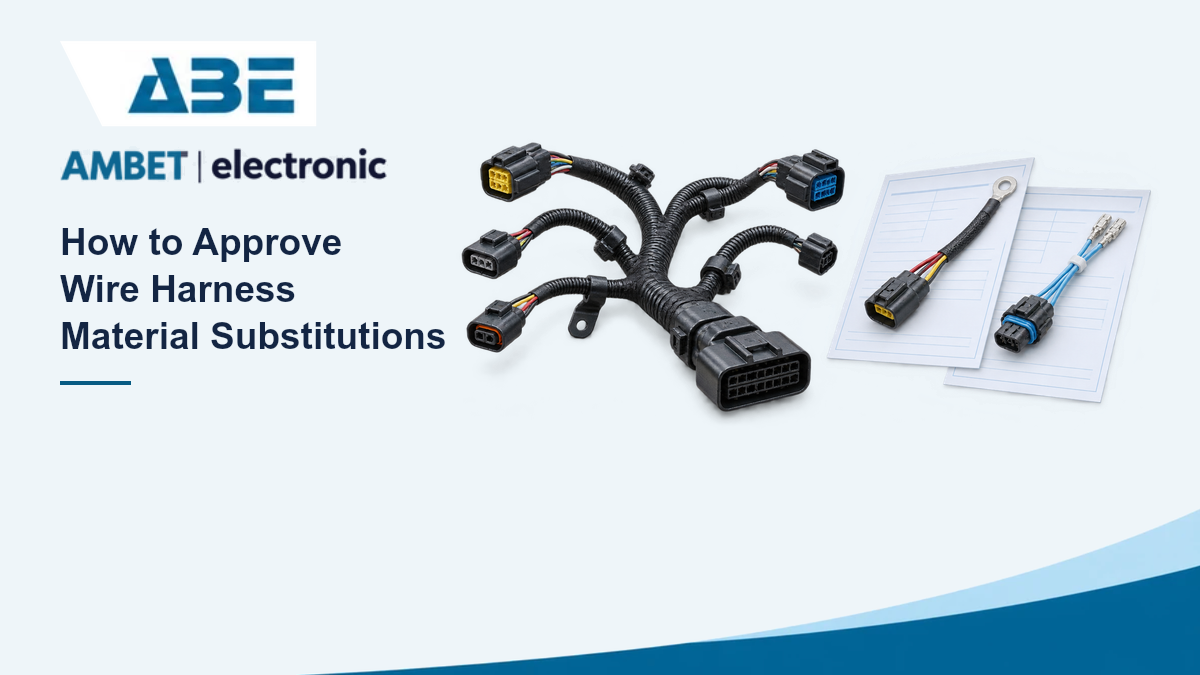
A discontinued connector or a shortage of approved wire can delay an entire harness order. Choosing an alternative without proper evaluation may create an even bigger problem.
Wire harness material substitutions should be approved by comparing the original and proposed materials, evaluating their impact on fit, function, and manufacturing, and obtaining the required authorization before production. The approval must identify the affected parts, revisions, and production quantities.
From a manufacturer's perspective, finding an available alternative is only the beginning. The more important question is whether that alternative can meet the customer's original requirements without introducing unacceptable risks.
What Information Should Buyers Request Before Approving a Material Substitution?
Material substitutions are sometimes necessary, particularly when an approved component becomes unavailable. However, a shortage does not establish that another component is suitable.
Buyers should request the exact original and proposed part numbers, the reason for the change, a technical comparison, and a list of affected harnesses and orders. The manufacturer should also explain the available supply options and expected impact on production.
Why Do Wire Harness Manufacturers Propose Material Substitutions?
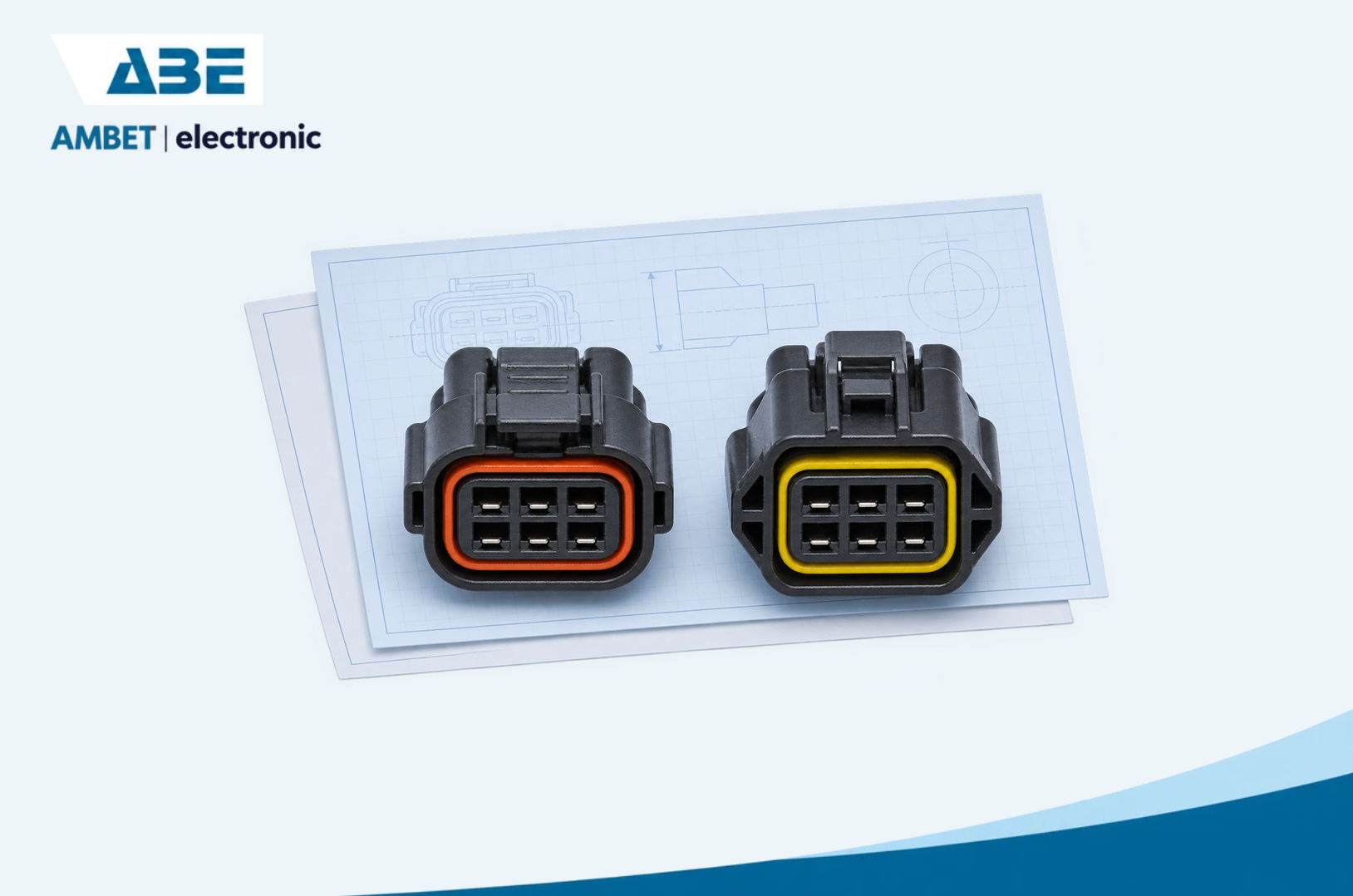
A custom wire harness may contain components from several different manufacturers. Wires, connector housings, terminals, seals, protective sleeves, and mounting clips can each have different purchasing conditions and availability.
A shortage of one component can prevent the entire assembly from being completed, even if every other material is ready for production.
Common reasons for proposing a substitution include:
- Temporary shortages or extended component lead times.
- Discontinued connectors, terminals, or other components.
- Changes to a component manufacturer's product range.
- Customer requests to reduce costs or improve availability.
- Manufacturing difficulties that may be resolved by an alternative construction.
These reasons explain why a change is being considered. They do not demonstrate that the proposed material is technically equivalent.
For example, a connector manufacturer may discontinue a particular terminal. Another terminal may appear to fit the same housing, but its retention features, plating, wire range, or required crimp tooling could be different.
As a manufacturer, the responsible approach is to identify these differences and bring them to the customer's attention before changing the approved build.
Is a Change of Supplier the Same as a Material Substitution?
Not every purchasing change results in a different material specification. The distinction matters because different changes may require different levels of review.
| Type of change | Example | What needs to be reviewed |
|---|---|---|
| Purchasing source | Buying the same approved part from another distributor | Source approval, authenticity, traceability, and purchasing requirements |
| Approved alternate | Using a second part already listed in the approved BOM | Conditions of approval and the applicable manufacturing instructions |
| New component | Replacing a terminal with a different manufacturer's part | Technical compatibility, process requirements, and necessary validation |
| Material specification | Changing wire insulation or protective sleeve material | Electrical, mechanical, and environmental requirements |
| Design change | Replacing a discontinued connector with a different mating interface | System compatibility, revised drawings, and engineering approval |
A change of distributor does not necessarily change the finished harness specification. However, the new purchasing source must still comply with any customer-defined sourcing requirements.
A new manufacturer part number is different. Even if it has the same catalog description, its suitability must be evaluated against the approved specification.
What Should a Material Substitution Request Include?
The approved drawing and bill of materials (BOM) provide the starting point for a substitution request.
A clear request helps the customer understand exactly what is changing and gives the relevant engineering or quality team enough information to make a decision.
| Information | Why it matters |
|---|---|
| Harness part number and revision | Identifies the approved assembly affected by the change |
| Original component manufacturer and part number | Establishes the existing technical reference |
| Proposed component manufacturer and part number | Identifies the exact alternative under consideration |
| Reason for the substitution | Explains the supply, cost, or manufacturing issue |
| Technical comparison | Shows differences in dimensions, ratings, materials, and other relevant properties |
| Affected orders and quantities | Defines the proposed scope of the change |
| Proposed validation plan | Explains how the new configuration will be evaluated |
| Cost and lead-time impact | Helps the buyer compare available supply options |
| Requested implementation date | Allows the customer to coordinate approval and production |
Some OEM programs require a formal change notification1 before changes to approved materials, products, or processes can be implemented. Other programs may use a simpler written approval procedure. The applicable customer requirements should determine the process.
Where timing is critical, ask whether the original material is available from an approved source, whether an unchanged portion of the order can be produced first, or whether a later delivery is possible. These options should be compared with the time needed to validate an alternative.
True or False:
A material shortage automatically allows a wire harness manufacturer to use an equivalent component.
False.
A shortage explains why a substitution may be necessary. It does not authorize a change to an approved specification. The proposed alternative must follow the change and approval process agreed for the project.
How Can You Verify That an Alternative Material Meets the Requirements?
Two components may have similar dimensions or catalog ratings but behave differently once they are assembled into a wire harness.
Verify an alternative material by comparing the properties relevant to the application, reviewing compatibility with adjacent components, and conducting the necessary sample and process checks. The validation scope should reflect what has changed and the consequences of failure.
Which Technical Characteristics Should Be Compared?
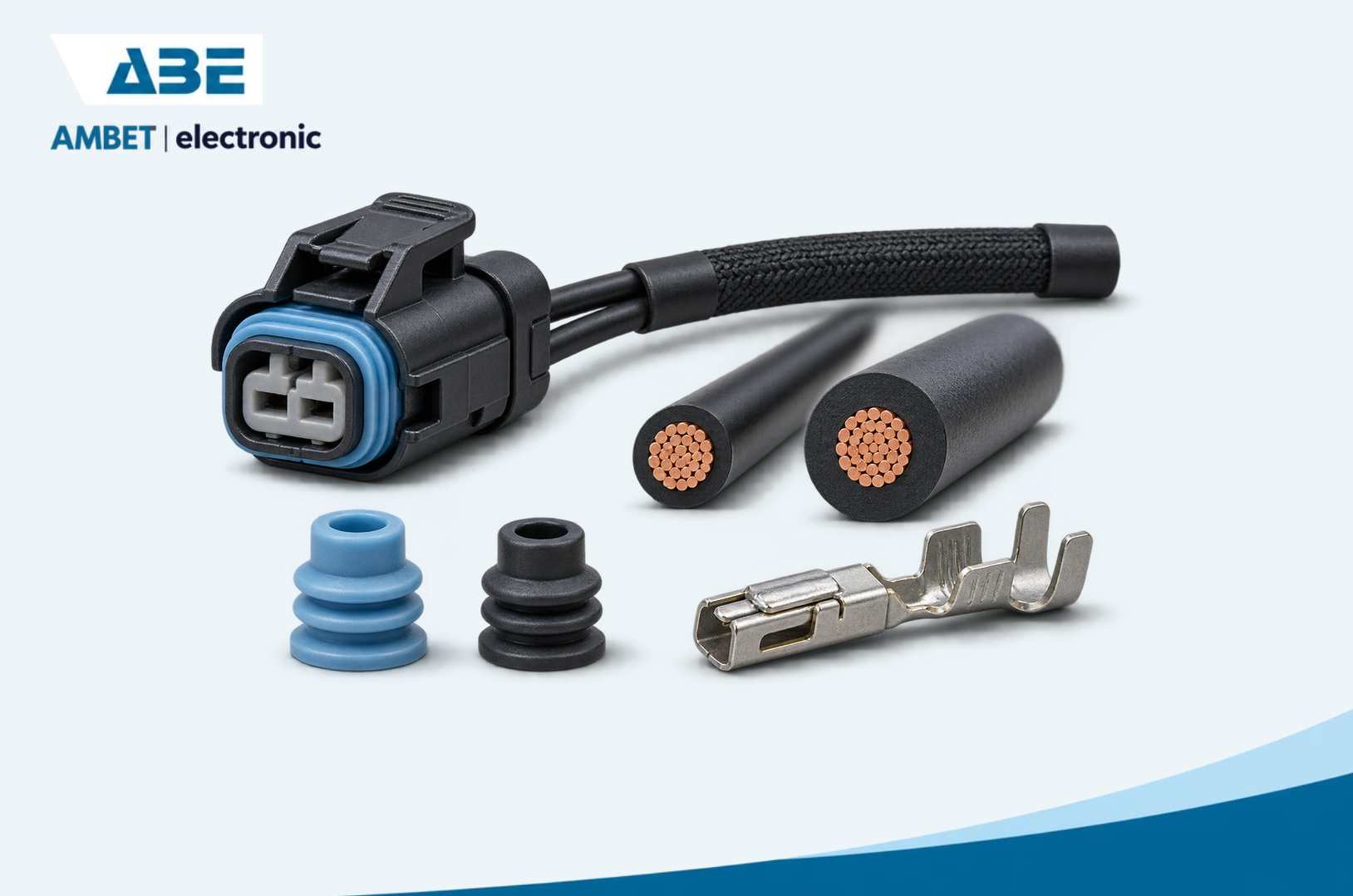
A material comparison should go beyond a general statement that two components are equivalent. The important characteristics depend on the component and the environment in which the harness will operate.
| Component | Characteristics to compare | Examples of supporting evidence |
|---|---|---|
| Wire | Conductor size and strand construction, insulation diameter, temperature and voltage ratings, flexibility | Datasheets, crimp checks, dimensional or application tests |
| Connector housing | Mating geometry, keying, cavity arrangement, locking, sealing provisions | Manufacturer drawings, mating and installation checks |
| Terminal | Wire range, contact geometry, plating, retention, tooling requirements | Application specifications, crimp measurements, mechanical and electrical checks |
| Wire seal or cavity plug | Compatible dimensions, material, fit within the housing | Manufacturer specifications, assembled fit and specified sealing tests |
| Protective sleeve or tape | Dimensions, coverage, flexibility, resistance to relevant exposure | Material data, fitted sample, application-specific checks |
| Clip or grommet | Mounting dimensions, orientation, retention, bundle fit | Drawings, installed sample, applicable mechanical checks |
The objective is not to perform every possible test whenever a component changes. It is to identify the affected characteristics and obtain evidence that addresses the actual risk.
A change to a printed label, for example, would normally require a different review from a change to a power terminal or a sealed connector. The customer and manufacturer should agree on the applicable checks before the sample is built.
Why Is the Same Wire Gauge Not Always Enough?
Consider a hypothetical harness using a sealed automotive connector. The original wire becomes temporarily unavailable, and another wire with the same conductor gauge is proposed.
At first, the alternative may appear suitable. Both wires have the same nominal conductor cross-section. However, the proposed wire may have a different insulation thickness, outside diameter, or strand construction.
These differences can affect several parts of the assembly:
- The conductor crimp may require a different approved setup.
- The insulation support may not grip the wire as intended.
- The individual wire seal may no longer fit within its specified diameter range.
- The finished bundle may have a different diameter or flexibility.
Before proceeding, the manufacturer needs to check the wire against the terminal application specification and the connector's contact and seal ranges2. The assembled sample must then be evaluated against the relevant requirements.
If the proposed wire falls outside the approved seal range, engineering may need to consider another compatible seal or a different wire. Any resulting specification change must follow the required approval process.
This is one reason I recommend reviewing the wire, terminal, connector housing, and seal as a complete system rather than comparing each component in isolation.
True or False:
Two wires with the same conductor gauge are automatically interchangeable in a sealed wire harness.
False.
Wires with the same gauge can differ in strand construction, insulation diameter, material, and ratings. These differences can affect crimp quality, sealing, and installed performance.
How Should a Manufacturer Validate the Proposed Alternative?
A component datasheet provides important information, but it cannot answer every question about the completed harness. The manufacturer should determine which characteristics can be confirmed from documentation and which require a production-intent sample.
For a terminal substitution, the review may include the intended applicator, crimp dimensions, conductor placement, pull force, and terminal retention. For a connector substitution, it may include mating, locking, cavity assignments, and installation clearance. For a sleeve substitution, it may focus on coverage, bundle diameter, flexibility, and the environmental requirements of the installation.
Electrical checks should be selected according to the application. Continuity and wiring verification are useful for detecting certain circuit faults, but a passing continuity result does not establish adequate sealing, mechanical retention, or long-term durability.
A useful sample approval record identifies:
- The original and proposed materials used for the comparison.
- The harness drawing revision and sample identification.
- The actual tooling or assembly process where relevant.
- The agreed inspection methods and acceptance limits.
- The results, remaining differences, and any unresolved questions.
Where the substitution affects performance at vehicle or equipment level, the customer's engineering team may need to carry out or approve additional system validation. Harness-level testing and system-level validation have different purposes.
The manufacturer can prepare the technical evidence and explain its findings. The designated approval authority determines whether that evidence is sufficient for the proposed change.
How Should an Approved Material Substitution Be Controlled?
A material substitution approved to resolve one shortage should not automatically become the standard configuration for every future order.
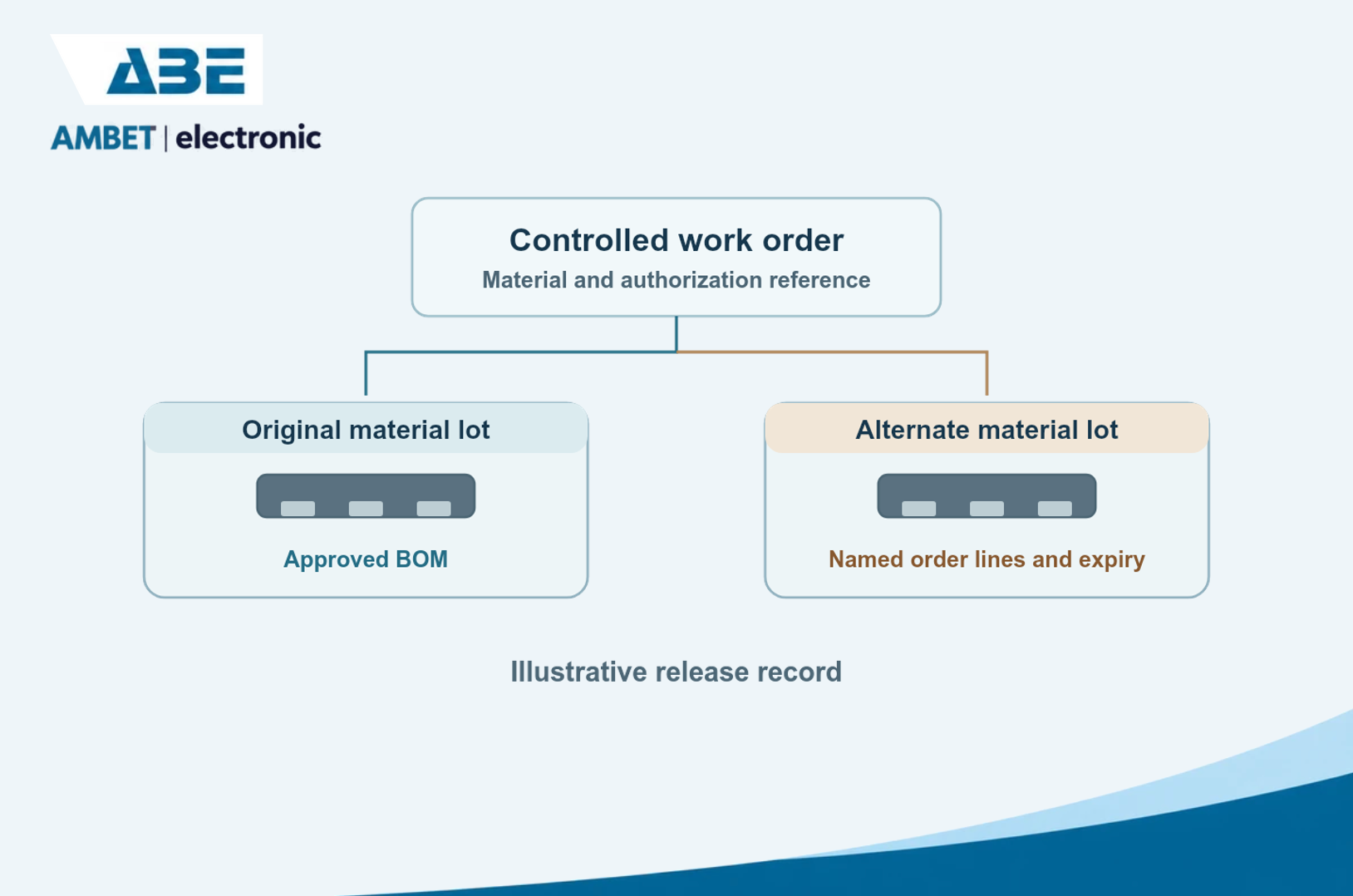
Control an approved substitution by documenting the exact alternative, authorization, affected part numbers and revisions, and permitted quantities or dates. Update the relevant production documents and preserve material-to-batch traceability before releasing affected orders.
What Is the Difference Between a Temporary Deviation and a Permanent Change?
The approval should clearly state whether the proposed alternative is permitted for a limited production scope or will become part of the standard harness specification.
A temporary deviation allows a specified departure from the existing requirements under defined conditions. A permanent change revises the approved configuration through the applicable engineering change process.
| Control item | Temporary deviation | Permanent change |
|---|---|---|
| Scope | Defined orders, quantities, lots, or time period | Future production under the revised approval |
| Technical reference | Existing specification plus the approved exception | Updated drawing, BOM, or approved alternate list |
| Authorization | Written approval for the limited scope | Approval through the applicable change process |
| Production identification | Affected lots and exception reference | Effective revision or first affected lot |
| Future orders | Return to the standard specification unless further approval is obtained | Follow the newly approved configuration |
For example, a customer might authorize an alternative wire for one specific purchase order while waiting for the original material to become available. That authorization does not necessarily apply to the next purchase order.
If the alternate is subsequently accepted for continuing production, the appropriate documents should be updated so the manufacturer, buyer, and quality team can work from the same approved requirements.
The principle of maintaining an approved configuration3 is useful here: changes need to be identifiable, reviewed, authorized, and connected to the product configuration to which they apply.
How Can Buyers and Manufacturers Prevent Unauthorized Substitutions?
Both parties need a clear record of what has been agreed. A technical comparison submitted by the manufacturer is not the same as authorization to implement the change.
Before the affected production is released, the team should confirm:
| Release check | What should be confirmed |
|---|---|
| Approval authority | Who is authorized to accept the change under the project agreement |
| Exact material | Approved manufacturer, part number, or material specification |
| Production scope | Applicable harness part number, revision, order, quantity, or expiry |
| Sample evidence | Required tests and sample approval have been completed |
| Manufacturing documents | Relevant BOM, drawing, work instructions, and inspection plan are aligned |
| Traceability | Substituted material can be linked to the affected finished batches |
| Future supply | Instructions for subsequent orders and remaining material are clear |
Where both the original and alternate materials are in stock, identification and production records should prevent unintended mixing. If the approved change has a quantity limit, the affected production must remain within that limit.
When a temporary authorization expires, any further use needs to follow the applicable approval process. If the original component becomes available again, confirm which configuration is required for the next build.
How Can AMBET Help Buyers Evaluate Alternative Materials?
For a custom wire harness project, we can review the customer's drawing, BOM, original material reference, proposed alternative, and required acceptance checks.
If an approved material is difficult to obtain, share your delivery requirements, any restrictions on component brands or sources, and the relevant technical specifications. This gives our team a basis for reviewing available alternatives and discussing the effect on manufacturing, sampling, cost, and lead time.
Where a proposed substitution requires further evidence, we can discuss the necessary sample and inspection scope with your team. The quotation and production plan can then reflect the confirmed configuration and agreed requirements.
The manufacturer's role is to help identify and evaluate practical supply options. Changes to customer-approved specifications must remain subject to the applicable authorization process. Finding a material that is available sooner is valuable only when the resulting harness can still meet its intended requirements.
Conclusion
Evaluate material substitutions against the approved application, verify the affected characteristics, and obtain the required authorization. Clear documentation and batch traceability help protect repeat-order quality.
Shows one OEM’s formal process for submitting and approving material, product, and process changes. ↩
Shows a connector family with part-specific conductor ranges and seal options related to insulation diameter. ↩
Explains how approved changes and limited departures are controlled against a documented technical baseline.**** ↩